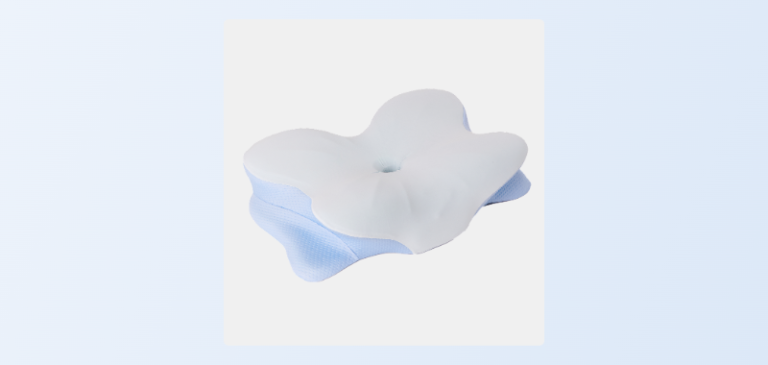

Derila Pillow for Side Sleepers: Does the Contour Actually Help?
Side sleeping is the most common sleep position — around 60% of adults sleep on their side. It’s also the position most likely to cause neck pain if your pillow doesn’t fill the gap between your shoulder and your head correctly.
The Derila Ergo Pillow was designed with side sleepers in mind. Its contoured shape includes raised side sections specifically dimensioned to bridge the shoulder gap and keep the cervical spine horizontal. We tested it over 8 weeks with two dedicated side sleepers to see how it performs in practice.
Why Side Sleepers Need a Different Pillow
When you sleep on your side, your shoulder creates a gap between the mattress and your head. A standard flat pillow either doesn’t fill this gap fully (leaving the neck bent downward) or collapses under the weight of your head (providing uneven support through the night).
The result is cervical lateral flexion — the neck bending sideways for hours at a time. This stretches the muscles and ligaments on the upper side of the neck, compresses those on the lower side, and frequently leads to morning stiffness, shoulder tension, or pain radiating into the upper back.
What a side sleeper actually needs is a pillow that is both tall enough to fill the shoulder gap and firm enough to maintain that height through the night. Memory foam, with its slow-recovery property, is better suited to this than standard polyester fill.
How the Derila Contour Works for Side Sleepers
The Derila pillow has a wave-shaped contour with two raised sections on either side and a lower central groove. For side sleepers, the raised section on the outer edge supports the head at the correct height above the shoulder, while the curve of the contour cradles the neck and holds it in a neutral horizontal position.
The memory foam responds to head and neck pressure within a few minutes of lying down, conforming to individual neck shape without losing its baseline height. This is the key difference from standard foam or polyester pillows, which compress fully under sustained pressure.
For side sleepers who shift from one side to the other during the night, the symmetrical contour means both sides provide the same support profile — there’s no “wrong end” to land on.
Our 8-Week Side Sleeper Test
Tester 1 — Laura, 38 (Chronic Left-Side Sleeper)
Laura sleeps almost exclusively on her left side and had been waking with a stiff neck 4–5 mornings per week. She used a standard memory foam pillow before the test but described it as “always feeling flat by morning.”
Week 1: Initial discomfort — the Derila felt “too structured.” Neck stiffness unchanged but she noticed the cooling cover was pleasant.
Week 2–3: Adjustment period over. Waking with stiffness dropped from 4–5 mornings to 2–3 mornings per week. Duration of morning stiffness down from 20+ minutes to around 10 minutes.
Week 6: Stiff mornings down to 1x per week. Shoulder tension she’d attributed to “just how I sleep” had significantly reduced.
Week 8: Sleep quality self-rated 8/10 (up from 5.5/10). Stiff neck now occasional rather than routine. She noted the pillow “still feels the same as day one” — no compression loss.
Tester 2 — James, 45 (Side Switcher with Shoulder Issues)
James alternates sides during the night and has a history of right shoulder impingement. He’d previously avoided lying on his right shoulder because the pressure caused pain.
Week 1–2: Noticed the raised contour allowed his shoulder to sit more naturally — less compression of the joint against the mattress. Right-side sleeping became possible for the first time in 18 months.
Week 4: Sleeping more evenly on both sides. Night wakings from shoulder discomfort dropped from nightly to 1–2x per week.
Week 8: Pain rating on waking down from 5/10 to 2/10. James noted the contour shape supports the neck even when the shoulder changes position slightly during the night.
Derila vs Standard Pillows for Side Sleepers
| Feature | Derila Ergo | Standard Memory Foam | Polyester Fill | Down/Feather |
|---|---|---|---|---|
| Shoulder gap fill | Yes — designed for it | Depends on loft | Collapses overnight | Collapses overnight |
| Cervical alignment | Contoured for neutral spine | Flat, no contour | Poor | Poor |
| Height consistency | Maintained all night | Moderate | Poor | Poor |
| Adjusts to neck curve | Yes | Partially | No | No |
| Cooling | Ventilated cover | Varies | Poor | Moderate |
Who the Derila Pillow Is Best For (Side Sleeper Edition)
Best suited to:
- Dedicated side sleepers who wake with neck stiffness or shoulder tension
- Side sleepers who find standard pillows “too flat by morning”
- People with shoulder impingement who need reduced joint compression during sleep
- Couples where one or both partners sleep on their side
- Side sleepers with broader shoulders (the raised sections accommodate wider shoulder profiles)
Less suited to:
- Strict stomach sleepers (the contour height is too much for face-down sleeping)
- Back sleepers who never shift to their side (the central groove is better suited to them — see our Derila for neck pain guide)
- People who prefer an ultra-soft, sink-in pillow feel
The Derila comes with a 30-day return policy, which removes the risk of trying it. If you’re a side sleeper dealing with chronic morning neck stiffness, it’s the most targeted pillow option in this price range.
→ Try the Derila Pillow — official site with 30-day guarantee
Related Derila Guides
- Derila Pillow Full Review — 8-week test results for neck pain and sleep quality
- Derila for Neck Pain — how the contour helps cervical alignment
- Does the Derila Pillow Work? — evidence and test data
- Derila Customer Reviews — what real buyers say
- Where to Buy Derila — best price and bundle guide
Frequently Asked Questions
Is the Derila pillow good for side sleepers?
Yes — the raised side sections of the Derila contour are specifically designed to fill the gap between the shoulder and head for side sleepers, keeping the cervical spine horizontal through the night.
What pillow height do side sleepers need?
Side sleepers generally need a pillow loft of 10–14 cm depending on shoulder width. The Derila’s raised sections fall within this range for most adults. Broader shoulders may need the pillow positioned with the edge closer to the shoulder for maximum fill.
How long does it take to adjust to the Derila as a side sleeper?
Most side sleepers find the first 5–10 days uncomfortable as the neck adjusts to proper alignment. Significant improvement in morning stiffness typically appears by week 3.
Can you use the Derila pillow if you switch between side and back sleeping?
Yes. The central groove supports back sleepers and the raised sides support side sleepers, so position-switchers can use either section of the pillow without removing or adjusting it.