
Quick answer: Pain-disrupted sleep usually needs fixing on three fronts at once. First the cause: set pillow loft for your position, roughly 5-6 inches firm for side sleepers, 3-4 inches medium for back sleepers, 1-2 inches soft for stomach sleepers and 4-5 inches for combination sleepers, so head, neck and spine stay neutral. Second, calm the pain before bed with targeted topical relief, the right choice of heat or cold, and two or three minutes of gentle neck and shoulder stretches. Third, signal the day is over: dim lights 60-90 minutes before bed, screens down, room around 65F/18C, same wake time daily. Wind-down changes can help the first night; a new pillow takes 3-7 nights.
How to stop waking up sore, fall asleep faster, and finally get mornings that don’t hurt — the full system we’ve researched, in one place.

Why sleep and pain feed each other
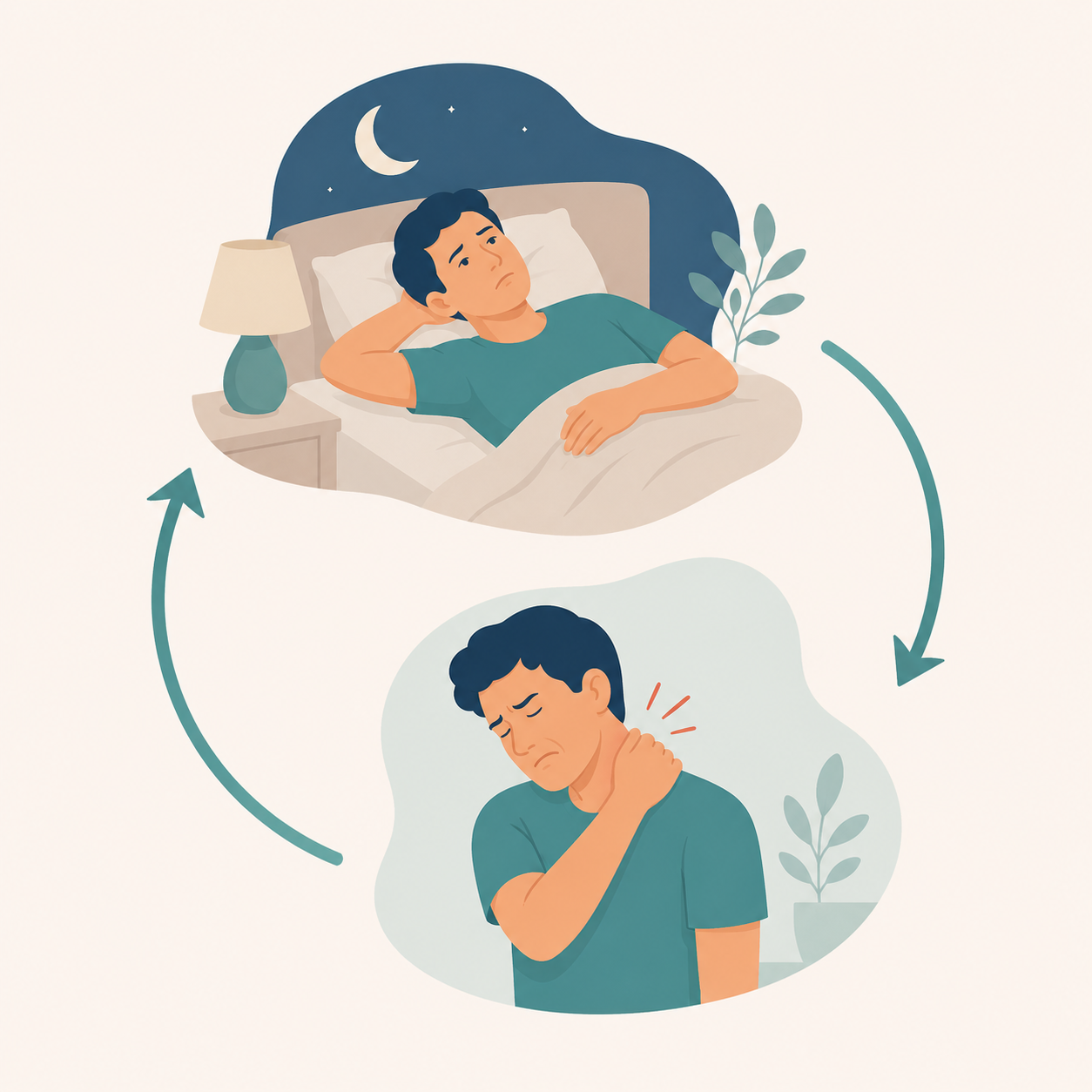
If you wake up with a stiff neck, sore shoulders, or a lower back that takes an hour to loosen up, it is tempting to treat it as a morning problem. It is not. It is an all-night problem you only notice in the morning.
Here is the loop almost everyone gets stuck in:
- Pain makes sleep worse. Discomfort keeps you in lighter sleep stages, wakes you when you shift position, and makes it harder to drift off in the first place.
- Bad sleep makes pain worse. Short, broken sleep lowers your pain threshold — poorly-rested people report the same physical problem as more painful the next day.
That is the pain-insomnia cycle, and it is why toughing it out rarely works. You break it by hitting it from more than one side at once. (More: How to Break the Pain-Insomnia Cycle.)
Part 1 — Fix the cause: sleep posture and alignment
You spend roughly a third of your life with your head resting on something. If that something holds your neck at the wrong angle, you are straining the same muscles and joints for 7-8 hours straight, every night. The goal: keep your head, neck, and spine in a neutral line.
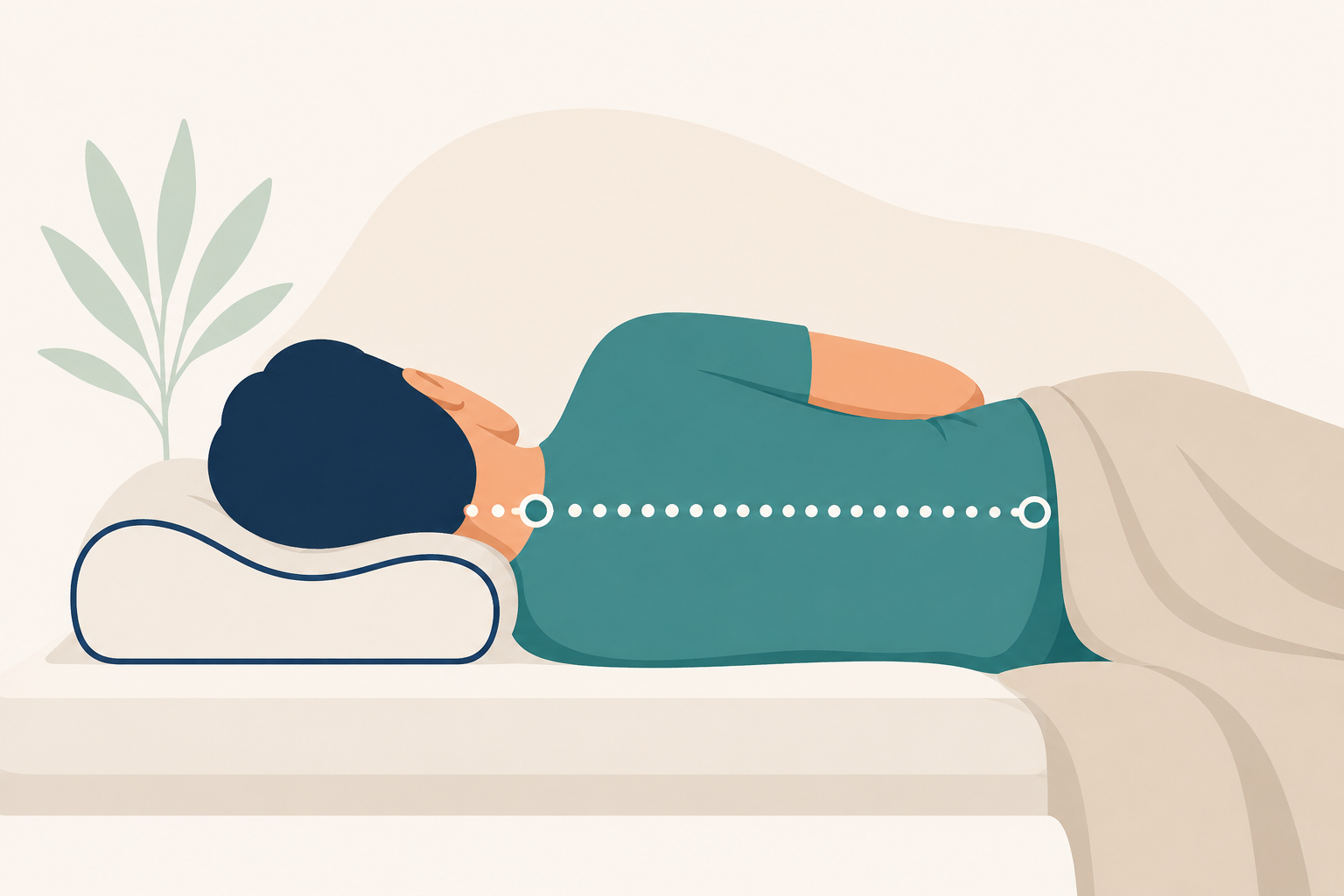
The single most important variable: pillow height (loft)
- Side sleepers need the most height — about 5-6 inches, firm, to fill the gap between ear and shoulder.
- Back sleepers need less — about 3-4 inches, medium.
- Stomach sleepers need the least — 1-2 inches, soft (or transition away from stomach sleeping).
- Combination sleepers do best around 4-5 inches with an adaptive pillow.
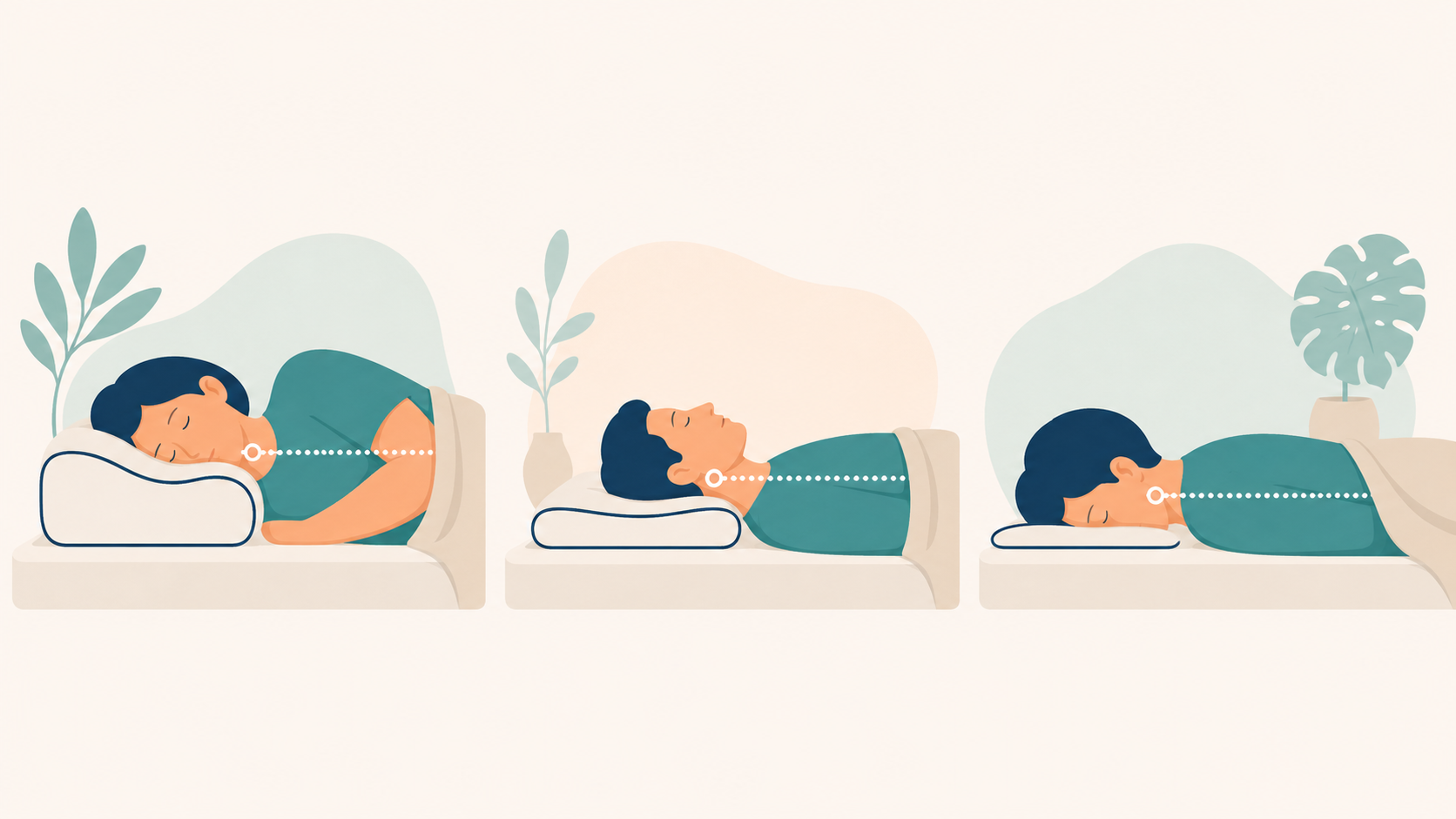
Deep dives: Perfect Pillow Height for Your Sleep Position and the Best Pillow for Neck Pain guide.
Wrong pillow height
Neck bends out of line all night
Correct pillow height
Head, neck and spine stay neutral
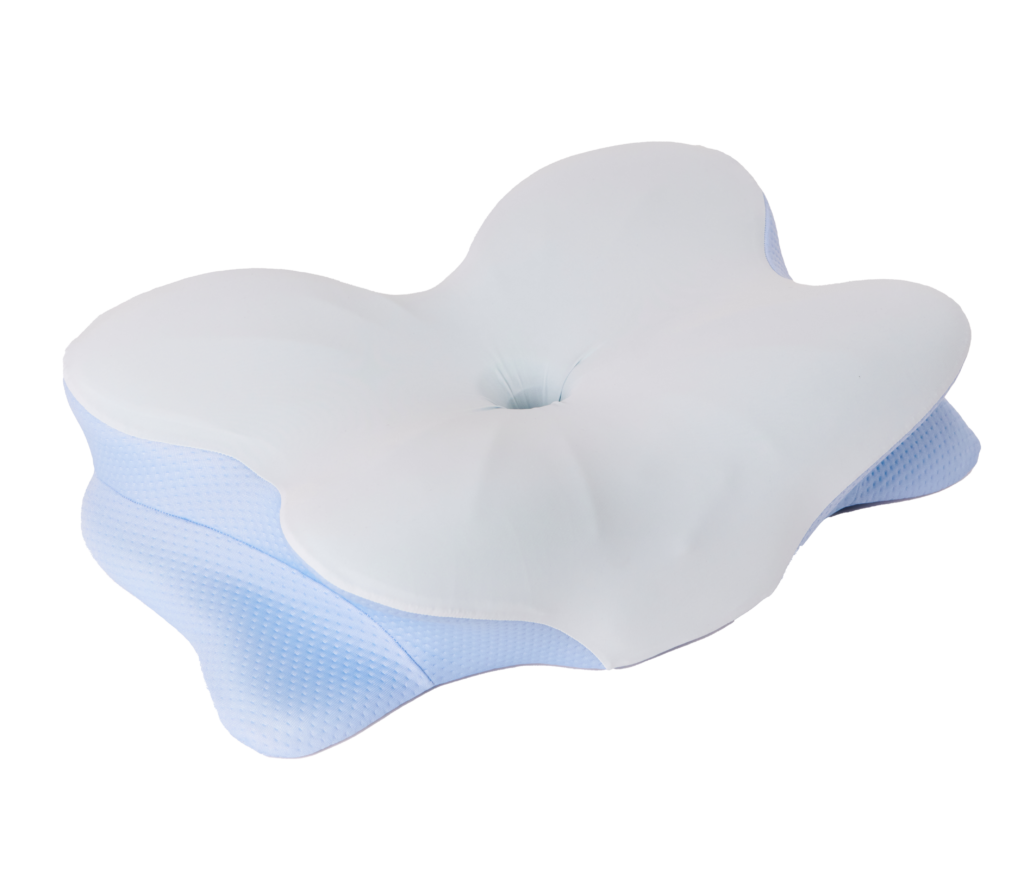
Our top pick: the Derila Ergo pillow
Across all the buyer feedback we analyzed, the pillow we point people to first is the Derila Ergo — a contoured memory-foam design that supports the neck in side and back positions and that buyers consistently report holds its shape over months of use. Buyers commonly describe a noticeable drop in morning stiffness from about week two. Full scores and who it is right for: our Derila Ergo review.
Part 2 — Calm the pain that keeps waking you
Fixing alignment addresses tomorrow’s cause. But if you are already in pain tonight, you need something that helps you get comfortable enough to fall asleep now.
- Targeted topical relief. For localized neck, shoulder, or back pain, a topical NSAID (diclofenac gel) has the best evidence for inflammatory pain, a menthol gel works fastest, and a patch is the one that stays on overnight. Which to buy and when: our topical pain relief comparison.
- Heat vs. cold — use the right one. Heat relaxes stiff muscles; cold calms fresh, inflamed pain. See Heat vs. Cold for Pain Before Bed.
- A few gentle stretches. Two or three minutes of slow neck and shoulder mobility. Routine: The Evening Wind-Down Routine.
Part 3 — Quiet the mind and body so you actually fall asleep
You can have a perfect pillow and zero pain and still lie awake because your nervous system never got the signal that the day is over.
Build a real wind-down routine

- Dim the lights 60-90 minutes before bed. Bright light suppresses melatonin.
- Set a hard screens-down line — even 30 minutes helps.
- Cool the room to around 65F / 18C.
- Keep it dark and quiet — blackout and white noise where you can.
- Same wake time every day, even weekends.
Turn it into a checklist: The 10-Minute Evening Routine That Transforms Your Mornings.
When your body is ready but your mind will not stop
- Magnesium supports nervous-system relaxation — see Magnesium for Sleep and Pain.
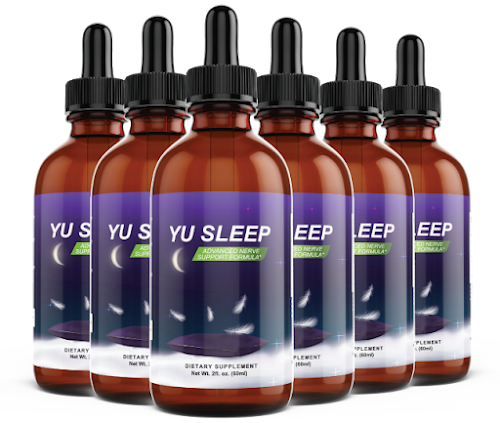
- A liquid sleep aid for the tough nights. We researched YU SLEEP — a low-dose (0.9mg) melatonin liquid with magnesium, L-theanine and 5-HTP, built for falling asleep faster without next-morning grogginess (not for anyone on SSRIs or other serotonergic medication). A tool for hard nights, not a crutch.
Your 7-day pain-free sleep reset
- Day 1-2: Fix your sleep surface — get your pillow loft right for your position.
- Day 2-3: Add the wind-down cues — dim lights, cool room, consistent wake time.
- Day 3-4: Add pre-bed pain management — topical plus a couple of stretches.
- Day 5-7: Layer in extras only if needed — magnesium and/or a sleep aid on rough nights.
Give it a full week; alignment changes take a few nights to adapt. (How long a new pillow takes to stop hurting your neck.)
Your 3-part sleep toolkit
Because the problem has three sides, so does the fix. Here is what we recommend, each linked to our full review:
| Your problem | The tool | Why |
|---|---|---|
| Stiff neck & poor posture on waking | Derila Ergo Pillow | Fixes the root cause — holds your neck aligned all night. |
| Sharp muscle/joint pain right now | A pharmacy topical | Voltaren for inflammatory pain, menthol for speed, a patch to last the night. |
| A racing mind, cannot drift off | YU SLEEP Liquid | Helps you fall asleep faster on the hard nights, without grogginess. |
Frequently asked questions
How fast will I notice a difference?
Wind-down and pain-relief changes can help the first night. A new pillow usually takes 3-7 nights as your body adapts.
Do I really need all three products?
No. Start with the pillow — correct overnight support is the biggest single fix. Add topical relief and a sleep aid only if pain or falling asleep are still problems.
Is it my mattress or my pillow?
For neck and shoulder pain, the pillow matters more — it is in direct contact with the most vulnerable part of your spine. Fix it first.
What is the fastest thing I can do tonight?
Get your pillow height right for your position, and dim the lights an hour before bed. Both cost nothing.
Disclosure: Sleep Align is reader-supported and independent. Some links are affiliate links — if you buy through them we may earn a commission at no extra cost to you. We only recommend products we have researched in depth and assessed against the manufacturer’s published information and independent research, and commissions never change our scores.