

Best Pillow for Neck Pain (2026): Find Your Height First
Quick answer: The best pillow for neck pain is the one that holds your head at the right height for the way you sleep. For most people that means about 4.5 to 5.5 inches on your side and 3.25 to 4.25 inches on your back, on a medium mattress. A contoured memory-foam pillow with a lower center and higher sides covers both. Our pick is the Derila Ergo (about 3.5 in center, 4.7 in sides, 60-day money-back guarantee). Use the height finder below to check your own number first, and give any new pillow 10 nights.
Our verdict
Our pick: Derila Ergo Pillow
For most people with morning neck pain, a contoured pillow that holds the neck neutral is the right first move, and the Derila Ergo is the one we point to first.
| Best for | Side and back sleepers whose neck pain is worst on waking and eases through the morning |
|---|---|
| Not for you if |
|
| Main drawback | Fixed loft; broad-shouldered side sleepers on a firm mattress may need more than its 12 cm |
| Price | $59.99 for one, $99.98 for two ($49.99 each) at the time of writing — the seller sets the price |
| Guarantee | 60-day money-back |
Verdict: Start with the Derila unless you are a strict back sleeper or a stomach sleeper. Give any new pillow ten nights before judging it.
Affiliate link — we may earn a commission at no cost to you. Nothing on this page is medical advice.
Most morning neck pain comes from one thing: for seven or eight hours, your pillow holds your head a little too high or a little too low. Every “best pillow” list skips the step that matters, which is working out what height your neck needs. Get that right and the choice of pillow gets easy. Get it wrong and even a $165 pillow will hurt.
So this guide starts with your height, not a ranking. Answer three questions below, and you’ll get your number and the kind of pillow that fits it.
Find your pillow height
Uses the same method as our full pillow height calculator.
Your range suits a contoured memory-foam pillow with a lower center and higher sides. The Derila Ergo is built that way: about 3.5 in in the center for your back and about 4.7 in on the sides for your side.
Buying memory foam? Add about half an inch, because foam settles under your head.
The right height for each sleeping position
These ranges are for an average build on a medium mattress. Two things move them: a broad build needs more, and a softer mattress needs less, because your shoulder sinks into it. That second one surprises most people, and it’s a common reason a “correct” pillow still hurts.
| You sleep on your… | Pillow height | What fits |
|---|---|---|
| Side | 4.5–5.5 in | Contoured foam with raised sides, or an adjustable pillow |
| Back | 3.25–4.25 in | Contoured foam with a lower center |
| Both (you switch) | 3.75–4.75 in | Contoured foam with a low center and high sides |
| Stomach | 1–2 in, or none | Thin, soft and flat. No contour. |
Side sleepers
Your shoulder creates the biggest gap between your head and the mattress, so you need the most height. If the pillow is too low, your head drops toward the mattress and you wake sore on the top side of your neck. If it’s too high, your head is pushed up toward the ceiling and the bottom side gets sore. If you aren’t sure which way you’re off, our guide to whether your pillow is too high or too low works it out from where it hurts.
Back sleepers
You need noticeably less height than a side sleeper. The pillow should fill the curve behind your neck without pushing your chin toward your chest. A pillow with a lower center and a gentle roll under the neck does this best. For more detail, see our guide for back sleepers with neck pain.
If you switch positions
You need two heights in one pillow, or a pillow you can adjust. A contoured pillow with a lower center and higher sides covers both: you roll from the middle to a side and the height changes with you. That’s exactly the shape our pick has.
Stomach sleepers
No pillow makes stomach sleeping easy on the neck, because your head is turned to one side for hours. Use the thinnest pillow you can, or none, and put a thin pillow under your hips to spare your lower back. Moving to your side usually takes 2 to 4 weeks, and a body pillow in front of you makes it easier.
Our pick: Derila Ergo
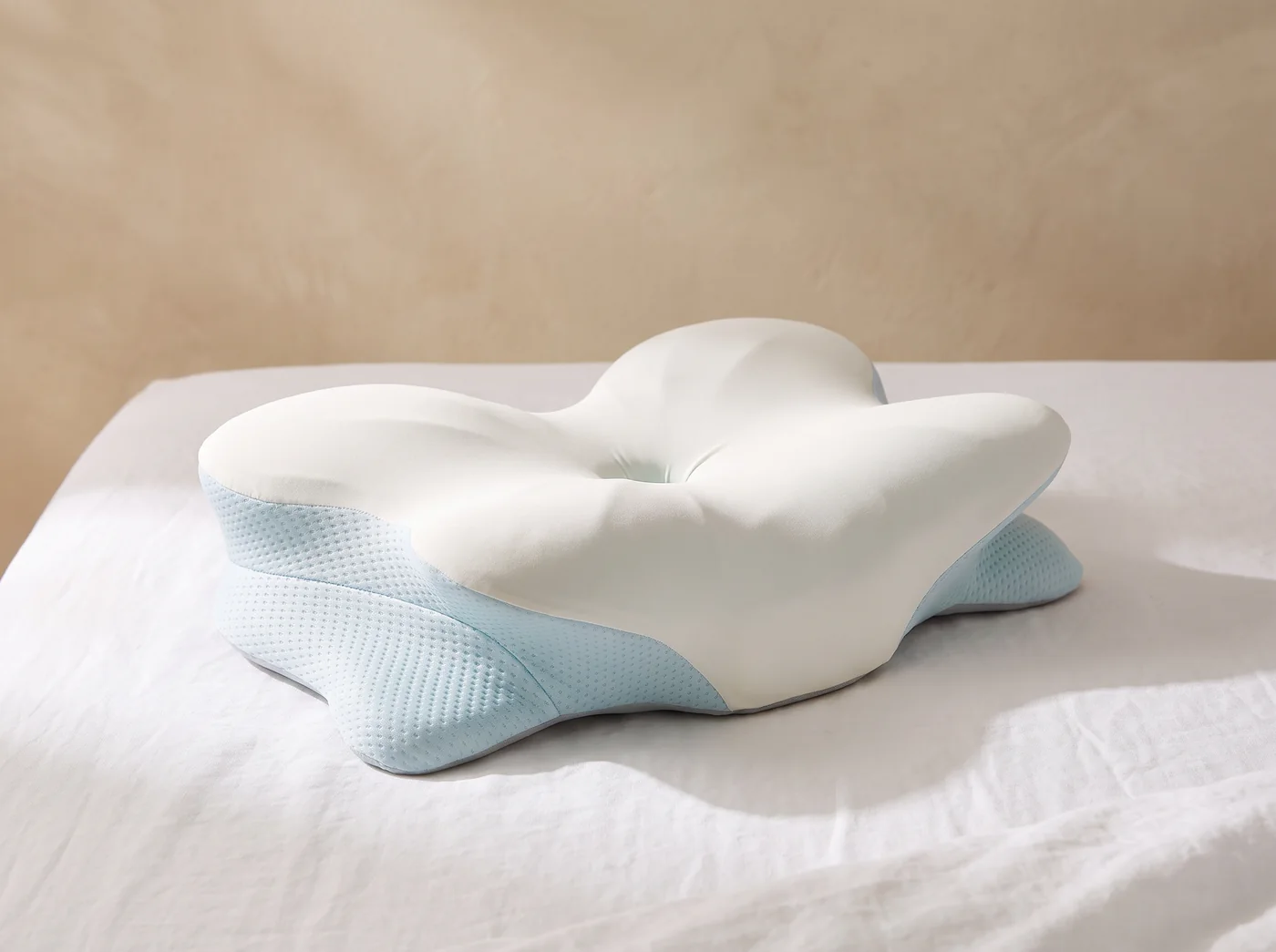
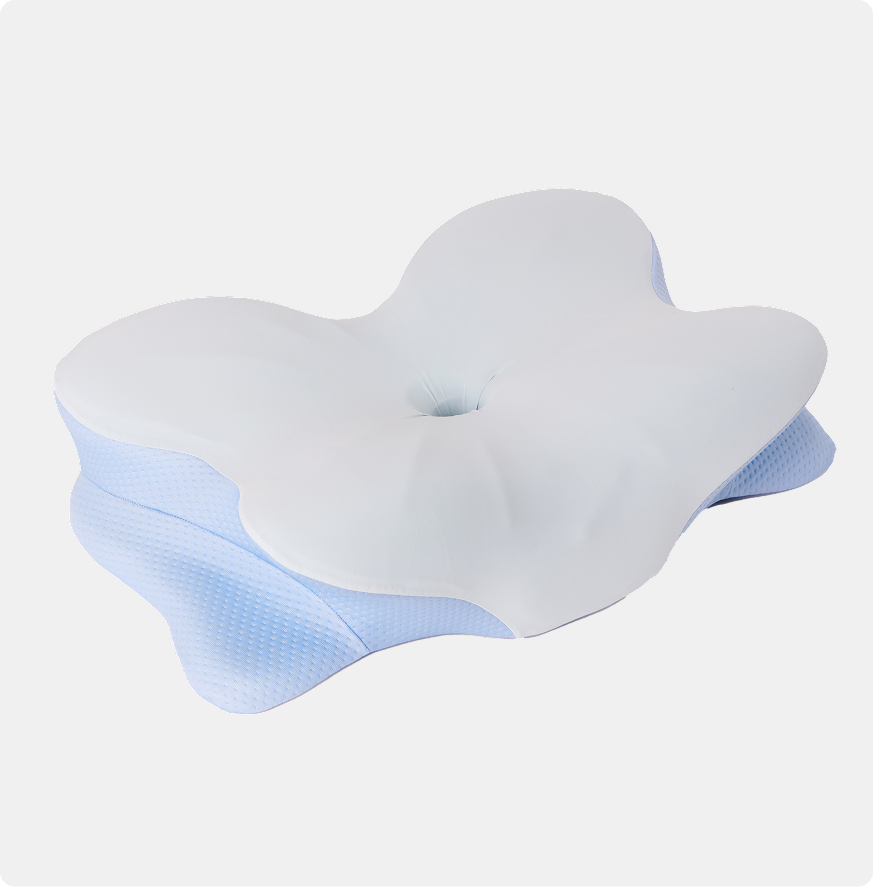
Why it fits most people with neck pain: the Derila Ergo is a medium-firm memory-foam pillow with a butterfly shape. It’s about 9 cm (3.5 in) in the center, which is right for most back sleepers, and about 12 cm (4.7 in) on the raised sides, which is right for most side sleepers. If you switch during the night, the height changes with you. You don’t have to find the right spot; the shape holds you there.
I have slept on it myself, and it’s the pillow I’d start with for neck pain. As a brand, Derila rates 4.1 out of 5 on Trustpilot across more than 46,000 reviews (checked October 2026).
- Side sleepers and back sleepers
- People who switch between the two
- Average or narrow shoulders
- Anyone who wants support without adjusting fill
- Stomach sleepers: use a flat pillow instead
- Very broad shoulders on a firm mattress: an adjustable pillow will reach your height
- It’s medium-firm, so give it 10 nights to settle in
| Pack | Price | Per pillow |
|---|---|---|
| 1 pillow | $59.99 | $59.99 |
| 2 pillows (our pick) | $99.98 | $49.99 |
| 4 pillows (3 + 1 free) | $149.96 | $37.49 |
Regular prices. The maker’s page shows today’s price and any sale. Every pack has a 60-day money-back guarantee. Shipping is worked out at checkout, and US delivery usually takes 8–12 business days plus 1–2 days to process.
Want the full picture first? Read our Derila review.
If the Derila doesn’t fit you
A fixed contour pillow can’t suit everyone. If your height from the finder is very low or very high, or you have a specific need, these are the pillows worth looking at. We haven’t tested these four ourselves. The details below come from each maker’s published specifications, and we earn nothing from them.
Strict back sleepers: Tempur-Pedic TEMPUR-Neck
A firm, narrow contour pillow made for lying on your back, listed at roughly 3.5 to 4.75 inches. It’s a poor fit if you roll onto your side. The maker’s published return policy only covers faulty pillows, so be sure before you buy. About $109 when we last checked.
Need to set your own height: Coop Home Goods Eden
Shredded foam fill that you add or take out until the height is right. It’s the safer choice if the finder gave you more than 5.5 inches (broad shoulders, firm mattress) or a very low number. Expect a few nights of adjusting.
Hot sleepers: Saatva Latex Pillow
A shredded latex core in an organic cotton cover. Latex sleeps cooler and springs back faster than memory foam. It’s a general-comfort pillow rather than a neck contour, listed at 4 to 7 inches, with a 45-day home trial. About $165.
Tight budget: Uttu Sandwich Pillow
A contour pillow with a removable middle layer, so you can make it lower. It’s an inexpensive way to try a contour shape, though buyers commonly report the foam softening sooner than on pricier pillows.
Not sure whether foam or latex suits you? We compare them in memory foam vs latex for neck pain.
Pick your situation
Some kinds of neck pain change what the pillow has to do. If one of these sounds like you, the dedicated guide goes further than this page.
Give a new pillow 10 nights
If you’ve slept on a soft, flat pillow for years, your neck is used to that position, even if it’s the one causing the pain. A pillow that corrects it can feel strange at first. Nights 3 to 7 are usually the hardest, and most people who give up on a contoured pillow do it in that window. By around night 10 you’ll know whether it’s right for you. If it still hurts after two weeks, the height is probably off: check your number above, and see how long a new pillow takes to stop hurting.
What about water, buckwheat and wedge pillows?
Water pillows have the only clinical trial in this category. A small 1997 study in Archives of Physical Medicine and Rehabilitation found a water-filled pillow did best on pain and sleep quality among the pillows compared. It was one small study. They’re heavy, can leak, and need refilling as the water level drifts. They’re worth trying if two contoured pillows haven’t worked.
Buckwheat pillows hold whatever shape you press into them and stay cool, but the hulls rustle every time you move.
Wedge pillows raise your whole upper body, which helps reflux and congestion but not a stiff neck. Used alone, a wedge tips your head forward. If you need one, put a proper pillow on top of it.
“Cervical pillow” and “orthopedic pillow” aren’t regulated terms. Both usually just mean a contoured foam pillow, so don’t pay extra for the label.
When it isn’t the pillow
A pillow fixes one thing: your head being held at the wrong angle all night. If your neck is worst in the first few minutes after waking and loosens up as you move, a better pillow is very likely to help. If your mornings are fine and the pain builds through the day, look at your desk and screen setup first. Our guide to how to stop waking up with neck pain covers the fixes that aren’t about the pillow.
- You have numbness, tingling or weakness down an arm or into the hand
- The pain started after a fall, a crash or another impact
- Pain wakes you during the night, rather than being there when you wake
- There’s fever, unexplained weight loss, or the pain is getting worse week by week
- You have trouble with balance, walking, or small hand movements like buttons and keys
The bottom line
Work out your height first, then pick the pillow that matches it. For most side and back sleepers, and anyone who switches between them, that’s a contoured pillow with a lower center and higher sides, and the Derila Ergo is the one we’d start with. You have 60 days to decide, so give it at least 10 nights before you judge it.
Questions people ask
What type of pillow is best for neck pain?
For most side and back sleepers, a medium-firm contoured memory-foam pillow with a lower center and higher sides. It holds your neck at the right height without you having to find the spot. What matters most is that the height matches your position, your build and your mattress.
Is a higher or lower pillow better for neck pain?
It depends on how you sleep. An average-build side sleeper on a medium mattress needs about 4.5 to 5.5 inches, and a back sleeper about 3.25 to 4.25 inches. Stomach sleepers need 1 to 2 inches, or none. A softer mattress means a lower pillow, because your shoulder sinks in.
Can the wrong pillow cause neck pain?
Yes. A pillow that holds your head too high or too low for seven or eight hours keeps your neck muscles and joints under strain all night. That’s the most common reason people wake up stiff and loosen up after moving around.
How long should I try a new pillow before deciding?
At least 10 nights, and up to 14. Nights 3 to 7 are often the hardest, because your neck is used to its old position. Most people who return a contoured pillow in the first week do it during this adjustment, not because the pillow is wrong.
Are expensive pillows better for neck pain?
Not necessarily. Price buys materials and finish, not the right height for you. A $60 pillow at the right height will do more for neck pain than a $165 pillow at the wrong one.
When should I see a doctor instead of changing my pillow?
See a doctor or physical therapist if you have numbness, tingling or weakness down an arm; if the pain started after a fall or crash; if pain wakes you in the night; if there’s fever, unexplained weight loss or steadily worsening pain; or if you have trouble with balance, walking or fine hand movements.
Disclosure: Sleep Align is reader-supported. If you buy through our Derila links we may earn a commission, at no extra cost to you. We have no relationship with Tempur-Pedic, Coop Home Goods, Saatva or Uttu, and those four were described from the makers’ published details, not tested by us. Nothing here is medical advice.
Waking up with a stiff neck?
Get the free guide — the 7 real causes of morning neck pain and the exact fix for each. Straight to your inbox.
4 Comments
Comments are closed.