The Ergonomic Pillow Explained: What the Design Actually Does for Your Neck
Quick answer: A genuinely ergonomic pillow is built around cervical spine geometry rather than simply being shaped differently from a rectangle. It has two zones: a raised perimeter, or wings, that gives higher loft for side sleeping so the head is held level with the thoracic spine, and a lower central section that lets a back sleeper’s head sit naturally while a raised lower edge supports the forward lordotic curve of the neck. Rolling from back to side transitions between those profiles without repositioning. It is not suitable for stomach sleepers, firmness still has to match body weight and shoulder dimensions, and memory foam contours often need 3–7 nights of adjustment.
“Ergonomic” is one of the most overused words in pillow marketing. Every brand applies it, often to pillows that are simply shaped differently from a standard rectangle. A truly ergonomic pillow design is one built around the specific geometry of the human cervical spine and the mechanical demands placed on it during sleep. Here is what that actually means.
What the Cervical Spine Needs During Sleep
The cervical spine has a natural lordotic curve — it bows gently forward when viewed from the side. During back sleeping, the pillow needs to support this curve without flattening it (too high) or allowing it to reverse (too low). During side sleeping, the pillow needs to hold the head level with the thoracic spine — no lateral bend in either direction.
A flat rectangular pillow addresses neither of these requirements with any precision. It simply provides a raised surface; how well it supports the cervical spine depends almost entirely on whether the user happens to compress it to the right height by chance.
What Ergonomic Contour Design Actually Does
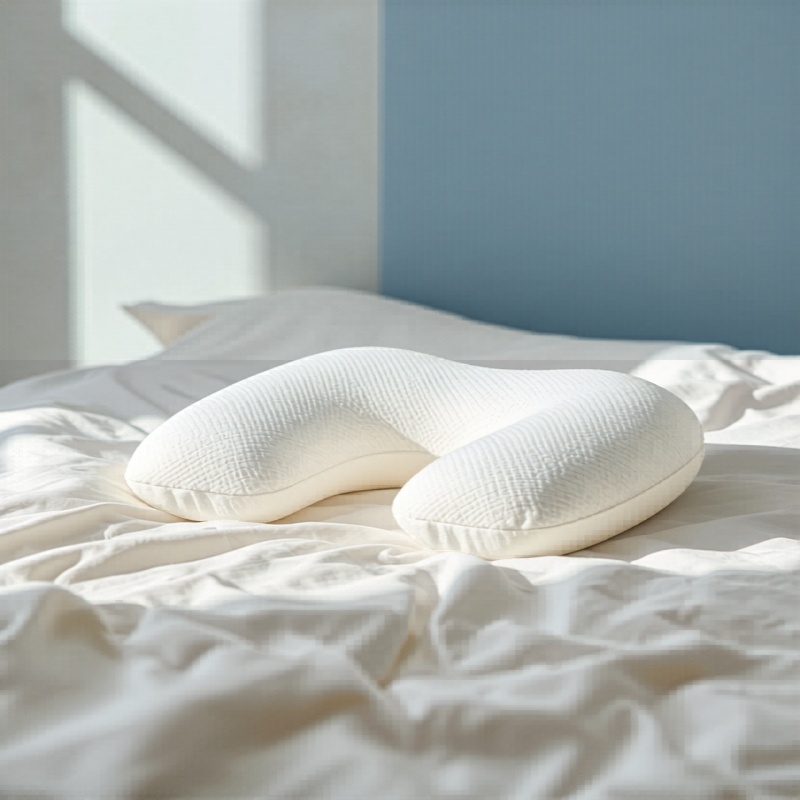
A properly contoured ergonomic pillow has two distinct zones built into its shape:
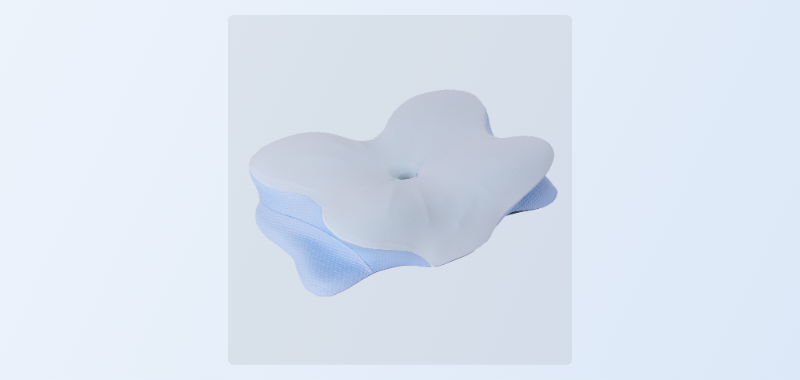
- A raised perimeter (wings or bolsters): Provides higher loft support for side sleeping — the head rests in the wing while the neck is supported at a height that matches the shoulder-to-ear distance. The raised edge does not require the pillow to be uniformly thick, which would overshoot back sleepers.
- A lower central section: Allows the head to sit in a natural position for back sleeping while a raised lower edge supports the natural cervical curve. The head is not pushed forward, and the neck is not unsupported.
The Derila uses this dual-zone approach in its memory foam contour. When you roll from back to side during the night, the pillow transitions support profiles rather than requiring you to reposition. This is the practical advantage of ergonomic design over a flat pillow: it maintains correct support across position changes without the user actively managing it.
Genuine Ergonomic Design
🛏 Derila — Built Around Cervical Spine Geometry
Dual-zone contour that works for side and back sleeping. Memory foam that holds the design shape all night.
Read the Full Review →What Ergonomic Does Not Mean
- It does not mean the pillow is universally correct for all sleepers — a contoured pillow designed for side and back sleeping is not appropriate for stomach sleepers
- It does not mean harder is better — the firmness still needs to match the sleeper’s body weight and shoulder dimensions
- It does not guarantee immediate comfort — memory foam contours feel different from standard pillows and often require 3–7 nights of adjustment before the neck adapts to correct alignment
The adjustment period is worth acknowledging: if your neck has been in incorrect alignment for months or years, a pillow that holds it correctly will feel unusual at first. Mild neck awareness (not pain) in the first week is normal. Sustained or worsening pain is not — in that case, the pillow’s loft or firmness may be incorrect for your specific anatomy.
The Pillow We Recommend for This
60-day money-back guarantee · Ergonomic contour for side and back sleepers.
More Pillow Guides
Recommended for Pain-Free Sleep
🛌 Derila Ergonomic Memory Foam Pillow
Contoured design that holds your cervical spine in neutral for the full night. Works for side and back sleepers. Backed by a 60-day money-back guarantee on the official store.
- ✓ Memory foam contour
- ✓ Side & back sleeper design
- ✓ 60-day money-back guarantee