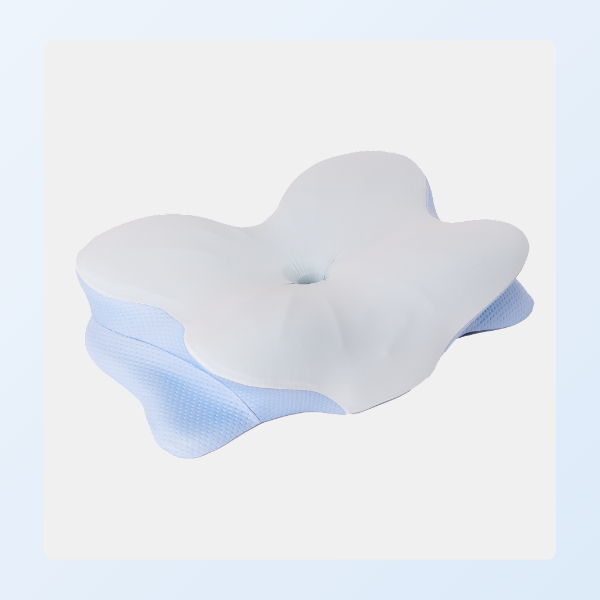

Memory Foam vs. Latex Pillow: Which One Actually Fixes Neck Pain?
Every morning, millions of people wake up with stiff necks and dull headaches — and blame their mattress. But more often than not, the real culprit is the pillow. Two of the most popular pillow types today are memory foam and latex, and choosing between them can make a dramatic difference in how you feel when you wake up. Here’s the honest breakdown.
⭐ Our #1 Recommended Pillow — proper cervical support that actually holds through the night.
What Is Memory Foam?
Memory foam (also called viscoelastic foam) was originally developed by NASA in the 1960s. It responds to heat and pressure, slowly contouring to the shape of your head and neck. This “hugging” effect is what makes it so popular for pain relief.
Memory Foam Pros
- Excellent pressure relief — It cradles the cervical spine and reduces pressure points.
- Widely available and affordable — Good memory foam pillows start around $30–$60.
- Motion isolation — Great if you share a bed, as movement doesn’t transfer.
Memory Foam Cons
- Retains heat — Traditional memory foam traps body heat, which can disrupt sleep for hot sleepers.
- Off-gassing smell — New memory foam pillows often have a chemical odour that can take days to dissipate.
- Slow response — If you move positions at night, memory foam takes time to adjust.
What Is Latex?
Latex pillows are made from natural or synthetic rubber. Natural latex comes from the sap of rubber trees and is one of the most durable pillow materials available. Unlike memory foam, latex is bouncy and responsive — it pushes back against your head rather than cradling it.
Latex Pros
- Responsive and supportive — Springs back immediately when you shift positions, making it easier to move.
- Naturally cooling — Latex is more breathable than traditional memory foam, sleeping cooler.
- Hypoallergenic — Natural latex resists dust mites, mould, and bacteria.
- Long-lasting — A quality latex pillow can last 5–10 years.
Latex Cons
- Heavier — Latex pillows are noticeably denser and harder to adjust at night.
- More expensive — Natural latex pillows typically cost $80–$150.
- Not ideal for latex allergies — A small percentage of people have sensitivities to natural latex.
Which One Is Better for Neck Pain?
The answer depends on your sleep position.
Side sleepers tend to do better with latex. The firmness maintains proper spinal alignment between the shoulder and ear, which is the crucial measurement for side sleeping. Memory foam can compress too much under the shoulder weight, causing the neck to tilt downward.
Back sleepers often prefer memory foam. The contouring fills the natural curve of the neck (the cervical lordosis) and cradles the base of the skull gently. A medium-loft memory foam pillow is ideal here.
Stomach sleepers (the hardest position for neck health) should use the thinnest pillow possible regardless of material — ideally no pillow at all or a very flat option.
The Verdict
Both materials can fix neck pain — but only if matched to your sleep style. If you run hot and change positions frequently, latex is the better investment. If you sleep mainly on your back and want pressure relief at a lower price, memory foam delivers excellent results.
The biggest mistake people make is buying a pillow based on brand name alone. Match the material to your sleep position first, then consider loft height, and finally price. Your neck will thank you. For a tested memory foam option shaped for cervical support, see our Derila ERGO review.
Further Reading
- Pillow Firmness Guide
- How to Choose the Right Pillow for Your Sleep Position
- Our top pillow recommendation →
Frequently Asked Questions
Which is better for hot sleepers: memory foam or latex?
Latex is generally better. Its open-cell structure allows more airflow than traditional memory foam. Gel-infused memory foam helps but latex still leads on breathability.
How long does a latex pillow last?
5-7 years, compared to 2-3 years for most memory foam pillows. The higher upfront cost is offset by the longer lifespan.
Which is better for side sleepers?
Both can work well. Memory foam provides better shoulder pressure relief; latex offers more consistent support. Heavier side sleepers often prefer memory foam.