
ArcticBlast for Knee Pain: Does It Actually Work? (2026)
Knee pain is one of the most common reasons people reach for a topical pain relief product — and one of the hardest to treat effectively. Most creams and gels sit on the surface and never reach the joint tissue where the pain actually originates.
ArcticBlast works differently. Its DMSO (dimethyl sulfoxide) carrier is clinically known to penetrate skin and deliver active compounds into deeper tissue — including around the knee joint. This guide covers what to expect, how to apply it, and who sees the best results.
Why Most Topicals Fail for Knee Pain
The knee joint sits beneath several layers of tissue — skin, fascia, fat, and muscle. Standard menthol-based creams create a cooling sensation on the skin surface but rarely penetrate deep enough to affect the joint itself. The active compounds evaporate or bind to surface tissue before reaching where the inflammation or pain signal originates.
This is why people find that standard topical products work well for superficial muscle soreness but disappoint for joint-level pain like knee osteoarthritis, patellar tendinitis, or post-injury stiffness.
How ArcticBlast Reaches Knee Joint Tissue
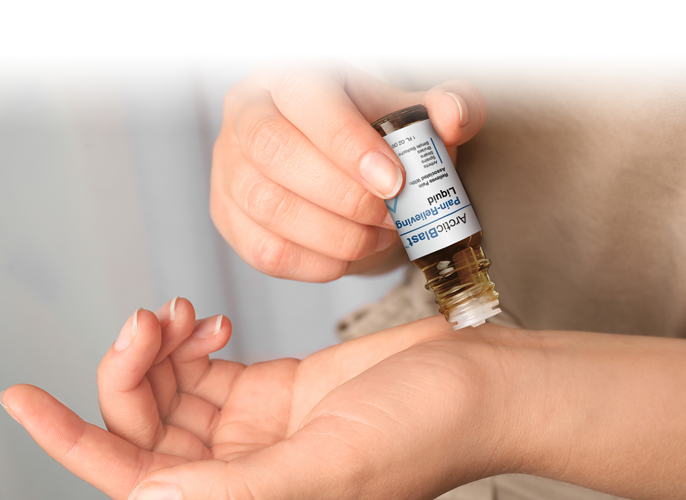
ArcticBlast uses DMSO as its primary carrier compound. DMSO is a well-studied solvent that has the unusual ability to pass through intact skin and carry dissolved molecules with it. When you apply ArcticBlast to the knee, the DMSO doesn’t just sit on the surface — it actively transports the formula’s active ingredients (including camphor, aloe vera extract, and menthol) through the dermal layers toward the underlying tissue.
For knee pain, this matters significantly. The difference between a product that penetrates to joint-adjacent tissue and one that stays at the surface is the difference between actual pain modulation and temporary distraction.
60-Day Test: ArcticBlast on Knee Pain
During our 60-day test of ArcticBlast across multiple pain types, the knee was one of the four sites we tracked consistently. The tester had ongoing left knee discomfort from a running injury — specifically patellar tendinitis that had been present for approximately 8 months before the test began.
Week 1–2: Immediate cooling relief within minutes of application. Stiffness after sitting for long periods felt noticeably reduced when ArcticBlast was applied before getting up. No reduction in underlying chronic pain yet.
Week 3–4: Post-exercise soreness recovered faster with application directly after activity. The area around the kneecap felt less tender to the touch. Applied 3 times daily during this phase.
Week 5–8: Cumulative improvement became clear. Morning stiffness — previously lasting 20–30 minutes after waking — reduced to under 10 minutes. The tester was able to resume light running at week 7, which had been avoided for 3 months.
Results won’t be identical for everyone — the underlying cause and severity of knee pain varies widely. But the trajectory was consistent with other user reports: modest early relief that builds meaningfully with consistent use.
Which Types of Knee Pain Respond Best
Osteoarthritis knee pain — This is where ArcticBlast sees the most consistent positive feedback. Arthritis-related inflammation and stiffness respond well to the anti-inflammatory compounds that DMSO carries into the joint area. Morning stiffness and activity-related flare-ups are particularly responsive.
Post-exercise soreness — Lactic acid buildup and micro-trauma from exercise responds quickly to topical application, typically within one session. Athletes and active users report applying after workouts as a recovery tool.
Patellar tendinitis — Inflammation around the kneecap tendon is accessible to topical treatment. Results are slower than surface muscle pain but more consistent than with standard creams.
Bursitis — The bursae around the knee are relatively close to the surface, making them accessible to DMSO-carried compounds. Users with prepatellar or pes anserine bursitis report good results.
Structural damage (torn meniscus, ACL): ArcticBlast is not a substitute for medical treatment of structural knee injuries. It can reduce associated inflammation and pain around the injury site but cannot repair damaged tissue. Use as a complementary measure alongside medical care, not instead of it.
How to Apply ArcticBlast for Knee Pain
Application technique matters more for the knee than for larger muscle groups. The joint has multiple distinct pain points — front of the kneecap, sides of the joint line, and the soft tissue behind the knee (popliteal area). Covering all relevant points improves results.
Step 1: Clean and dry the knee area. Remove any lotions or other products — these can interfere with DMSO penetration.
Step 2: Apply 4–6 drops directly onto the skin around the knee. For osteoarthritis, concentrate on the joint line (the gap between the upper and lower leg bones, felt on the sides of the knee).
Step 3: Massage in with circular motions for 30–45 seconds. The skin will absorb the product quickly — don’t rinse.
Step 4: Allow 5–10 minutes before covering with clothing. Tight compression (knee sleeves) worn immediately after application can reduce absorption.
Frequency: For chronic knee pain, apply 2–3 times daily. For post-exercise recovery, once immediately after activity is sufficient.
Try ArcticBlast for Knee Pain
365-Day Money-Back Guarantee
DMSO-powered formula · Penetrates to joint tissue · Fast-acting cooling relief
Get ArcticBlast →Official site only · Bundle discounts available
Frequently Asked Questions
Does ArcticBlast work for knee pain?
Yes, particularly for inflammation-related knee pain such as osteoarthritis, bursitis, and tendinitis. The DMSO carrier gives it an advantage over standard topicals by enabling deeper tissue penetration. Results build over 2–4 weeks of consistent daily use.
How long does it take to work?
Initial cooling relief comes within 2–5 minutes. Deeper pain reduction develops over 20–30 minutes per application. For chronic conditions, meaningful cumulative improvement typically appears after 2–4 weeks of regular use.
Can I use it with a knee brace or compression sleeve?
Wait at least 5–10 minutes after applying before putting on a sleeve or brace. Tight compression applied too soon can impede absorption. After the product has been absorbed, wearing a sleeve is fine and won’t affect results.
Is ArcticBlast suitable for knee replacement recovery?
Consult your surgeon before applying any topical product near a surgical site. Post-operative tissue is different from intact skin, and DMSO penetration near a recent incision or implant is not advisable without medical guidance.
Further Reading
- ArcticBlast Review: Full 60-Day Test Results
- Does ArcticBlast Work? Evidence and Test Results
- ArcticBlast Ingredients: What’s Actually Inside
- ArcticBlast for Shoulder Pain
- ArcticBlast for Back Pain
- ArcticBlast Discount & Best Price Guide
Also see: ArcticBlast for Wrist and Hand Pain — test results for carpal tunnel and RSI.