Why Your Pillow Is Causing Your Neck Pain (And the Fix Most People Miss)
If you wake up with neck stiffness that loosens over the first hour of the day, your pillow is almost certainly part of the problem. The overnight position your head and neck are held in for 7–8 hours has more influence on your neck health than any exercise, stretch, or treatment you do during the day.
Most people replace their pillow when it becomes visibly flat or lumpy. By that point they have been sleeping on inadequate support for years. The fix is not complicated — but it requires understanding what “support” actually means for your specific sleep position.
The Cervical Neutral Position: What You Are Aiming For
Your pillow has one structural job: keep your cervical spine in the same alignment it has when you are standing with good posture. That means no forward bend, no backward extension, no lateral tilt. When your neck holds this neutral position for the full duration of sleep, the posterior neck muscles, facet joints, and intervertebral discs are under minimal load. When it does not, those structures are under sustained strain for hours.
The problem is that “neutral” requires a different pillow depending on how you sleep. A pillow that holds a side sleeper in perfect alignment will hold a back sleeper in 30 degrees of neck flexion.
The Most Common Pillow Mistakes by Sleep Position

- Side sleepers with a flat pillow: The head drops toward the mattress. This laterally compresses the neck on the lower side and overstretches the upper trapezius on the top side. The result: the classic “one-sided” neck pain on waking.
- Back sleepers with a thick pillow: The chin is pushed toward the chest (cervical flexion) for the whole night. This compresses the posterior facet joints and stretches the posterior ligaments — precisely the structures that are already irritated in most people with chronic neck pain.
- Stomach sleepers with any pillow: Full cervical rotation for 7–8 hours. This is the worst position for neck health regardless of pillow choice. If you are a stomach sleeper with chronic neck pain, this needs to change.
What a Correctly Designed Ergonomic Pillow Does
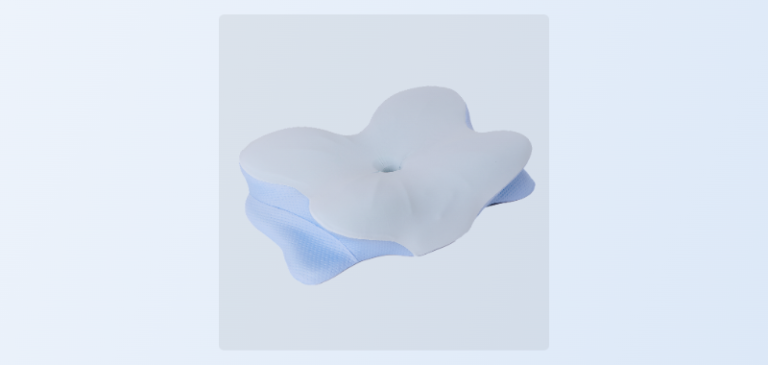
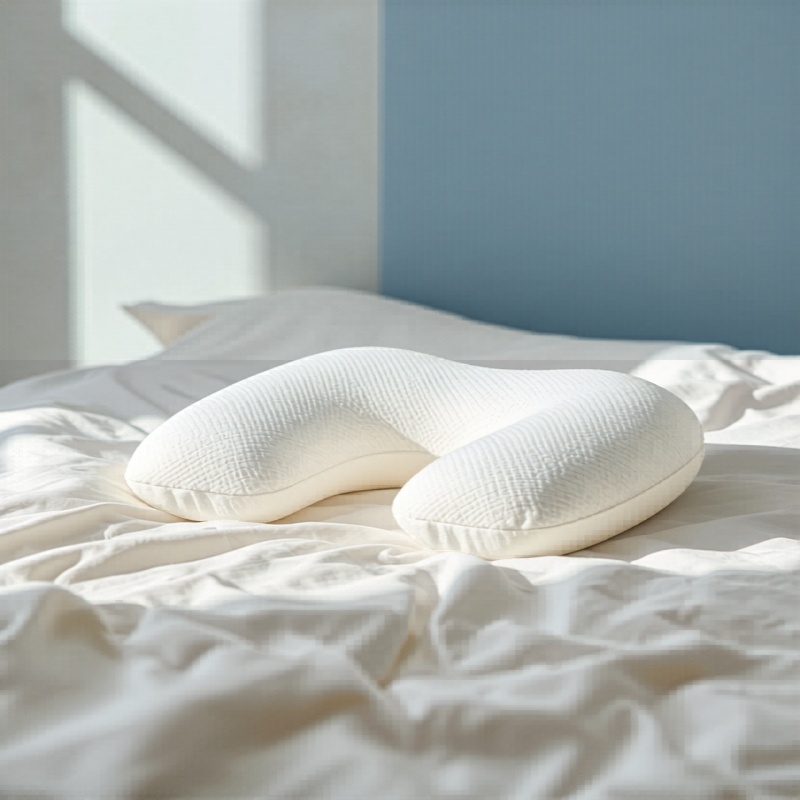
An ergonomic pillow like the Derila is designed around the geometry of the cervical spine rather than just providing a soft surface. The contoured shape provides higher support at the edges (for side sleeping) and a lower, cradle profile in the centre (for back sleeping) — in a single pillow that works for both positions.
The Fix for Pillow-Caused Neck Pain
🛏 Derila Ergonomic Pillow — Designed for Cervical Neutral
Memory foam contour that adapts to your position. Supports both side and back sleepers. 30-night trial.
Read the Full Review →The memory foam material is a key part of this. Unlike a standard pillow that compresses to the same flat shape regardless of where pressure is applied, memory foam responds to the specific shape of your head and neck, distributing weight evenly across the contact surface. This eliminates the pressure points that cause the “I need to keep shifting position” pattern that many chronic neck pain sufferers experience.
When to Replace Your Current Pillow
- It compresses flat within an hour of lying on it
- You wake with neck pain that goes away during the day (positional sign)
- It is more than 2 years old (standard pillows)
- The fold test: fold the pillow in half — if it stays folded rather than springing back, it has lost its support capacity
The single highest-leverage change most chronic neck pain sufferers can make is replacing a worn or incorrectly matched pillow with one designed for their sleep position. It costs less than a physiotherapy session and works every night.

About the Author
Certified Health & Wellness Coach · Pain Relief Specialist
Sarah Brennan spent 11 years managing chronic neck and shoulder pain after a rear-end collision left her with cervical disc damage. She tried physical therapy, prescription muscle relaxants, cortisone injections, and a dozen over-the-counter creams before discovering that topical DMSO formulations worked where everything else failed. That personal experience turned into a side project: testing and documenting pain relief products with honest, skeptical reviews grounded in how they actually feel to use. She now writes for Sleep Align, focusing on topical analgesics and sleep ergonomics, and has reviewed more than 40 pain relief products over the past four years. She holds a certificate in Health and Wellness Coaching from the National Board for Health and Wellness Coaching (NBHWC).
More Pillow Guides
Recommended for Pain-Free Sleep
🛌 Derila Ergonomic Memory Foam Pillow
Contoured design that holds your cervical spine in neutral for the full night. Works for side and back sleepers. Backed by a 30-night trial.
- ✓ Memory foam contour
- ✓ Side & back sleeper design
- ✓ 30-night trial