Sleep Ergonomics 101: Building a Pain-Free Sleep Setup From Scratch

Sleep ergonomics — the practice of engineering your sleep environment for physical recovery — is one of the most underutilised tools in chronic pain management. Most people spend more time configuring their desk chair than their sleep setup, despite sleeping 7–9 hours per night and sitting for perhaps 6–8. The consequence is a chronic mismatch between the demands of recovery sleep and the environment that is supposed to provide it.
This guide covers each component of a sleep ergonomics setup in the order of importance for pain outcomes.
1. The Pillow (Highest Impact for Neck and Shoulder Pain)
The pillow is the highest-leverage component for people with neck, shoulder, or upper back pain — because it determines the position of the head and cervical spine for the entire duration of sleep.

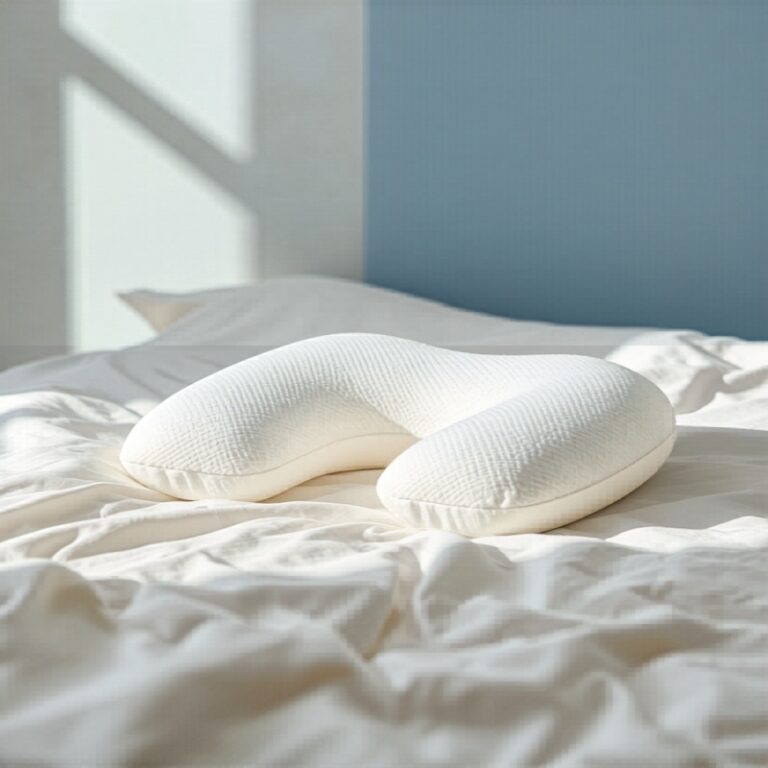
For most people with chronic neck pain, an ergonomic contoured memory foam pillow — one designed around cervical spine geometry rather than general comfort — is the correct specification. The Derila is designed for this: a dual-zone contour that supports cervical neutral for both side and back sleeping, made from memory foam that holds its shape and loft consistently through the night.
Start With the Pillow
🛏 Derila — Ergonomic Memory Foam Pillow
The highest-impact change for neck and shoulder pain. Contoured design, 30-night trial.
Read Full Review →2. The Mattress (Highest Impact for Back and Hip Pain)
The mattress determines the position of the thoracic and lumbar spine during sleep. A mattress that is too soft allows the hips to sink, creating lumbar flexion that strains the posterior elements of the lower back. A mattress that is too firm creates pressure points at the hips and shoulders (for side sleepers) that cause pain through their own contact discomfort.
Medium-firm is the most consistently recommended specification for spinal health, with adjustments based on body weight. Heavier people distribute more force per unit area and may need a slightly firmer mattress to prevent excessive sinkage; lighter people can often use medium.
3. Sleep Position
- Back sleeping is optimal for spinal alignment when paired with the correct pillow height
- Side sleeping is excellent for airway patency and acceptable for spinal alignment with the right pillow and a knee pillow
- Stomach sleeping creates cervical rotation and lumbar extension that no pillow configuration can fully mitigate
4. Room Temperature
A room temperature of 16–19°C (60–67°F) optimises sleep architecture — specifically the proportion of slow-wave (deep restorative) sleep. Warmer rooms reduce slow-wave sleep, increase nighttime waking frequency, and elevate the perception of pain during sleep. For people with chronic pain, this is not a minor optimisation — it is a material factor in how restorative their sleep is.
5. Pain Management as Part of Sleep Ergonomics
For people with active chronic pain, sleep ergonomics includes a pre-bed pain management protocol. The physical setup (pillow, mattress, position) addresses structural contributors to overnight pain. A topical pain reliever addresses the tissue-level inflammatory and analgesic component. Both are needed for the full stack — the pillow cannot address active tissue inflammation, and the topical cannot fix a structural alignment problem.
See our ArcticBlast review for the topical pain relief option we recommend for pre-bed use. Combined with a correctly specified pillow like the Derila, this two-component approach addresses both the structural and the pharmacological causes of pain-disrupted sleep.

About the Author
Certified Health & Wellness Coach · Pain Relief Specialist
Sarah Brennan spent 11 years managing chronic neck and shoulder pain after a rear-end collision left her with cervical disc damage. She tried physical therapy, prescription muscle relaxants, cortisone injections, and a dozen over-the-counter creams before discovering that topical DMSO formulations worked where everything else failed. That personal experience turned into a side project: testing and documenting pain relief products with honest, skeptical reviews grounded in how they actually feel to use. She now writes for Sleep Align, focusing on topical analgesics and sleep ergonomics, and has reviewed more than 40 pain relief products over the past four years. She holds a certificate in Health and Wellness Coaching from the National Board for Health and Wellness Coaching (NBHWC).
More Pillow Guides
Recommended for Pain-Free Sleep
🛌 Derila Ergonomic Memory Foam Pillow
Contoured design that holds your cervical spine in neutral for the full night. Works for side and back sleepers. Backed by a 30-night trial.
- ✓ Memory foam contour
- ✓ Side & back sleeper design
- ✓ 30-night trial