
Best Pillow for Torticollis (Wry Neck) in 2026: What Helps at Night
Quick answer: for an adult with acute wry neck (the stiff, twisted neck you wake up with), the pillow’s job is to hold your head still in a neutral position so the sore muscles are not stretched all night. The NHS advice for a stiff neck is a low, firm pillow. In practice that means about 3.25–4.25 in (8.3–10.8 cm) under your head on your back, or 4.5–5.5 in (11.4–14 cm) on your side, for an average build on a medium mattress. Sleep on your back or on whichever side lets your head rest straight without pain, and avoid your stomach. Most acute wry necks start easing within a few days. Babies with torticollis are different: they should sleep on their back on a flat surface with no pillow.
This is general information about sleep comfort, not medical advice. If your neck pain followed an injury, or comes with any of the warning signs listed further down, see a doctor first.
Torticollis simply means a twisted neck: the head tilts or turns to one side and straightening it hurts. The version most adults search for at night is acute wry neck, which usually appears overnight or on waking, often after sleeping in an awkward position. It is painful and alarming, but it is common and usually settles by itself. What you sleep on while it settles decides whether each night helps or undoes the day’s progress.
Which Torticollis Do You Have?
| Type | Who gets it | What it feels like | Is a pillow relevant? |
|---|---|---|---|
| Acute wry neck | Adults and older children | Sudden stiffness and pain, head stuck turned or tilted, often on waking | Yes: a low, firm pillow and a neutral position help it settle |
| Congenital muscular torticollis | Babies, usually noticed in the first weeks | Head tilted to one side, a preferred direction to look | No pillows. Safe infant sleep rules apply; treatment is guided by a health visitor, GP or physiotherapist |
| Cervical dystonia (spasmodic torticollis) | Adults, most often in middle age | Involuntary muscle contractions that pull the head, often ongoing | Only for comfort. It is a neurological condition treated by a specialist |
The rest of this guide is about acute wry neck in adults.
Why Wry Neck Often Starts, and Stays Worse, at Night
When you are asleep, nothing stops your head settling at an angle for hours. If the pillow is too high, the neck is bent sideways or forwards; if it is too low, or you sleep on your front, the neck is twisted and tipped back. The muscles on one side end up held in a stretched or shortened position all night, and in the morning they guard against moving. Once the neck is already sore, the same position every night keeps re-provoking it.
That is why the goal overnight is not to “stretch it out”. It is to keep the head still and level, so the muscles can stop guarding.
The Pillow Height That Works
These are the working ranges from our pillow height calculator, measured with your head on the pillow rather than the height printed on the box. With a wry neck, aim for the middle of your range rather than the top: a pillow that is slightly too high tilts the head sideways, which is exactly the direction you are trying to avoid.
| Position | Average build, medium mattress | What the pillow has to do |
|---|---|---|
| On your back | 3.25–4.25 in (8.3–10.8 cm) | Fill the curve behind the neck without pushing the chin down |
| On your side | 4.5–5.5 in (11.4–14 cm) | Fill the gap between ear and mattress so the head does not drop towards the shoulder |
| On your front | Not recommended | Front sleeping forces the head to turn fully to one side, the movement a wry neck resists most |
Best Sleeping Positions for a Wry Neck
On your back (usually the easiest)
Lying on your back asks the least of the neck: nothing is rotated and the load is even on both sides. Use a low pillow that supports the curve of the neck, and keep your chin level with the ceiling rather than tucked. If your pillow is flat underneath the neck, a small rolled towel inside the pillowcase along the bottom edge can fill that gap.
On your side (fine if the height is right)
Side sleeping works if the pillow keeps your nose in line with your breastbone, so the head is neither dropping towards the mattress nor pushed up towards the ceiling. Try both sides: most people find one side lets the head rest straight with much less pain. Hug a pillow in front of you so you do not roll onto your front.
On your front (avoid while it settles)
You cannot breathe face-down without turning your head fully to one side, which is the position that hurts most with a wry neck. If front sleeping is a habit, a body pillow along your front makes it easier to stay on your side.
What to Look for in a Pillow
- Low and firm, not high and soft. A soft pillow lets the head sink and roll; a high one tilts it. The NHS advice for a stiff neck is a low, firm pillow.
- A shape that holds the neck. A contoured pillow, slightly higher under the neck than under the head, stops the head rolling to the sore side.
- One pillow, not two. Stacking pillows is the quickest way to end up with the head bent sideways all night.
- Something that keeps its height. Down and loose fibre compress through the night, so the pillow you fell asleep on is lower by morning.
Our Pick: The Derila Ergo
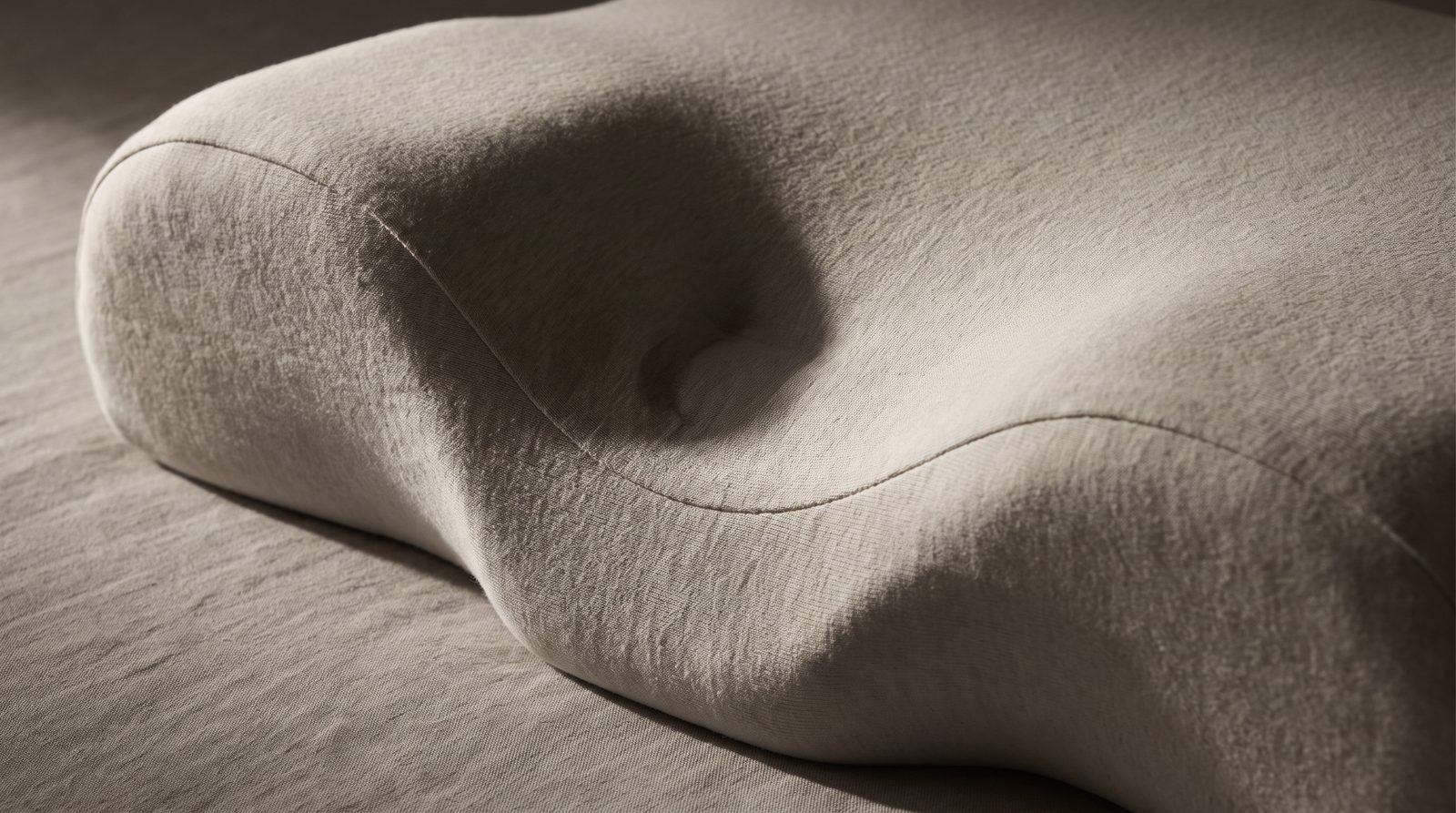
The Derila Ergo is a medium-firm contoured memory-foam pillow with a 9 cm (3.5 in) centre for lying on your back and 12 cm (4.7 in) raised edges for your side, so both positions sit inside the ranges above for an average build. The contour is what matters with a wry neck: it holds the head in the middle rather than letting it roll towards the painful side.
Be realistic about what it can do. No pillow fixes a muscle spasm; it removes the nightly strain so the neck can settle on its own. It is not suitable for front sleepers, and if you have broad shoulders on a soft mattress, check your number with the calculator first. It comes with a 60-day money-back guarantee.
Our pick for back and side sleepers with a stiff neck
Derila Ergo: 9 cm centre, 12 cm edges, medium-firm. 60-day money-back guarantee.
Check the Derila Ergo price →Affiliate link: we may earn a commission at no extra cost to you.
Babies With Torticollis: No Pillows
Congenital muscular torticollis in babies is a different condition, and nothing in this guide applies to it. Safe sleep guidance from the NHS and the American Academy of Pediatrics is clear: babies should sleep on their back, on a firm flat surface, with no pillows, positioners or wedges in the cot. Treatment for a baby’s tilted head is usually gentle stretching and positioning during awake time, guided by your health visitor, GP or a physiotherapist.
When to See a Doctor
Most acute wry necks improve within a few days. Get medical advice promptly if:
- the stiffness followed a fall, a car accident or any other injury
- you have a fever, a severe headache, or feel unwell
- you have numbness, tingling or weakness in an arm or hand
- you cannot touch your chin to your chest, or bright light hurts your eyes
- the pain is getting worse rather than better, or has not improved after a week or two
- your head keeps being pulled to one side by movements you cannot control
A stiff neck with fever, headache and sensitivity to light can be a sign of meningitis and needs urgent help: call emergency services.
Frequently Asked Questions
What is the best pillow for torticollis?
For an adult with acute wry neck, a low, firm, contoured pillow that keeps the head level: about 3.25–4.25 in on your back or 4.5–5.5 in on your side for an average build. The contour stops the head rolling towards the sore side. Babies with torticollis should not use a pillow at all.
How should I sleep with a wry neck?
On your back, or on whichever side lets your head rest straight without pain, with one pillow at the right height. Avoid sleeping on your front, because it forces the head to turn fully to one side.
Can the wrong pillow cause a wry neck?
It can contribute. Hours with the head bent or twisted, from a pillow that is too high, too low or too soft, or from sleeping on your front, is a common trigger for waking with a stiff, twisted neck.
How long does a wry neck last?
Most acute wry necks start easing within a few days. If yours is getting worse, has not improved after a week or two, or comes with fever, numbness or an injury, see a doctor.
Should a baby with torticollis use a pillow?
No. Babies should sleep on their back on a firm, flat surface with no pillows, positioners or wedges. Torticollis in babies is managed with stretching and positioning during awake time, guided by a health professional.
Related Guides
- How to sleep with a stiff neck
- Is my pillow too high or too low?
- Pillow height calculator
- Best pillow for cervicogenic headaches
- Best pillow for neck pain after a car accident
More Pillow Guides
Recommended for Pain-Free Sleep
🛌 Derila Ergonomic Memory Foam Pillow
Contoured design that holds your cervical spine in neutral for the full night. Works for side and back sleepers. Backed by a 60-day money-back guarantee on the official store.
- ✓ Memory foam contour
- ✓ Side & back sleeper design
- ✓ 60-day money-back guarantee