YU SLEEP Ingredients: What’s In It and What Each One Does
Quick answer: The official YU SLEEP page advertises "10 deep sleep restoring ingredients" and names nine of them: red tart cherry extract, 5-HTP, vitamins B6 and B2, magnesium glycinate, apigenin, lemon balm extract, L-theanine, melatonin at 0.9mg per serving, and GABA. The formula splits into two halves. One half feeds your body’s own melatonin production — 5-HTP is a serotonin precursor, vitamin B6 is the cofactor that converts it, and tart cherry supplies small natural amounts of melatonin and tryptophan. The other half works on the calming side — GABA, apigenin, L-theanine, lemon balm and magnesium. The melatonin itself is deliberately low at 0.9mg, against the 5-10mg in most supermarket tablets. The seller does not publish a full Supplement Facts panel, so melatonin is the only ingredient with a disclosed amount. That missing panel is what most of the scam accusations are actually built on, and it is worth knowing what it does and does not prove.
YU SLEEP Ingredients: What’s In It and What Each One Does
Every ingredient on the official YU SLEEP label — what each one actually does, how strong the evidence is, and what the seller does not tell you.
→ See the official ingredient list ✓ 60-day money-back guarantee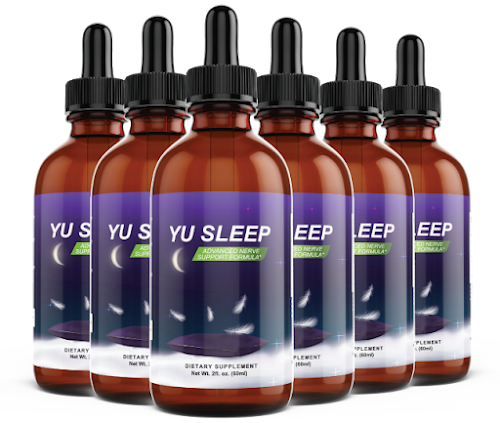
This is a more thoughtfully built formula than most sleep drops, and the logic behind it is easy to miss. Rather than throwing sedating herbs at the problem, it works two mechanisms at once: it feeds the pathway your body uses to make its own melatonin, and it separately supports the calming GABA side. Pairing 5-HTP with vitamin B6 is not decoration — B6 is the cofactor that conversion step needs. The genuine weakness is transparency: apart from melatonin at 0.9mg, no amounts are published, so you cannot check any ingredient against the doses used in research. For how strong the human evidence is behind each of these individually, see our ingredient-by-ingredient evidence review.
A Note on What Is Not In It
A lot of the sleep-supplement write-ups online describe YU SLEEP as containing ashwagandha, valerian root and passionflower. It does not contain any of those. They are common in competing products, which is probably where the confusion started. If those specific herbs are what you are looking for, this is not the product — and it is worth knowing that before you order rather than after the bottle arrives.
Why the Liquid Format Matters
YU SLEEP is a sublingual liquid taken as two droppers about 30 minutes before bed. Held under the tongue, some portion is absorbed through the mucous membrane rather than passing through the digestive tract, which is generally faster than waiting for a capsule to dissolve. Vendors tend to overstate how big this difference is, but the direction is right, and it is part of why the melatonin dose can be kept low.
Full Ingredient Breakdown
1. Melatonin — 0.9mg
Role: The hormone that signals your sleep-wake cycle. It does not sedate you; it tells your body the biological night has started, which lowers core temperature and heart rate.
Why the low dose is the point: Most pharmacy melatonin sits at 5-10mg. Research has repeatedly found the 0.3-1mg range works about as well for sleep onset while producing much less next-morning grogginess — higher doses mostly just linger in your bloodstream past sunrise. At 0.9mg this is one of the few products that actually follows the evidence, and it is the strongest single thing in its favour.
2. 5-HTP
Role: A direct precursor to serotonin, which your body then converts into melatonin. The idea is to support your own production rather than only supplying the finished hormone.
Honest read on the evidence: 5-HTP is well established as a serotonin precursor. Its evidence specifically for improving sleep in humans is thinner than the marketing around it suggests — the studies are small and mixed.
Safety, and this one is not optional: Because it raises serotonin, 5-HTP should not be combined with SSRIs, SNRIs, MAOIs, triptans, tramadol or St John’s Wort without your prescriber’s approval. See our side effects page for the full interaction list.
3. Vitamins B6 and B2
Role: B6 is the cofactor for the enzyme that converts 5-HTP into serotonin. Without adequate B6, that conversion runs slower — so including it alongside 5-HTP is a genuinely sensible piece of formulation rather than filler. B2 (riboflavin) plays a supporting role in energy metabolism.
Expect this: Riboflavin turns urine bright yellow. Harmless, and it catches people off guard.
4. Red Tart Cherry Extract
Role: One of the few foods containing meaningful natural melatonin, plus tryptophan and anthocyanins. Positioned here to support the sleep-wake cycle and reduce night-time awakenings.
Honest read on the evidence: Small trials on tart cherry juice have found modest improvements in sleep time and efficiency. "Modest" is the operative word — useful as a supporting ingredient, not a headline act.
5. GABA
Role: The brain’s main inhibitory neurotransmitter — the one that quiets overactive signalling. Prescription sleep drugs work on this system.
The honest caveat: Whether GABA taken by mouth crosses the blood-brain barrier in useful amounts is genuinely contested among researchers. Some studies suggest an effect via the gut-brain axis instead. Treat any confident claim in either direction with suspicion, including the seller’s.
6. Apigenin
Role: The flavonoid that gives chamomile tea its reputation. It binds weakly to the benzodiazepine site on GABA-A receptors — the same family of receptors as prescription sedatives, but with a very much gentler effect.
Note: If you are allergic to chamomile, ragweed, marigold or daisies, there is a cross-reactivity risk.
7. L-Theanine
Role: An amino acid from green tea that promotes alpha brainwave activity — the relaxed-but-awake state. It quiets mental chatter without sedating, which makes it the ingredient best suited to the racing-mind type of sleeplessness.
Evidence: One of the better-supported ingredients here. Trials at around 200mg daily have found improvements in sleep quality and reduced sleep latency in stressed adults. Whether YU SLEEP contains anything near 200mg is unknowable, since the amount is not published.
8. Lemon Balm Extract
Role: Melissa officinalis, used for centuries for restlessness. Modern interest centres on its effect on cortisol and anxiety, which is the relevant mechanism if stress is what keeps you awake.
Note: Some evidence suggests it can influence thyroid function at higher doses — worth mentioning to your doctor if you have a thyroid condition.
9. Magnesium Glycinate
Role: Magnesium is a cofactor in melatonin production and in GABA receptor regulation, and deficiency is common. Glycinate is the gentlest form on the digestive system, and glycine itself has some independent evidence for improving sleep quality.
Note: Anyone with kidney disease should speak to a doctor before supplementing magnesium.
10. The one they do not name
The official page advertises "10 deep sleep restoring ingredients" but lists only nine individually. We are not going to guess at the tenth. If exact contents matter to you — for an allergy or a medication interaction — contact the seller for the full label before ordering.
60-day money-back guarantee — sold only through the official site.
See today’s price — from $138 → 60-day money-back guarantee · prices set by the sellerHow the Formula Fits Together
Read as a whole, the ingredient list is working two separate mechanisms rather than piling up sedatives:
🧠 Making Your Own Melatonin
- 5-HTP → serotonin precursor
- Vitamin B6 → the cofactor that conversion needs
- Red tart cherry → small natural melatonin and tryptophan
- Melatonin 0.9mg → a low direct nudge to the sleep signal
⏳ Quieting the System Down
- GABA → the inhibitory neurotransmitter itself
- Apigenin → gentle GABA-A receptor activity
- L-Theanine → alpha brainwaves, quiets mental chatter
- Lemon balm → cortisol and bedtime anxiety
- Magnesium glycinate → muscle relaxation, receptor support
What YU SLEEP Does Not Contain
No diphenhydramine — the antihistamine in ZzzQuil and Benadryl that causes morning grogginess and builds tolerance within days. No prescription sedatives. And, to repeat the point above because so many write-ups get it wrong: no ashwagandha, no valerian root, no passionflower.
Frequently Asked Questions
Are the YU SLEEP ingredients safe?
Most of them have long safety records at typical supplement doses. The exception that needs naming is 5-HTP, which interacts with antidepressants, triptans and tramadol. If you take any of those, talk to your prescriber before ordering. Our side effects guide covers this in full.
How quickly do the ingredients take effect?
The calming ingredients — L-theanine, GABA, apigenin — are typically felt within 20-30 minutes. The melatonin-pathway side works on your body’s own production and is better judged over two to four weeks of consistent use than on any single night.
Is long-term use of melatonin safe?
At 0.9mg, this is at the low end of what is commonly used, and low doses are much less likely to cause tolerance or blunt your own production than the 5-10mg tablets sold in pharmacies. Long-term data on melatonin generally is still thinner than anyone would like.
Can I take YU SLEEP with other supplements?
Check for overlap first. If you already take a B-complex, a magnesium supplement or separate melatonin, you may end up doubling up. And avoid stacking it with other serotonergic supplements such as St John’s Wort because of the 5-HTP.
See the Formula for Yourself
YU SLEEP liquid drops, sold only through the official site, with a 60-day money-back guarantee.
See today’s price — from $138 → ✓ 60-Day Money-Back Guarantee · ✓ Low-Dose Melatonin (0.9mg) · ✓ No AntihistaminesDisclosure: This page contains affiliate links. If you purchase through our links, we may earn a small commission at no extra cost to you. The ingredient list above reflects what the seller publishes on the official product page at the time of writing; the seller does not publish a full Supplement Facts panel with per-ingredient amounts, and formulas can change without notice — always check the current label before ordering. Statements about this product have not been evaluated by the FDA. This product is not intended to diagnose, treat, cure, or prevent any disease.