
What Is the Derila Pillow Made Of? Materials & Design Explained
Quick answer: The Derila Ergo is a single piece of moulded viscoelastic memory foam under a removable, machine-washable cover. The foam is shaped into a butterfly contour with a lower center channel of roughly 9cm and raised wings of roughly 12cm, and the whole pillow measures 54cm × 36cm (21.2in × 14.1in). It is medium-firm. There is no shredded fill, no adjustable insert and nothing you can add or remove — the shape is moulded and fixed, which is the single most important thing to know before buying.
What the Derila is made of matters for three practical reasons: whether it will fit your pillowcase, whether it will sleep hot, and whether the shape will still be there in two years. This page covers what the maker publishes, what it doesn’t, and what each part actually means in use.
Specifications below were taken from Derila’s own product page on 4 November 2026.
The core: moulded viscoelastic memory foam
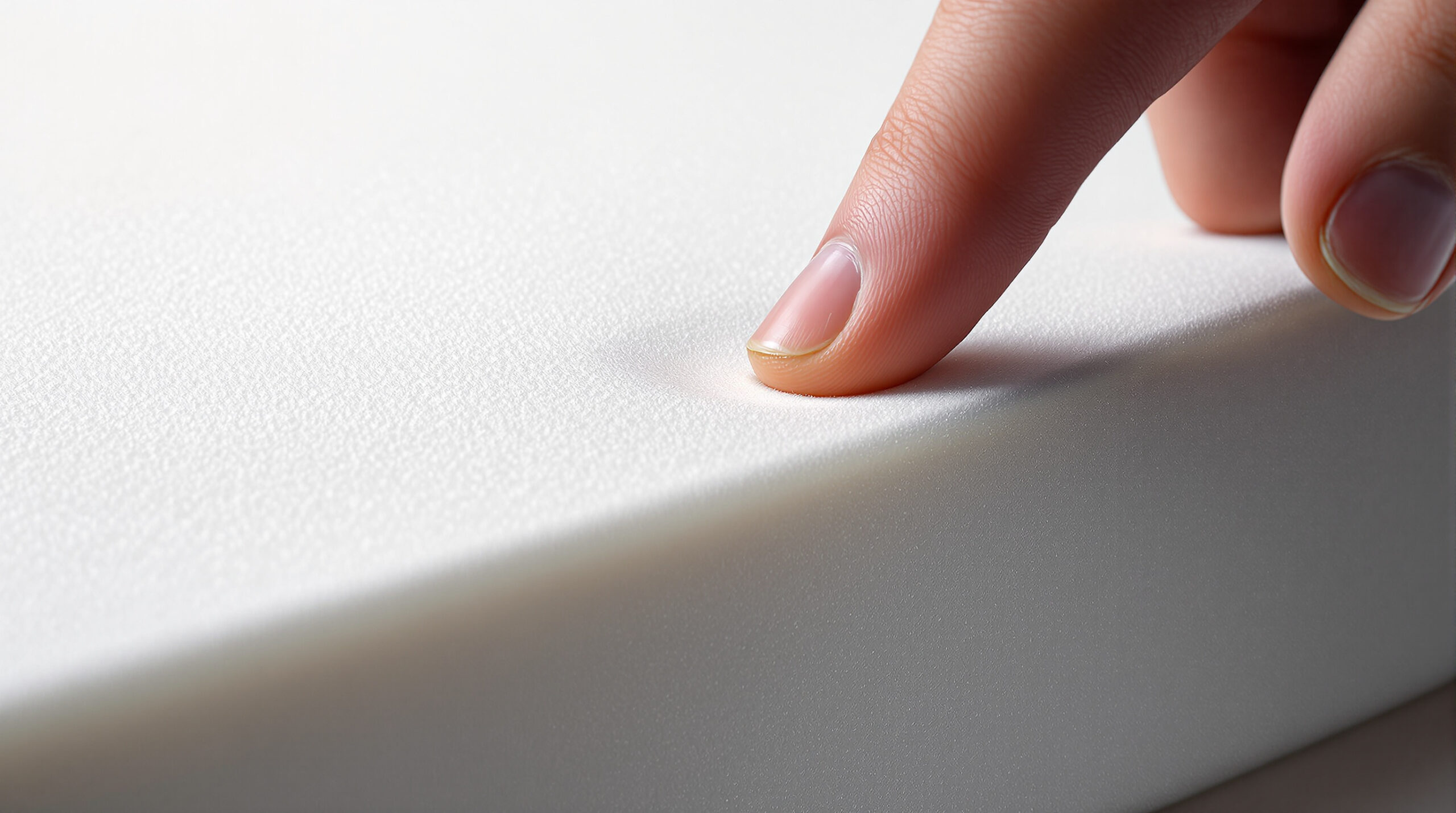
The whole pillow is one moulded block of viscoelastic memory foam — the heat-and-pressure-reactive kind. Viscoelastic means it softens where your body warms it and firms up again as it cools, so it conforms to the shape of your head and neck instead of pushing back evenly the way a standard foam or fibre pillow does. That is why it feels firm when you first press it and softer a minute after you lie down.
One honest caveat. Derila describes the material as “premium memory foam” but does not publish a density figure, and density (measured in kg/m³) is the number that actually predicts whether a foam pillow holds its contour or goes flat. Low-density foam compresses permanently within months; higher-density foam keeps its shape. Without a published figure, nobody can verify which this is from the spec sheet alone — so treat “high-density” as the maker’s framing rather than a measured specification, and let the 60-day window be your test.
The exact dimensions
Two things follow from those numbers. First, at 54 × 36cm the Derila is smaller than a standard UK or US pillow (typically around 75 × 50cm), so your existing pillowcases will swim on it. The supplied cover is the pillowcase, and a normal case over the top will bunch in the contours and partly defeat the shape.
Second, the 9cm center is lower than a standard bed pillow, which runs 12–15cm. If you are used to a thick pillow, the Derila will feel wrong for the first few nights purely because your head sits lower than your neck expects. That is the adjustment period, not a defect.
The shape, zone by zone
The butterfly contour is functional rather than decorative. Derila names four regions, each shaped to do a specific job:
- Support wings — the raised outer sections. They fill the shoulder-to-ear gap when you lie on your side, which is the gap that makes a flat pillow let your head tilt down towards the mattress.
- Shoulder arch release — the scalloped cut-outs along the bottom edge, shaped so your shoulder tucks under the pillow rather than being pushed up by it.
- Central core — the lower channel. It cradles the back of the head for back sleeping without forcing the chin towards the chest. It also leaves a gap at ear level, which is the detail people who fall asleep in headphones notice first.
- Arm support area — the wing extensions, there so a side sleeper can tuck a forearm under the pillow edge instead of under the pillow itself, which is what causes a dead arm by 3am.
Because the shape is moulded into the foam, every one of those zones is fixed. You cannot raise the center, lower the wings or move the cut-outs. For how butterfly, wave and contour shapes compare in general, see our explainer on ergonomic pillows.
The cover and the anti-allergen layer
The outer cover is removable and machine-washable. Derila describes it as an anti-allergen layer offering hypoallergenic materials, enhanced breathability and natural moisture control.
Worth being straight about what is missing here: Derila does not publish the fabric composition — no percentages, no fibre names — and we have found no third-party certification such as OEKO-TEX listed for it. “Hypoallergenic” is also not a regulated term on bedding. In practice it means the moulded foam gives dust mites nowhere to colonise the way a feather or fibre fill does, which is a genuine advantage, but it is a property of solid foam generally rather than anything specific to this cover.
Does it sleep hot?
Memory foam traps heat. That is inherent to the material: the same density that makes it hold a contour also makes it hold warmth, and it is the most common complaint about memory foam pillows as a category.
Derila’s answer is what it calls advanced cooling technology that “actively disperses heat”, combined with the breathable cover. We have not tested this product, and the maker publishes no temperature data or test method to support the claim, so we cannot tell you how much difference it makes. If you are a genuinely hot sleeper, treat this as the main thing to evaluate during the 60-day window rather than a settled question.
What it is not made of
This section exists because the wrong assumption here is the most common reason people end up returning it.
- No shredded fill. It is one solid moulded piece, not a bag of foam crumb. You cannot unzip it and take some out to lower the height.
- No adjustable insert or removable layer. The loft you get is the loft you keep.
- No down, feather or fibre. Nothing to plump, and it will not compress down to a thin pillow under your arm.
- No separately specified cooling gel layer. Derila markets a cooling effect but does not describe a discrete gel pad or phase-change layer.
- No latex. If you need the springier feel of latex, this is a different material entirely.
The practical upshot: if your neck needs a height you can tune, a shredded-fill pillow will serve you better. The Derila’s proposition is that its fixed geometry is already the right geometry for back and side sleepers. Derila’s own page claims it suits side, back and stomach sleeping; our view, set out in the full review, is that dedicated stomach sleepers are the group most likely to want something flatter.
Unboxing: decompression and smell
Moulded memory foam ships compressed. Two things follow, and both are normal for the material rather than signs of a faulty pillow:
- It needs time to expand. Take it out of the packaging and leave it to regain full shape before judging the height. A pillow still part-compressed will feel flatter than the finished product.
- It may smell of new foam. Off-gassing is standard for polyurethane foam. Air it in a ventilated room and the smell fades over a few days.
Derila says most of the benefit becomes evident within five to seven nights as your body adapts. That matches the general picture for contoured pillows and is the reason judging it on night one is unfair to it. The adjustment period, and the four other things that commonly go wrong after an order, are covered in our guide to Derila complaints.
How to clean it
- The cover comes off and goes in the machine. That is the part designed to be washed.
- Never put the foam core in a washing machine. Water breaks down the cell structure and a soaked memory foam pillow does not recover — it stays lumpy and takes days to dry. Spot-clean the core and let it air-dry fully.
- Air it rather than washing it. Most freshening needs nothing more than a few hours somewhere ventilated and out of direct sunlight.
This is also the quiet argument for the two-pillow bundle: a spare means the cover can go through a wash cycle without you losing a night’s sleep over it.
What the materials mean for durability
As a category, a decent moulded memory foam pillow holds its shape for roughly two to three years of nightly use before the contour starts to shallow out. A removable washable cover extends usable life compared with a pillow you cannot clean, because what usually finishes a pillow is accumulated body oil and moisture rather than the foam failing.
We have not tested the Derila over that span and the maker publishes no density figure, so we are not going to claim a lifespan for this specific pillow. What we can say is that the 60-day guarantee covers the window in which a genuinely low-density foam would start to show flattening, so if it is going to go soft on you quickly, you will know inside the return period.
Frequently asked
What is the Derila pillow made of?
A single moulded piece of viscoelastic memory foam under a removable, machine-washable cover that Derila describes as an anti-allergen layer. There is no shredded fill and no adjustable insert.
What size is the Derila pillow?
54cm × 36cm (21.2in × 14.1in), with a center channel around 9cm and wings around 12cm. That is smaller than a standard bed pillow, so ordinary pillowcases will not fit properly.
How firm is it?
Medium-firm. It feels firm to the hand and softens where your body heat reaches it, which is normal viscoelastic behavior.
Can I adjust the height?
No. The contour is moulded into a solid block, so nothing can be added or removed. If you need adjustable loft, choose a shredded-fill pillow instead.
Is the cover washable?
Yes, the cover is removable and machine-washable. The foam core must never go in a washing machine — spot-clean it and let it air-dry.
Does it sleep hot?
Memory foam retains heat as a material. Derila claims cooling technology and a breathable cover but publishes no supporting test data, so hot sleepers should treat this as the thing to assess during the 60-day window.
Why does it smell when it arrives?
Off-gassing from compressed polyurethane foam. It is normal and fades within a few days of airing.
See the Derila for yourself
54 × 36cm · moulded memory foam · washable cover · 60-day guarantee