
Best Pillow for Pregnancy: What to Look For and Why It Matters
Quick answer: the best pregnancy pillow is the one that supports three places at once while you lie on your side: between your knees, under your bump and behind your back. A U-shaped pillow does all three and stops you rolling onto your back, but it takes over the bed. A C or J shape does two of the three in less space. A wedge does one job at a time and is the cheapest and coolest option. Whichever you choose, you still need a proper head pillow tall enough for side sleeping, because most body pillows are too soft or too low at the head end.
Sleep gets harder as pregnancy goes on. The bump pulls on your back, your hips ache on the mattress, and from 28 weeks the advice is to go to sleep on your side every time. Ordinary pillows were not made for any of that. A pregnancy pillow is simply a way of putting support in the right three places without building a wall of cushions each night.
This guide compares the shapes honestly, including what is annoying about each, and shows where the pillows go. We have not tested individual brands of body pillow, so this is a guide to choosing the right type, not a ranking of products.

The half most guides skip: a body pillow looks after your bump and hips, not your neck. For your head we recommend the Derila Ergo, a contoured pillow with raised sides for side sleepers and a 60-day guarantee.
Why Pregnancy Changes What You Need
- You have to sleep on your side. From 28 weeks, going to sleep on your side lowers the risk of late stillbirth compared with going to sleep on your back. Either side is fine. Our trimester-by-trimester sleep guide explains the research.
- The bump needs holding up. Unsupported, it hangs toward the mattress and pulls on your lower back.
- Your hips and pelvis loosen. A top leg that drops forward twists the pelvis. Support between the knees stops it.
- Your shoulder takes more load. Months on your side with a low pillow means your shoulder carries your head.
- You run warmer. Anything that wraps round you adds heat.
The Shapes Compared
| Shape | Supports | Bed space | Good | Less good |
|---|---|---|---|---|
| U-shape | Back, bump, knees, head | Most of a double bed | Support on both sides, so you can turn without moving the pillow. Keeps you off your back. | Warm, bulky, hard to get out of for night toilet trips |
| C-shape | Back or bump, knees, head | About half a double | Good all-rounder in less space | You have to flip it when you turn over |
| J-shape | Bump, knees, head | A third of a double | Cooler, leaves room for a partner | Nothing behind your back unless you add a pillow |
| Straight body pillow | Bump and knees | A narrow strip | Simple, cheap, useful for years afterwards | No back or head support |
| Wedge | One spot: under the bump, behind the back, or under your upper body | Almost none | Cool, portable, firm. The right tool for heartburn. | One job at a time, so you may want two |
Pick the Shape for Your Situation
Tap what matters most to you.
Go for a U-shape, or a C-shape with the curve behind you.
- Support behind your back is the part that matters. It means that if you roll, you end up tilted and not flat.
- A U-shape gives you that on both sides, so you can change sides freely.
- On a budget, a firm bed pillow wedged behind your back does the same job.
- Add a separate head pillow that is tall enough for your shoulders.
Go for a C, J or straight body pillow with a firm, thick leg section.
- You need support from thigh to ankle, thick enough to keep your top leg level with your hip.
- Check the leg section is firm. Soft fill flattens by morning and your leg drops anyway.
- Add a small wedge under the bump.
- If turning over is what hurts, read how to sleep with pelvic girdle pain.
Go for a wedge under your upper body.
- Raising your head and shoulders together keeps stomach acid down. Extra pillows under the head alone just bend your neck.
- Lie on your side on the wedge, with a pillow between your knees.
- Use a low head pillow on top, because the wedge already lifts you.
- Eat your evening meal earlier and keep the last hours before bed light.
Go for a J-shape, a straight body pillow, or two wedges.
- Less pillow touching you means less heat and more room for a partner.
- Choose a breathable fill and a cotton cover you can wash.
- Two wedges, one under the bump and one behind your back, are the coolest setup of all.
- Pair it with a separate head pillow so you are not relying on the body pillow for your neck.
What to Check Before You Buy
- Firmness where it carries weight. The section between your knees and the part under the bump must hold their shape. A pillow sold as “cloud soft” will not hold a leg up all night.
- Length for your height. The leg section should reach from thigh to ankle. Taller women need the longer versions.
- Fill. Polyester fibre is light, cheap and the coolest, but flattens fastest. Shredded foam can be adjusted and holds up longer. Solid foam, used in wedges, keeps its shape best.
- A removable, washable cover. Night sweats and leaks make this essential, and a spare cover is worth having.
- Your bed. Measure it. A U-shape in a small double leaves very little room for anyone else.
- Life after pregnancy. C and U shapes can be wrapped round your waist to support a baby during feeds while you are awake, and a straight body pillow or wedge stays useful for years.
Where the Pillows Go
- Between your knees and ankles, so your top leg lies level with your hip.
- Under the bump, just enough to take its weight.
- Behind your back, firm enough to lean on.
- Under your head, filling the space between ear and mattress so your neck stays straight.
If you would rather not buy a pregnancy pillow at all, three ordinary bed pillows and a good head pillow do the same job. The shaped ones simply stay put better.
The Head Pillow Is a Separate Decision
The head end of most pregnancy pillows is the same soft fill as the rest. It is fine for resting, but it is rarely the right height for your shoulders, and it flattens. When you sleep on your side for months, a head that sits too low tips your neck toward the mattress and loads your lower shoulder. That is where the stiff neck and the numb arm come from.
The fix is to rest your head on a proper side-sleeper pillow and let the body pillow do the bump and legs. Our guide on choosing a pillow for your sleep position explains the height you need, and the pillow height calculator gives you a number.
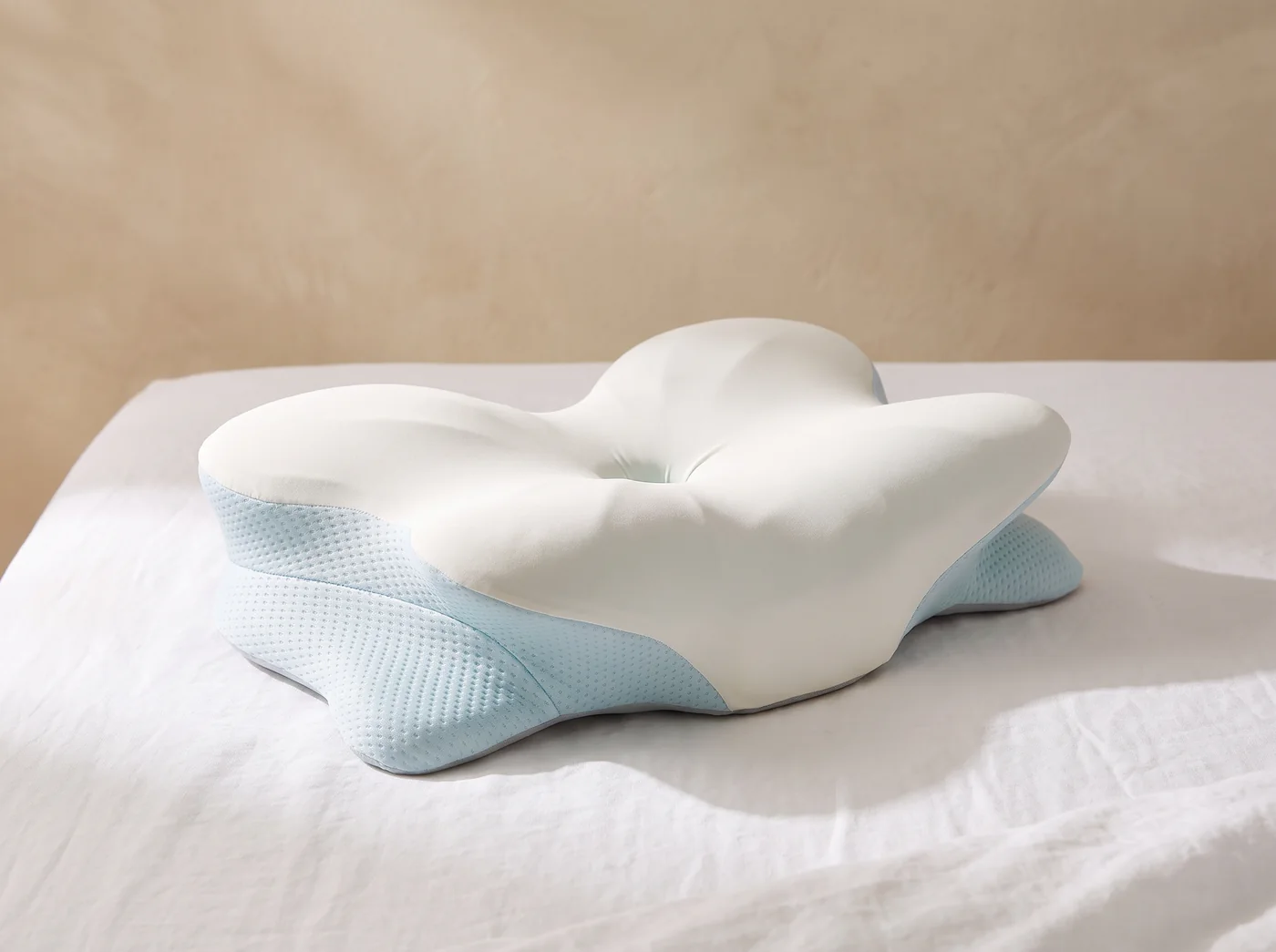
Our pick: Derila Ergo
The Derila Ergo is a contoured memory foam pillow with raised wings at each side, which give a side sleeper the height their shoulders need, a roll that supports the curve of the neck, and a lower center for when you are propped up on your back or on a wedge. It is medium firm and keeps its shape through the night, which is exactly what the head end of a body pillow does not do.
I have slept on it myself. It costs $59.99 for one or $99.98 for two, with shipping worked out at checkout, and it has a 60-day money-back guarantee. Memory foam holds a little more warmth than fibre, so if you run hot, use a cotton pillowcase. It suits side and back sleepers.
A pillow eases the ache; it does not treat the cause. If the pain is severe or getting worse, or comes with bleeding, fever, a hot or swollen leg, or numbness, call your midwife or doctor first.
We earn a commission if you buy through this link, at no extra cost to you. Full details in our Derila pillow review.
What About After the Birth?
Keep the pillow. A body pillow behind your back and between your knees is useful while stitches heal, and after a caesarean it becomes part of a four-pillow setup. See how to sleep after giving birth and the best pillows after a C-section.
One safety point. Pregnancy and nursing pillows are for you. A baby should never be left to sleep on or against one. After a feed, the baby goes on their back in their own flat, empty sleep space.
What a Pillow Cannot Do
Pillows make side sleeping more comfortable. They do not treat pain that is getting worse. Pelvic pain that makes walking or turning hard deserves a physiotherapy referral. Tell your midwife the same day about reduced baby movements, a headache that will not go away, changes in your vision, sudden swelling or severe itching.
Frequently Asked Questions
What type of pillow is best during pregnancy?
One that supports your knees, your bump and your back while you lie on your side. A U-shape does all three and takes the most space. C and J shapes do two in less room. A wedge does one job at a time. Add a separate head pillow tall enough for side sleeping.
Is a U-shaped or C-shaped pregnancy pillow better?
A U-shape supports both sides, so you can turn over without moving it and it keeps you off your back. A C-shape takes about half the space but has to be flipped when you turn. Choose the U if you have a large bed and turn a lot, the C if you share a smaller bed.
When should I start using a pregnancy pillow?
Whenever sleep becomes uncomfortable. Many women start in the second trimester as the bump grows. It is worth being used to it before 28 weeks, when side sleeping matters most.
Do I still need a normal pillow with a pregnancy pillow?
Usually yes. The head end of most pregnancy pillows is soft and too low for side sleeping. A separate contoured head pillow keeps your neck straight and takes the load off your lower shoulder.
Can a pregnancy pillow be used after pregnancy?
Yes. It supports your back and knees while you recover and can support your arms and the baby during feeds while you are awake. It should never be used as a place for the baby to sleep.
The Bottom Line
Match the shape to your bed and your main problem: U for full support, C or J for less space, a wedge for heartburn or a tight budget. Put support between your knees, under the bump and behind your back. Then give your head its own pillow, because that is the part of you a body pillow does not look after.
Related: how to sleep when pregnant, by trimester, sleeping with pelvic girdle pain, best ergonomic pillow for side sleepers and breastfeeding neck and back pain.
Sources
- Heazell AEP and colleagues. Association between maternal sleep practices and late stillbirth (MiNESS). BJOG, 2018.
- University of Auckland: Going to sleep on either side in late pregnancy more than halves stillbirth risk, 2019.
- NHS Fife: Pregnancy-related pelvic girdle pain.
- US Consumer Product Safety Commission: Safety Standard for Nursing Pillows, 2024.