
YU SLEEP for Anxiety and Sleep: Does It Actually Calm Your Mind? (2026)
Read this before anything else: YU SLEEP contains 5-HTP, a serotonin precursor. If you take an SSRI, SNRI, MAOI, a migraine triptan, tramadol or St John’s Wort, do not take it without your prescriber’s approval — the combination risks serotonin syndrome. This warning leads this page because anxiety and antidepressant use overlap heavily, so it applies to a large share of the people reading it.
Quick answer: If anxiety is what keeps you awake, the relevant ingredients in YU SLEEP are L-theanine (alpha brainwave activity, calm without sedation — the best-evidenced of the group), lemon balm (studied for cortisol and anxiety), apigenin (the chamomile flavonoid, gentle GABA-A activity) and GABA itself, alongside magnesium glycinate. It does not contain ashwagandha, valerian or passionflower, whatever other articles claim. That combination is a reasonable fit for bedtime mental arousal, but it is a sleep supplement, not a treatment for an anxiety disorder — and if anxiety is affecting your days as well as your nights, that needs addressing directly rather than at bedtime. From $138 for two months, 60-day money-back guarantee.
YU SLEEP for Anxiety and Sleep: Does It Actually Calm Your Mind?
When anxiety is the reason you cannot sleep, plain melatonin is not the answer. Here is what is actually in the formula for that, how good the evidence is, and the medication check to do first.
See today’s price — from $138 → ✓ From $138 · 60-day money-back guarantee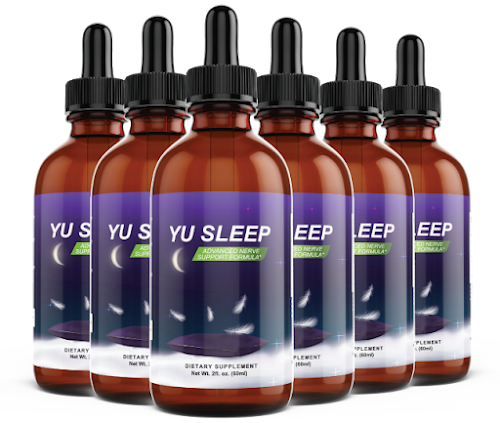
For bedtime mental arousal — the exhausted-but-wired feeling where your body is done and your head is not — the calming half of this formula is a sensible fit, and L-theanine in particular has real human evidence behind it. But two caveats matter more here than on any other page about this product. First, the 5-HTP makes it unsuitable for a lot of anxious people, because a lot of anxious people are on antidepressants. Second, if your anxiety runs through the daytime too, a bedtime supplement is treating the symptom at the wrong end of the day.
The Anxiety-Sleep Cycle
Anxiety disrupts sleep through a specific mechanism: elevated cortisol and a hyperactive stress response hold the nervous system in alert mode exactly when it needs to wind down. You cannot be in threat-response mode and in the parasympathetic state sleep requires at the same time.
That creates a loop. Poor sleep worsens next-day anxiety — sleep deprivation reliably does — which makes the following night harder. Melatonin alone does not break it, because melatonin signals that it is night; it does nothing about the arousal keeping you awake. That is the honest case for a formula with a calming component rather than just a timing signal.
What Is Actually in It for Anxiety
Worth stating plainly, because most write-ups get this wrong: YU SLEEP does not contain ashwagandha, passionflower or valerian. Here is what it does contain that is relevant.
L-Theanine — the strongest of the group
An amino acid from green tea that increases alpha brainwave activity: the calm-but-alert state, not sedation. Human trials, typically around 200mg, have found reduced psychological stress and improved sleep quality in stressed adults. If one ingredient here earns its place for anxiety, this is it.
The catch: the seller does not publish the amount, so whether this product contains a trial-level dose is unknowable.
Lemon Balm — the cortisol angle
Melissa officinalis, used for centuries for restlessness, with modern trial interest in anxiety and cortisol. This is the ingredient doing the job the marketing elsewhere wrongly attributes to ashwagandha. Evidence is more modest than ashwagandha’s, and often comes from combination products, which makes attribution harder.
Apigenin — the chamomile compound
Binds weakly at the benzodiazepine site on GABA-A receptors — the same receptor family prescription sedatives act on, but far gentler and without dependency risk. Mechanistically sound; human evidence for isolated apigenin is limited and mostly preclinical.
GABA — plausible, but contested
The brain’s main inhibitory neurotransmitter, and low GABA activity is associated with anxiety. Whether GABA taken by mouth reaches the brain in useful amounts is genuinely disputed among researchers. Do not let anyone sell you certainty here.
Magnesium Glycinate — supporting
Involved in GABA receptor regulation, and shortfalls are common. The glycine component has some independent support for sleep quality. Cheap to buy separately if it is the only part you want.
The Medication Problem, In Detail
This deserves more than a footnote. Anxiety and antidepressant use overlap heavily, which means a large share of people searching for an anxiety sleep aid are exactly the people who should not take this one without medical sign-off.
- SSRIs, SNRIs, MAOIs — all raise serotonin. Adding 5-HTP on top risks serotonin syndrome, which can be serious. Ask your prescriber.
- Triptans and tramadol — same mechanism, same caution.
- Benzodiazepines — additive sedation with the calming ingredients. Not dangerous in the same way, but worth flagging to your doctor.
- Blood pressure medication — GABA and L-theanine may both lower blood pressure modestly.
Your prescriber may well say it is fine at this dose. That decision is theirs. Full detail in our side effects and interactions guide.
$138 for two months, $177 for three, $294 for six — 60-day money-back guarantee.
See today’s price — from $138 → Prices at the time of writing · set by the seller and subject to changeWhat This Product Is Not
- It is not a treatment for diagnosed anxiety disorders — generalised anxiety, panic disorder, social anxiety
- It will not replace prescribed medication, and you should not stop anything without your doctor
- It does nothing for anxiety with a psychological cause that responds to therapy
- It is not a sedative and will not switch your mind off
- If anxiety is significantly affecting your daily functioning, professional support comes first — and we would rather say that than sell you a bottle
What to Realistically Expect
The Fast Part
L-theanine, apigenin and GABA are the ingredients you might notice quickly — a slightly quieter, less reactive mind at bedtime. Not silence, and not sedation. If you were expecting to be knocked out, this will feel like nothing much.
The Slower Part
The lemon balm and cortisol side, if it does anything for you, works over weeks rather than nights. This is the point at which you can fairly judge whether evenings feel less wired.
Decision Point
The guarantee window. If a month of consistent use has not shifted anything, it will not. Diarise the deadline the day it arrives.
Things That Work Better Than Any Supplement Here
If bedtime anxiety is your problem, these do more of the heavy lifting, and they are free:
- A fixed wake time, seven days a week. It anchors the body clock harder than bedtime does.
- Get out of bed if you are awake more than 20 minutes. Lying there anxious teaches your brain that bed is where you worry. This is a core CBT-I technique and it works.
- Write the worry down before bed, not in bed. Offloading tomorrow’s list onto paper measurably reduces bedtime rumination.
- CBT-I if this is chronic. It is the first-line treatment for persistent insomnia and its effects persist after you stop, which is not true of any supplement.
Frequently Asked Questions
Can I take it with my anxiety medication?
Ask your prescriber first — genuinely, not as a formality. The 5-HTP interaction with SSRIs, SNRIs and MAOIs is real, and benzodiazepines add a sedation consideration on top. Do not order it on the assumption it will be fine.
Will it make me drowsy if I take it too early?
It is not a sedative, so it should not impair you the way an antihistamine sleep aid would. That said, take it about 30 minutes before you actually intend to sleep — melatonin taken while you stay up tends to leave people feeling disoriented rather than sleepy.
I specifically wanted ashwagandha. Is this the right product?
No. There is no ashwagandha in it. If ashwagandha for cortisol is what you are after, buy a KSM-66 supplement directly — it will cost a fraction of $138.
Checked Your Medication and Still Interested?
See the current price and full label on the official site. From $138 for two months, 60-day money-back guarantee.
See today’s price — from $138 → ✓ 60-Day Guarantee · ✓ Melatonin at 0.9mg · ✓ No AntihistaminesDisclosure: This page contains affiliate links. We may earn a commission at no extra cost to you. I have used YU SLEEP myself and would recommend it; beyond that personal use, the assessment above is based on the ingredient list the seller publishes at the time of writing and on published research into those compounds, and no per-ingredient amounts other than melatonin are disclosed. This content is informational only and is not a substitute for professional medical or mental health advice. YU SLEEP is a dietary supplement, not a treatment for anxiety disorders. If you are experiencing significant anxiety, please consult a healthcare provider. Statements have not been evaluated by the FDA.