
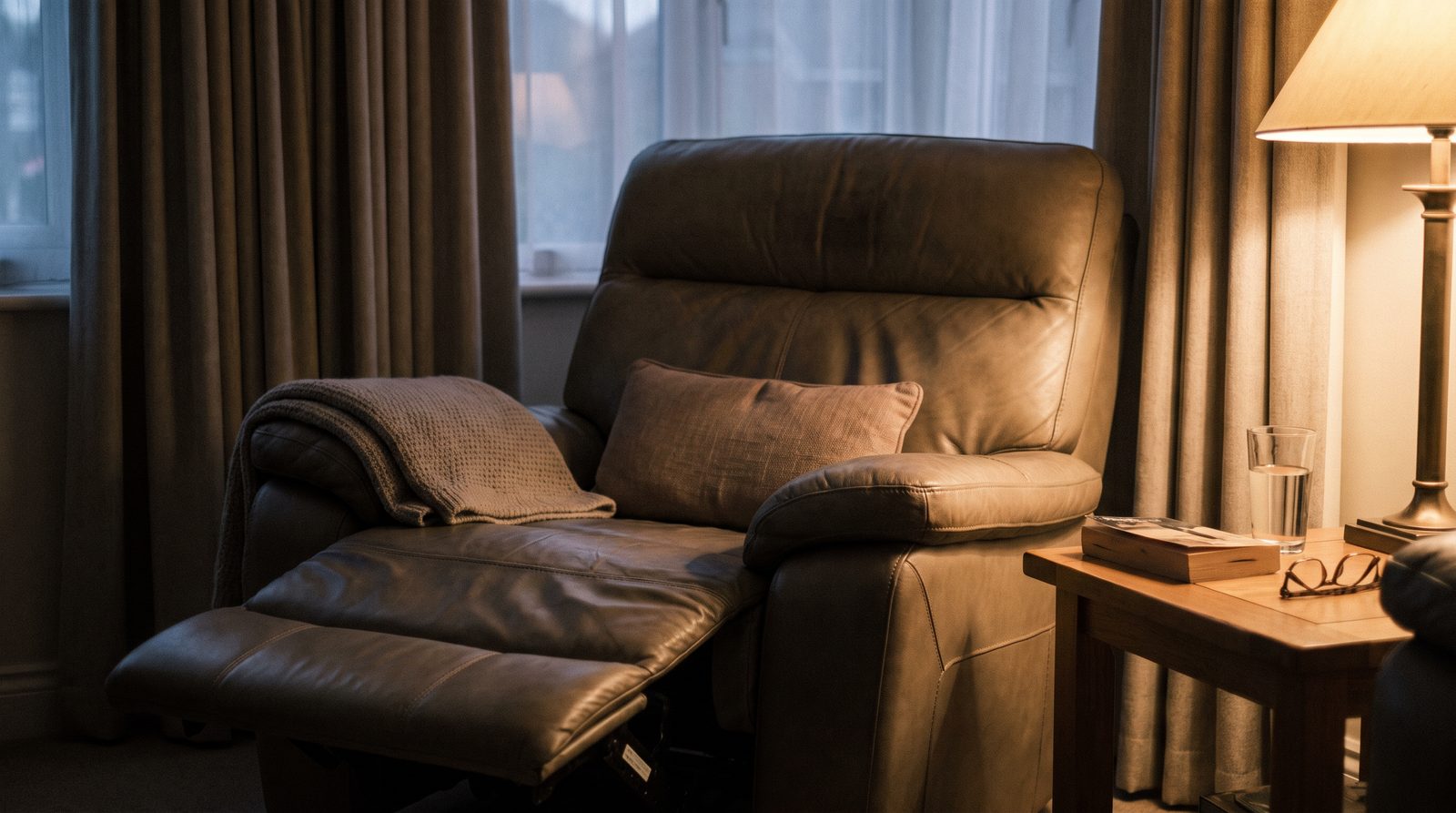
Sleeping in a Recliner After Hernia or Gallbladder Surgery
The short version: after keyhole (laparoscopic) hernia repair or gallbladder removal, the pain that surprises most people is in the shoulder, not the stomach. It comes from the gas used to inflate the abdomen during surgery, and it is usually worse lying flat. A recliner helps on both counts: sitting semi-upright eases the shoulder pain and takes pressure off the small incisions, and getting up from a chair spares your stomach muscles. Most people only need it for a few nights to a week. Below is why, how to set it up, and the symptoms that mean call your surgical team.
Hernia repair and gallbladder removal (cholecystectomy) are two of the most common operations there are, and both are now usually done through a few small keyhole incisions. Recovery is quick compared with open surgery. But the first few nights can be surprisingly uncomfortable, often for a reason nobody mentioned before the operation.
Follow your surgeon’s discharge instructions. Open (non-keyhole) repairs, large or complex hernias and people with other conditions all have different recovery timelines.
Why Your Shoulder Hurts
To make room to operate through keyhole incisions, the surgeon inflates the abdomen with carbon dioxide. Most of it is let out at the end, but some stays behind. That leftover gas rises and sits under the diaphragm, where it irritates the nerve that also carries sensation from the shoulder, so the brain reads the pain as coming from the shoulder tip.
It is common. Studies put shoulder pain after laparoscopic surgery at somewhere between 35 and 80 percent of patients, and it tends to be worse the more gas is left behind. It usually fades over a few days as the body absorbs the gas.
Lying flat tends to make it worse, because the gas spreads out against the whole underside of the diaphragm. Sitting semi-upright lets it collect in one place, and many people find that noticeably more comfortable. That is the main reason a recliner helps after this particular surgery.
Other Reasons a Recliner Helps
- Less strain on the incisions. A slightly bent, reclined position keeps the abdominal wall relaxed.
- Getting up without a sit-up. Rising from a chair is leg work. Sitting up from flat in bed uses exactly the muscles that were just operated on.
- For groin (inguinal) hernia repair, a footrest with your knees slightly bent takes tension off the groin. A small pillow under your knees does the same job if the footrest leaves your legs straight.
Setting It Up
- A pillow to hold against your stomach when you cough, sneeze or stand. It supports the incisions and makes coughing much less painful.
- Recline partway, not flat. Semi-upright is the point here. Somewhere around 120 to 135 degrees suits most people. Our recliner angle guide explains the differences.
- Something behind your neck. Even a few nights in a chair with your head dropping forward can leave a stiff neck on top of a sore shoulder. A thin support that fills the gap works better than a bed pillow.
- Keep moving. Walking little and often is one of the best things you can do for the gas pain and for circulation. In the chair, do slow ankle pumps when you settle and whenever you wake.
- Warmth on the shoulder helps some people, if your team is happy with it.
A few nights in the chair
Don’t add a stiff neck to a sore shoulder
A recliner needs a thinner pillow than a bed. We compared the shapes that hold up in a reclined chair and picked the one we would use.
See our recliner pillow pick →How Long You Will Need It
After keyhole surgery, usually not long. The shoulder pain commonly settles within three to seven days, and most people are comfortable back in bed within the first week, sleeping on their back or on the side away from the incisions. After an open repair it can take longer. Go back to bed when getting in and out of it no longer hurts. To get out of bed, roll onto your side first and push up sideways with your arms, rather than sitting straight up.
Call Your Surgical Team If
- You develop a fever or chills
- The incisions become redder, hotter, swollen or start to leak
- Pain gets worse over the days after surgery rather than better
- After gallbladder surgery, your skin or the whites of your eyes turn yellow, or you have dark urine or pale stools
- You cannot pass urine, or you keep vomiting
- One calf becomes painful, swollen or warm. Chest pain or sudden breathlessness is an emergency.
Frequently Asked Questions
Why does my shoulder hurt after gallbladder or hernia surgery?
Carbon dioxide gas used to inflate the abdomen during keyhole surgery can remain afterwards and irritate the diaphragm. The nerve involved also carries sensation from the shoulder, so the pain is felt there. It is common and usually fades within a few days.
Is it better to sleep in a recliner after laparoscopic surgery?
Many people find it more comfortable for the first few nights. Sitting semi-upright tends to ease the shoulder-tip gas pain, which is usually worse lying flat, and getting up from a chair spares the abdominal muscles.
How long should I sleep in a recliner after hernia surgery?
After keyhole repair, often just a few nights to a week. After an open repair it can be longer. Move back to bed once getting in and out of it is comfortable, and follow your surgeon’s guidance.
Can I sleep on my side after gallbladder removal?
Usually yes, once it is comfortable, often lying on the side away from the incisions with a pillow against your stomach. Many people prefer their back or a reclined position for the first few nights.
Sources
- Prevention of postlaparoscopic shoulder pain by forced evacuation of residual CO2: PMC
- Residual pneumoperitoneum volume and postlaparoscopic cholecystectomy pain: PMC
More Pillow Guides
Recommended for Pain-Free Sleep
🛌 Derila Ergonomic Memory Foam Pillow
Contoured design that holds your cervical spine in neutral for the full night. Works for side and back sleepers. Backed by a 60-day money-back guarantee on the official store.
- ✓ Memory foam contour
- ✓ Side & back sleeper design
- ✓ 60-day money-back guarantee