
Quick answer: Menopause does not break sleep in one way, it breaks it in four — night sweats and hot flashes, the loss of progesterone’s sedating effect, a genuine rise in sleep apnea risk once estrogen falls, and more trips to the bathroom. Each has a different fix, which is why generic sleep advice so often does nothing. Work out which one is actually waking you first: what wakes you, whether you are hot, whether you go to the bathroom, and how long you lie awake afterward. Then treat that. Persistent night sweats, loud snoring or unrefreshing sleep are worth a doctor’s appointment, not another supplement.
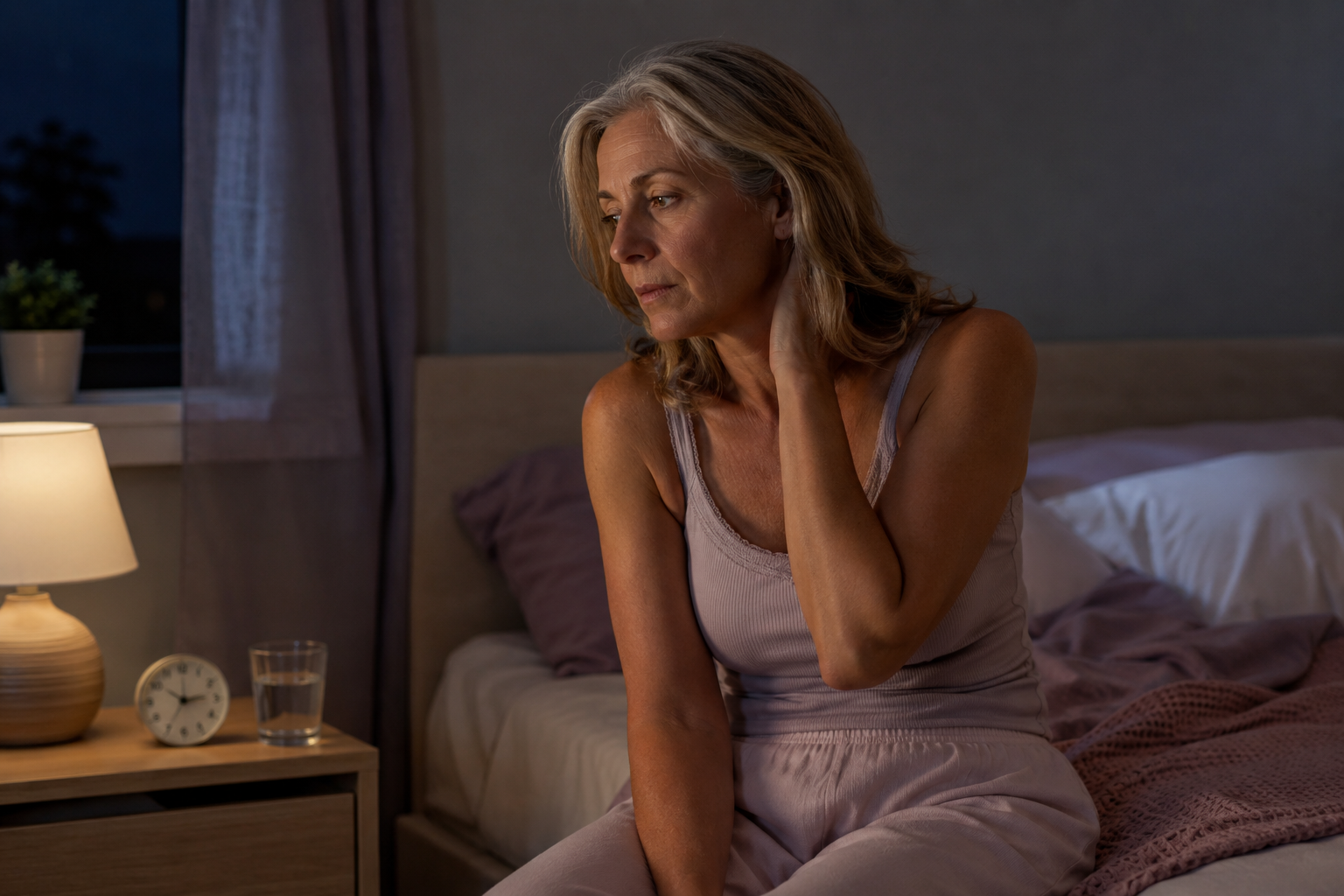
Sleep is one of the first things to go in perimenopause, and one of the last things anyone asks about. Surveys consistently put sleep problems among the most common complaints of the menopausal transition, yet the advice on offer is usually the same generic list handed to everyone else: cut caffeine, go to bed earlier, try a lavender spray.
The reason that advice underperforms is simple. Menopause does not disturb sleep through one mechanism. It disturbs it through four, and they need different answers.
The four mechanisms, separated
1. Vasomotor symptoms — hot flashes and night sweats
This is the one everybody knows about. A hot flash during sleep raises core temperature and triggers a wake-up, often with damp bedding and a period of feeling too hot to settle. What is less well known is that the wake-up can precede the conscious sensation of heat: you surface first and register the flush afterward, which is why some women describe “just waking” and only later notice they are drenched.
2. The hormonal changes themselves
Progesterone has a mild sedating effect and it falls through the transition. Estrogen is involved in temperature regulation, so the comfortable window for sleep narrows. Both changes make sleep lighter and easier to interrupt, independent of any hot flash — which is why some women sleep badly without ever having a classic night sweat.
3. Sleep apnea, which becomes more likely and stays undiagnosed
Obstructive sleep apnea becomes substantially more common in women after menopause. It is also badly under-diagnosed in this group, because the textbook patient is a snoring middle-aged man. Women more often present with fatigue, insomnia, morning headaches and repeated bathroom trips — a symptom set that gets filed under “menopause” and never investigated. If you snore, wake unrefreshed despite enough hours, or someone has noticed you stop breathing, our guide to sleep apnea and snoring covers what to do about it.
4. The bladder
Falling estrogen thins the tissue of the bladder base and urethra and shifts the local microbial balance, which brings urgency, more frequent urination and a new tendency to infections. The result is more night-time waking — and, crucially, waking that has nothing to do with your sleep and will not respond to sleep advice. This one sits outside what we cover here, so we will point you at a site that does: HerWellReport, a separate women’s health publication, explains the mechanism and the treatment options in perimenopause and your bladder.
Which one is waking you?
This is the step that makes everything else work, and it takes three nights of casual notes rather than any equipment. Each time you wake, note what you are aware of in the first few seconds:
- Heat, damp sheets, throwing off covers — vasomotor.
- An urgent need to go — bladder. A real volume points at the bladder or overnight urine production; a trickle usually means something else woke you and you went because you were up. This guide works through that distinction in detail.
- Dry mouth, a gasp, a headache on waking — breathing. Get it checked.
- A racing mind with no physical trigger — see nighttime anxiety and the racing mind.
- No obvious trigger, wide awake for an hour — often the cortisol-timing pattern covered in why you wake at 3am.
Most women find two of these apply, not one. That is normal, and it tells you what to fix first: whichever wakes you most often.
What actually helps
For the heat
- Drop the bedroom temperature before anything else. A cooler room widens the margin before a flush becomes a wake-up. Around 16-19°C (60-67°F) is the usual recommendation and it matters more during the transition than at any other time of life.
- Layer so you can shed without fully waking. A sheet plus a light blanket beats a single heavy duvet, because half-waking to push a layer off is far less disruptive than getting up.
- Natural fibres for sleepwear and bedding — cotton, linen, bamboo. Synthetics trap moisture, and damp fabric against skin is what turns a flush into twenty minutes awake.
- Alcohol is the big evening lever. It is a well-established hot flash trigger and it fragments the second half of the night independently.
- Talk to your doctor about treating the flashes themselves. Menopausal hormone therapy is the most effective treatment for vasomotor symptoms, and there are non-hormonal prescription options for women who cannot or prefer not to take it. Treating the flush treats the sleep. HerWellReport sets the evidence out tier by tier in what actually works for hot flashes — the FDA’s removal of the boxed warning from hormone therapy, the newer non-hormonal drugs fezolinetant and elinzanetant, and the treatments the 2023 North American Menopause Society position statement explicitly does not recommend.
- If night-time bathroom trips are part of your picture, ask about vaginal oestrogen specifically. It is a separate question from systemic hormone therapy, and the evidence behind it is different — HerWellReport sets out the distinction in does HRT help bladder problems.
For the sleep itself
The behavioural basics do still work, they just cannot carry the whole load: one fixed wake time every day, a genuine wind-down, an afternoon caffeine cut-off, and getting out of bed if you have been lying awake more than about twenty minutes. Our guide to what to do when you cannot fall asleep sets out the order to try them in. If insomnia has become the main problem in its own right, cognitive behavioural therapy for insomnia (CBT-I) has better long-term evidence than any sleep medication.
If you are weighing a supplement for the nights that will not come, we looked at one in detail in YU SLEEP for menopause and perimenopause, including the check that matters most here: it contains 5-HTP, which should not be combined with the low-dose SSRIs and SNRIs, such as paroxetine or venlafaxine, that are often prescribed for hot flashes, without your prescriber’s approval.
It also helps to separate menopause from ordinary ageing, because the two overlap in time. Deep sleep shortens and aches become less forgiving for men and women alike from the mid-forties on, and our guide to sleeping well after 45 covers those changes, which respond to different fixes from the hormonal ones above.
For the bladder side
Move fluid earlier in the day without cutting your total intake — concentrated urine irritates the bladder and makes things worse. Cut evening caffeine and alcohol, which are bladder irritants as well as sleep disruptors. And if this is your dominant symptom, ask your doctor about genitourinary syndrome of menopause by name; local vaginal estrogen has well-established evidence for these urinary symptoms and is routinely never offered.
What a pillow can and cannot do here
We are a pillow and neck-pain site, so we will be direct about the limits of our own subject. A well-matched pillow fixes neck alignment. It does not treat hot flashes, hormones, apnea or the bladder.
Two things are worth knowing anyway. First, if you are waking with neck or shoulder pain on top of menopausal sleep disruption, that is a separate, fixable problem stacking on the first — and it is worth removing, because you want as few reasons to wake as possible. Our pillow height calculator gives you the right loft in thirty seconds.
Second, a caution that runs against our own commercial interest: dense memory foam retains heat. If night sweats are your main issue, a solid contoured foam pillow can make you hotter, and we would rather tell you that than sell you one. Look for ventilated or shredded fill, a breathable cover, and the ability to flip to a cool side.
When to see a doctor
Book an appointment if night sweats are drenching or nightly, if you snore heavily or wake gasping, if daytime sleepiness is affecting driving or work, if low mood has come along with the sleep loss, or if you are getting up to urinate two or more times most nights. All of these are treatable, and all of them are commonly waved through as “just menopause”.
The bottom line
Menopausal sleep disruption is not one problem and does not have one fix. Spend three nights working out which mechanism is actually waking you, then treat that one — cool the room and treat the flashes, get the breathing checked, deal with the bladder properly, and use the behavioural basics as a foundation rather than a cure. Generic sleep advice fails here not because the advice is wrong, but because it is aimed at the wrong mechanism.
Disclosure: Sleep Align is reader-supported and independent. Some links on this site are affiliate links, and if you buy through them we may earn a commission at no extra cost to you — there are none in this article. This is general information, not medical advice; talk to your doctor about persistent sleep problems, night sweats or suspected sleep apnea.