
Best Pillow for Arm and Hand Numbness at Night (2026): Why You Wake Up Numb
Quick answer: Waking with a numb arm or hand usually comes from one of three places, and which fingers are affected tells you which. Thumb, index and middle finger points to the wrist (carpal tunnel). Little and ring finger points to the elbow (ulnar nerve). Numbness that follows a line down the arm with neck or shoulder pain points to the neck. A pillow only fixes the third one directly — but by changing where your head and arm sit, the right pillow helps with all three. Keep the neck neutral, and keep the bottom arm in front of you rather than under your head.
Almost everyone has woken with an arm that has gone dead and needs shaking back to life. If it happens most nights, it is worth knowing which nerve is being squashed, because the fix is different for each — and buying a pillow for a problem that is happening at your elbow will not help you.
Which fingers are numb tells you where the problem is
Three different nerves serve your hand, and each one covers its own territory. Check which fingers are involved when you wake:
Overlap happens and more than one can be true at once — sleeping on a flat pillow with your arm folded under your head manages to irritate the neck and the elbow simultaneously. But the finger pattern is the single most useful clue you have.
Why it happens at night and not in the day
While you are awake you make constant small adjustments without noticing — shifting your weight, straightening an elbow, turning your head. Asleep, you hold one position for an hour or more at a time. A nerve that is mildly compressed at a given joint angle has time for the pressure to build, the blood supply to drop, and symptoms to appear.
This is why night-time numbness is so common with carpal and cubital tunnel: a bent wrist or a bent elbow held for two hours is a very different thing from the same angle held for two seconds.
Our pick for neck-related arm symptoms
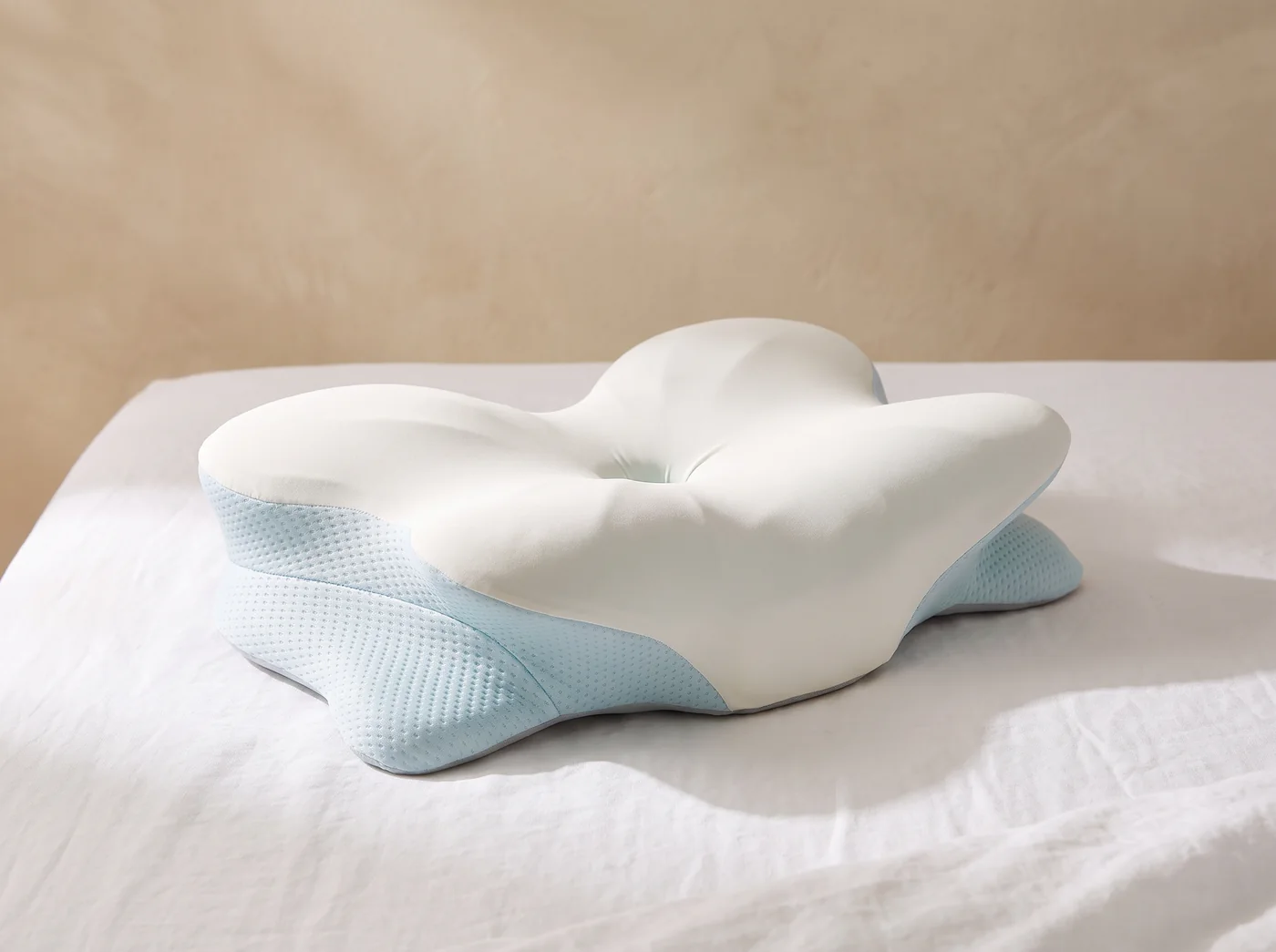
See today’s price →Derila Ergo · contoured, with arm cut-outs · 60-day guarantee
What a pillow can and cannot fix
Being straight about this matters, because plenty of pillow marketing implies otherwise.
A pillow directly fixes the neck cause. If your head drops back into extension on a flat pillow, the small bony openings the nerve roots exit through close down. Hold that for six hours and you get arm symptoms. A pillow that keeps the neck neutral removes that. If your numbness is neck-driven, this is the single highest-value change you can make.
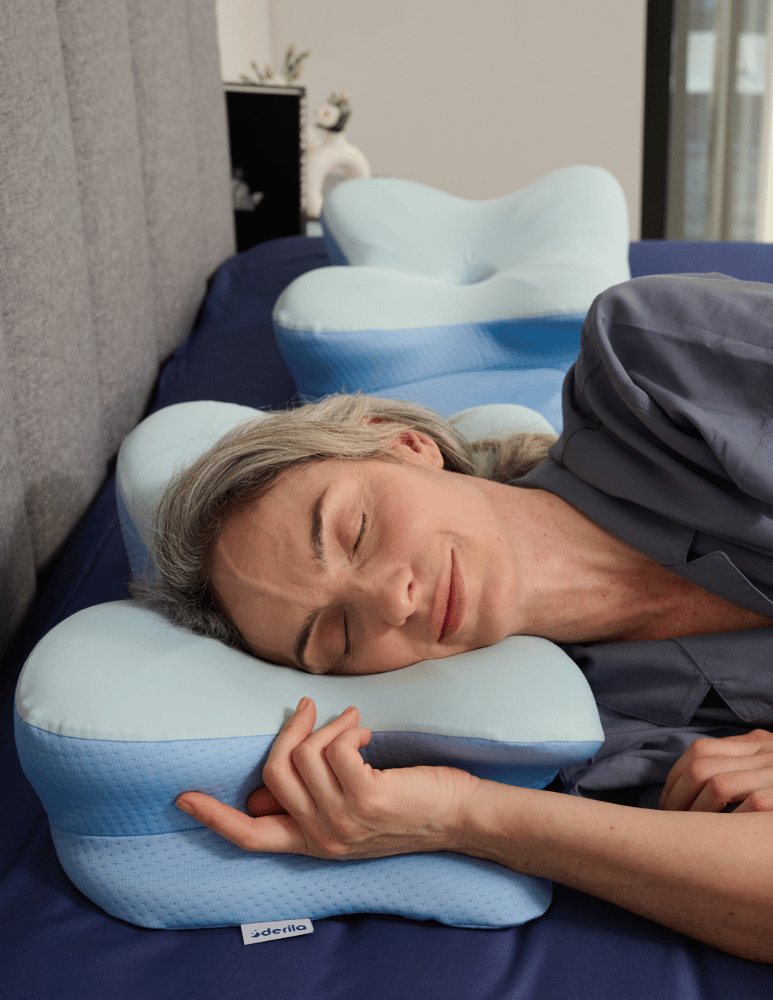
A pillow indirectly helps the elbow cause, by changing where your arm goes. The reason people tuck a forearm under their head is almost always that the pillow is too low to fill the gap between shoulder and ear, so the arm gets recruited as extra height. Give them a pillow of the right loft and the arm comes out. A contoured pillow with cut-outs at the sides gives the forearm somewhere to rest in front of the body instead.
A pillow does very little for carpal tunnel. That is a wrist-angle problem. The evidence-backed first step there is a neutral wrist splint worn at night, which is cheap and often dramatically effective. No pillow substitutes for it.
Is a contoured pillow actually your answer?
Three questions, then a loft number and a straight yes or no — including the times the answer is no.
Sleeping positions, best to worst
On your back, arms at your sides — best. Nothing is compressed, the elbows stay open and the neck sits neutral if the loft is right. If you also get carpal tunnel symptoms, a wrist splint stops the hand curling.
On your side, bottom arm in front — fine. The loft has to match your shoulder width, or the neck bends sideways all night. Keep the bottom forearm out in front of you, elbow relatively open. A pillow between loosely cuddled arms stops the top shoulder rolling forwards.
On your side with the arm under your head — the most common culprit. This folds the elbow hard and presses the ulnar nerve against the bed, while also tipping the neck. If you wake with a dead little finger, this is almost certainly why.
Arm overhead, or on your front — worst. An arm above the head narrows the thoracic outlet. Front sleeping forces the neck into rotation at end range for hours. If you do both at once, expect symptoms.
What to change tonight, in order
- Get the arm out from under your head. Free, immediate, and it resolves a surprising share of cases on its own.
- Check your pillow is not too flat. If your chin drifts upwards when you lie on your back, your neck is in extension. That is the position that provokes nerve-root symptoms.
- Match the loft to your side-sleeping shoulder width. Our pillow height calculator gives you a target rather than a guess.
- If the little and ring fingers are the problem, loosen the elbow. Some people wrap a towel loosely around the elbow to stop it folding past 90 degrees overnight.
- If the thumb side is the problem, try a neutral wrist splint before you spend anything on bedding.
What we recommend, and the honest caveats
For the neck-driven version, the Derila Ergo fits the brief: medium-firm moulded foam with a lower centre channel of roughly 9cm and raised wings of roughly 12cm, so back and side sleeping each get an appropriate height. The maker calls the side cut-outs an arm support area and claims they prevent numb arms — that is their claim rather than a tested finding, but the geometry does give the forearm somewhere to go other than under your head, which is the mechanism that matters.
- It will not touch carpal tunnel. Wrong joint. A splint is the answer there.
- The shape is fixed — no adding or removing fill, so if your measured loft falls well outside 9–12cm an adjustable pillow suits you better.
- Give it two weeks. Contoured pillows feel wrong for the first few nights. What else tends to go wrong after ordering is set out in our Derila complaints guide.
If a scan has already identified a specific level in your neck, the pillow logic is slightly different and worth reading separately: see our guide to the best pillow for a C5-C6 or C6-C7 disc bulge.
Frequently asked
Why do I wake up with my arm numb every night?
Because sleep holds a joint at one angle for hours. A nerve that is only mildly compressed at that angle has time for pressure to build and symptoms to appear. The usual sites are the wrist, the elbow and the neck, and which fingers are numb tells you which.
Can a pillow stop my arm going numb?
If the cause is in your neck, yes — keeping the neck neutral instead of extended removes the compression. If the cause is your elbow, a pillow helps only by giving your arm somewhere better to rest. If it is carpal tunnel at the wrist, a pillow will not help and a night splint will.
Why are my little and ring fingers the numb ones?
That is the ulnar nerve, most often compressed at the elbow by sleeping with it bent tight — classically with the forearm tucked under your head or pillow. Straightening the elbow at night usually settles it.
Is it bad to sleep with your arm under your head?
It is the position most likely to give you a numb arm, because it compresses the ulnar nerve and tips the neck at the same time. People usually do it because their pillow is too low, so fixing the loft fixes the habit.
Should I sleep without a pillow if my arm goes numb?
No. Going flat lets the head drop backwards into extension, which narrows the openings the nerve roots pass through and tends to make neck-driven arm symptoms worse rather than better.
How long should I give a new pillow before judging it?
About two weeks. The first few nights on a contoured pillow feel wrong while your neck adapts. If arm symptoms are clearly worse after two weeks, the height is probably wrong for you.
Give your arm somewhere else to go
9cm centre · 12cm wings · side cut-outs for the forearm · 60-day guarantee
See today’s price →