

Best Pillows After a C-Section: The Four You Need and Where Each One Goes
The short version: there is no single “C-section pillow”. After a caesarean, pillows do four separate jobs. A small firm one splints the incision when you cough or stand. A wedge or a stack props your back so you are not lying flat. One under or between your knees takes the pull off your stomach. And one under your head keeps your neck straight while the rest of you is propped at an odd angle. The first three can be pillows you already own. The head pillow is the one you will still be using in a year, so it is the one worth choosing carefully.
A caesarean is major abdominal surgery, and for the first couple of weeks almost every movement you make in bed runs through the muscles that were just operated on. Rolling over, sitting up, coughing, laughing, reaching for the baby. Pillows cannot heal the wound, but they can take the load off it, and that is the difference between sleeping in ninety-minute pieces and not sleeping at all.
This guide sorts the pillows by the job they do, shows where each one goes in a recliner, in bed and on your side, and is honest about which ones you need to buy and which you do not. Your maternity team’s discharge instructions come first. If anything here disagrees with what your midwife or obstetrician told you, follow them.
Short on time? Use spare pillows for the incision, back and knees. For your head and neck we recommend the Derila Ergo, a low contoured memory foam pillow with a 60-day guarantee.
The Four Jobs Pillows Do After a Caesarean
| Job | Pillow | Where it goes | Buy or borrow? |
|---|---|---|---|
| Splint the incision | Small, firm cushion or folded towel | Pressed over your lower stomach when you cough, sneeze, laugh or stand | Borrow. A sofa cushion works. |
| Prop your back | Foam wedge, or two or three bed pillows stacked like steps | Behind your back and shoulders, so you rest half sitting | Either. A wedge is steadier than a stack. |
| Bend your knees | Any medium pillow | Under your knees on your back, between them on your side | Borrow. |
| Hold your neck | Low, contoured head pillow | Under your head and the curve of your neck | Buy. You keep using it long after the wound heals. |
Pick Your Setup for Tonight
Where are you sleeping? Tap one and the pillow plan changes.
Recliner, roughly half reclined. Usually the easiest place in the first days, because standing up from a chair is leg work, not stomach work.
- Incision: splint cushion on your lap, within reach before you move.
- Back: the chair does this job. No wedge needed.
- Knees: a pillow under them if the footrest leaves your legs straight.
- Neck: a low pillow that fills the gap behind your neck. A thick bed pillow pushes your chin onto your chest.
More detail: sleeping in a recliner after a C-section.
In bed, propped half upright. The usual choice if you have no recliner, or once you want your own bed back.
- Incision: splint cushion beside your hip, on the side you get out of bed.
- Back: a wedge, or pillows stacked like steps so the slope starts at your waist, not your shoulder blades.
- Knees: a pillow under them. It stops you sliding down the slope and relaxes your stomach.
- Neck: one low pillow on top of the slope. The slope already lifts your head, so you need less height than usual, not more.
On your side. Often comfortable within the first few days, as long as nothing pulls or twists.
- Incision: hug the splint cushion against your stomach. It stops your belly sagging toward the mattress.
- Back: a pillow wedged behind you so you cannot roll flat in your sleep.
- Knees: a pillow between them, knee to ankle, so your top leg does not drag your hips round.
- Neck: a pillow tall enough to fill the space between your ear and the mattress, so your head stays level.
1. The Splint Pillow
This is the one every recovery leaflet mentions. NHS hospital leaflets tell you to support the scar with your hands, a folded towel or a small pillow when you cough, sneeze or laugh, and to bend your knees up while you do it. The pressure stops the wound jolting. One Royal Devon leaflet adds a line worth remembering at 3am: do not be afraid to cough, because the stitches are very secure.
What makes a good splint pillow is size and firmness, not branding. It should be about the size of a sofa cushion, firm enough that it does not squash flat under your hands, and light enough to pick up with one arm. Keep it within reach of wherever you are sleeping, and take it in the car for the ride home so it sits between you and the seat belt.
Is a contoured pillow actually your answer?
Three questions, then a loft number and a straight yes or no — including the times the answer is no.
2. The Wedge or Back Prop
Lying completely flat stretches the lower stomach, and sitting up from flat is close to a sit-up. Resting half upright avoids both. A foam wedge gives you a slope that stays put all night. A stack of bed pillows does the same job for free, but it shifts, so build it like steps: the lowest pillow under your waist, the next under your shoulder blades, the last under your shoulders.
The common mistake is propping only the head and shoulders. That folds you in the middle, loads the incision and bends your neck forward. The slope should start at your hips.
3. The Knee Pillow
On your back, a pillow under your knees puts a slight bend in your hips, which slackens the muscles across the front of your stomach. On your side, a pillow between your knees keeps your top leg from falling forward and twisting your pelvis, which tugs on the scar from the inside.
It also makes the log roll easier. To get out of bed, NHS guidance is to bend your knees, roll onto your side in one piece, drop your legs over the edge and push yourself up with your arms. A pillow between your knees keeps hips and shoulders moving together while you do it.
4. The Head and Neck Pillow
This is the job people forget, and it is the one that hurts a week later. For the first fortnight you sleep in positions you would never choose: half sitting, wedged on one side, dozing upright after a feed. Add hours a day looking down at a baby, and your neck is doing more work than at any other time in your life. A pillow that is too tall on a slope pushes your chin to your chest. One that is too flat on your side lets your head hang.
What works is a low pillow with a raised edge that fills the curve of your neck, firm enough to keep its shape through the night.
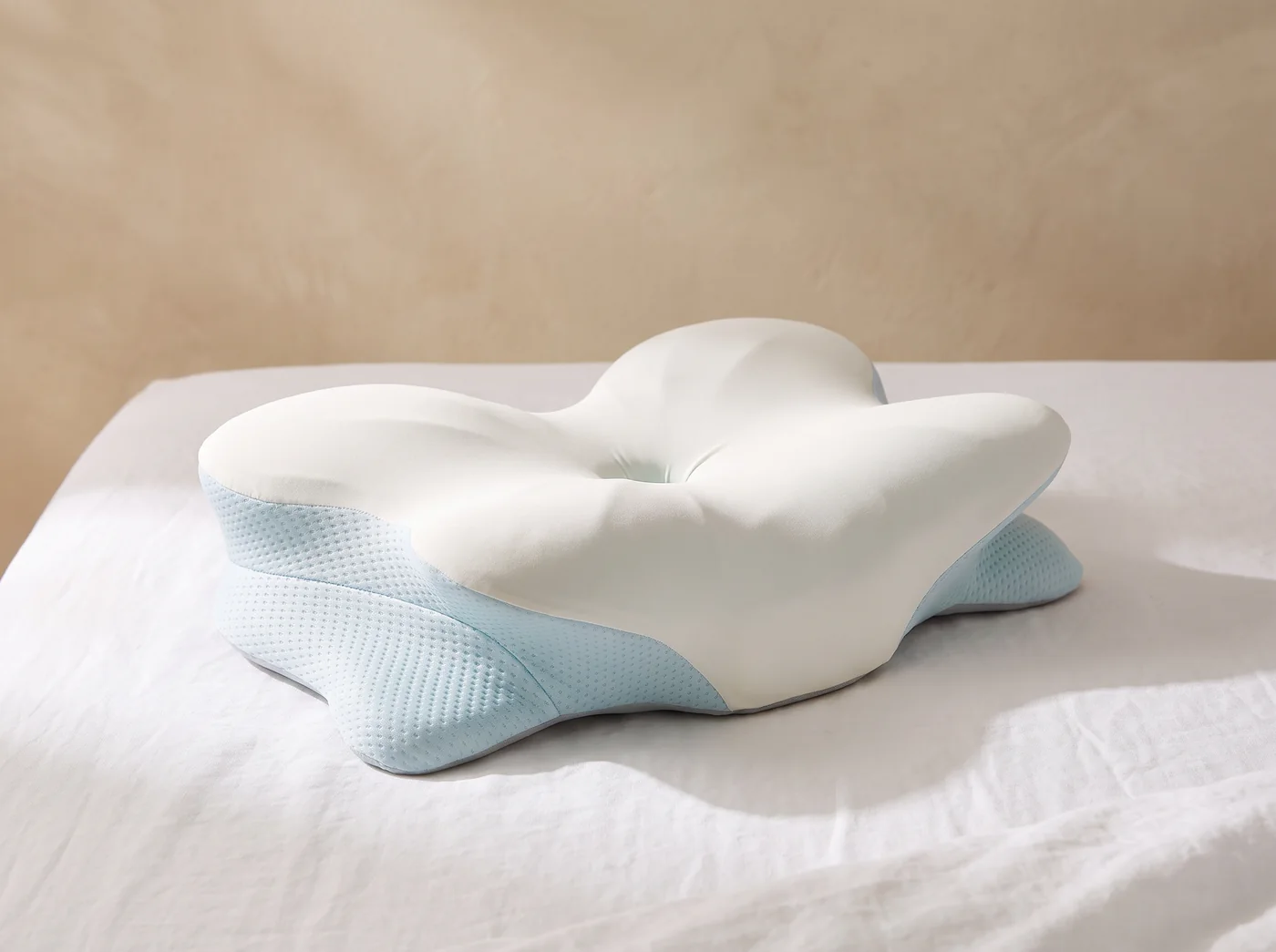
Our pick: Derila Ergo
The Derila Ergo is a contoured memory foam pillow with a low center for your head and a raised roll under your neck, with taller wings at the sides for when you turn over. That shape suits this recovery for three reasons. The low center works on top of a wedge or in a recliner without tipping your head forward. The side wings give you the extra height side sleeping needs, so one pillow covers both positions as you move from back to side. And the foam is medium firm, so it holds its shape when you doze off half upright.
It is also the only pillow on this page I have slept on myself. It costs $59.99 for one or $99.98 for two, with shipping worked out at checkout, and it comes with a 60-day money-back guarantee, which covers the whole six-week recovery with time to spare.
A pillow eases the ache; it does not treat the cause. If the pain is severe or getting worse, or comes with fever, heavy bleeding, redness or discharge from your scar, or a hot or swollen leg, call your midwife or doctor first.
We earn a commission if you buy through this link, at no extra cost to you. Full details in our Derila pillow review.
What About a Body Pillow or a Nursing Pillow?
A pregnancy body pillow is worth keeping if you already own one. Turned around, it does two jobs at once on your side: the long edge sits behind your back and the curve goes between your knees. It does not replace the splint cushion or the head pillow. If you are still choosing one, see our guide to the best pillow for pregnancy.
A nursing pillow earns its place after a caesarean because it keeps the baby’s weight off your stomach during feeds. Many mothers also find the “football hold”, with the baby tucked under your arm along your side, more comfortable than holding the baby across the scar. Our guide to breastfeeding neck and back pain covers the setup.
One rule comes with it. A nursing pillow is for feeding while you are awake, never for the baby to sleep or lounge on. The US Consumer Product Safety Commission introduced a federal safety standard for nursing pillows in 2025 after linking them to at least 154 infant deaths between 2010 and 2022, almost all when babies were left to sleep on them. When the feed ends, the baby goes on their back in their own flat, empty sleep space.
How the Setup Changes Week by Week
| When | Typical position | Pillows in use |
|---|---|---|
| Days 1 to 4 | Half upright, on your back | All four: splint, back prop, knees, low head pillow |
| Days 5 to 14 | Mix of half upright and side | Splint to hug, pillow behind your back, one between the knees, head pillow |
| Weeks 3 to 6 | Mostly side or back, flatter | Knee pillow and head pillow. Splint for coughs and car rides. |
| After 6 weeks | Whatever is comfortable | Head pillow, and a knee pillow if you like it |
These are typical timings, not rules. Recovery commonly takes around six weeks and varies a lot from one person to the next. Leave stomach sleeping until the wound has healed and it feels comfortable.
What Pillows Cannot Do
Pillows make rest more comfortable. They do not treat pain that is getting worse, and they are no substitute for the pain relief you were sent home with or for getting up and walking as your team advised. Short, regular walks matter because the risk of blood clots is raised after a caesarean.
Contact your midwife or doctor promptly if the wound becomes redder, hotter, more painful, starts to leak or opens, or if you develop a fever. Treat these as urgent: a painful, swollen or warm calf, chest pain, trouble breathing, bleeding that soaks a pad in an hour, a headache that will not go away, or thoughts of harming yourself or your baby. The CDC’s list of urgent maternal warning signs applies for a full year after birth.
Frequently Asked Questions
What is the best pillow to use after a C-section?
You need four pillows doing four jobs: a small firm cushion to hold against the incision, a wedge or stacked pillows behind your back, one under or between your knees, and a low contoured pillow under your head. Three of those can be pillows you already own. The head pillow is the one worth buying.
Do I need to buy a special C-section pillow?
Not for the incision. Hospitals suggest a folded towel or an ordinary small pillow, and a firm sofa cushion does the job well. Put the money into the pillow under your head, because you will use it every night long after the scar has healed.
How should I position pillows to sleep after a C-section?
In the first days, rest half upright with the slope starting at your hips, a pillow under your knees and a low pillow under your head. On your side, put one pillow between your knees, one behind your back and hug a small cushion against your stomach.
Can I sleep on my side after a C-section?
Yes, usually within the first few days if it is comfortable. Support makes the difference: a pillow between your knees keeps your hips level and a cushion against your stomach supports the wound. Use the log roll to turn over and to get up.
Is a wedge pillow worth it after a C-section?
If you do not have a recliner, yes. A wedge gives a steady slope that does not collapse in the night the way a stack of pillows can. It is also useful later for reflux or for reading in bed.
The Bottom Line
Raid the sofa for a splint cushion, build a slope for your back, put a pillow at your knees, and give your neck a low contoured pillow that works both propped up and on your side. That is the whole setup. The first three pillows go back where they came from in a few weeks. The head pillow stays.
Related: newborn night shifts, how to sleep after giving birth, sleeping in a recliner after a C-section and our pillow height calculator.
Sources
- Royal Devon University Healthcare NHS Foundation Trust: Physiotherapy after a caesarean section
- University Hospitals Plymouth NHS Trust: Post caesarean section advice
- US Consumer Product Safety Commission: Safety Standard for Nursing Pillows, Federal Register, 25 October 2024
- CDC Hear Her campaign: Urgent maternal warning signs
- American Academy of Pediatrics: A parent’s guide to safe sleep
More Pillow Guides
Recommended for Pain-Free Sleep
🛌 Derila Ergonomic Memory Foam Pillow
Contoured design that holds your cervical spine in neutral for the full night. Works for side and back sleepers. Backed by a 60-day money-back guarantee on the official store.
- ✓ Memory foam contour
- ✓ Side & back sleeper design
- ✓ 60-day money-back guarantee