
How Do Truck Drivers Sleep?
The short version: Most long-haul truck drivers sleep in the sleeper berth behind the seats, parked at truck stops, rest areas and shipper lots. US rules require 10 consecutive hours off duty before driving again, and that time can be split between the berth and other off-duty periods as long as one part is at least 7 hours in the berth. Team drivers sleep while their partner drives, which is legal but lighter and more broken sleep. The biggest hidden problem is sleep apnea, found in about 28% of drivers in a large Penn study, and it is very treatable once it is diagnosed.
Trucking is one of the few jobs where your bedroom is also your workplace, your kitchen and, for a lot of the week, your home. You sleep where the clock runs out, not where you would choose, and the clock is set by federal law.
This guide covers what the hours-of-service rules allow, what the research says about sleep apnea and drowsy driving, why team driving is hard on sleep, and what helps in a cab. Every number is sourced at the end.

What the rules and research say
The hours-of-service rules for property-carrying drivers are in Part 395 of Title 49 of the US Code of Federal Regulations. They do not tell you how much to sleep. They tell you how long you must be off duty, and the space between those two things is where most drivers lose sleep.
| Rule or finding | The number | Source |
|---|---|---|
| Off duty before you can drive | 10 consecutive hours | 49 CFR 395.3 |
| Driving limit | 11 hours, inside a 14-hour window | 49 CFR 395.3 |
| Required break | 30 minutes after 8 hours of driving | 49 CFR 395.3 |
| Sleeper berth split | At least 7 hours in the berth plus at least 2 hours, totalling 10 | 49 CFR 395.1(g) |
| Weekly limit and reset | 60 hours in 7 days or 70 in 8; reset with 34 hours off | 49 CFR 395.3 |
| Drivers with some degree of sleep apnea | About 28% (nearly 5% severe) | Pack et al., 2006 |
| Drivers regularly sleeping under 5 hours | About 13% | Pack et al., 2006 |
| Drivers who said they fell asleep driving in the past month | 28% | 1999 FHWA survey, cited by CDC |
| Fatal car crashes involving a drowsy driver, 2017 to 2021 | An estimated 17.6% | AAA Foundation, 2024 |
Two notes: the 28% “fell asleep” figure is from an older roadside survey, so read it as a warning rather than today’s rate, and the AAA estimate covers car drivers only. It still shows how much police reports undercount drowsy driving.
Key facts you can quote
- US truck drivers must take 10 consecutive hours off duty before driving, then may drive up to 11 hours inside a 14-hour window (49 CFR 395.3).
- The sleeper berth split needs one period of at least 7 hours in the berth and another of at least 2 hours, totalling at least 10 (49 CFR 395.1(g)).
- About 28% of commercial truck drivers in a University of Pennsylvania study had some degree of sleep apnea, and nearly 5% had it severely (Pack et al., 2006).
- A meta-analysis commissioned by FMCSA found the odds of a crash are 243% higher for a driver with untreated sleep apnea (cited by the AASM, 2017).
- Long-distance drivers who used caffeine to stay alert had 63% lower odds of crashing in an Australian case-control study (Sharwood et al., BMJ, 2013).
Free to quote with a link to this page.
The sleep problems that come with the job
Off duty is not the same as asleep
Ten hours off sounds generous until you take out fuel, the shower line, food, paperwork and the hunt for a legal spot. The Penn study found that about 13% of drivers regularly slept under five hours a night, and those short sleepers dozed off faster in a dark-room alertness test than drivers who slept seven to eight hours.
Sleeping at the wrong time of day
Appointment times and traffic decide when you sleep: 9 pm one night, 4 am behind a warehouse the next. Your body clock, the internal timer that makes you sleepy at night, cannot keep up, and daytime sleep in a cab tends to be shorter and lighter.
Sleep apnea
Obstructive sleep apnea means the airway keeps collapsing in sleep, so you stop breathing, half wake and start again, many times a night without remembering it. You get the hours but not the rest. A 2017 American Academy of Sleep Medicine (AASM) task force reported that studies of truck drivers have found rates from 28% to 78%, higher in groups carrying more weight.
The same paper cites an FMCSA-commissioned meta-analysis (a study pooling many studies): crash odds were 243% higher with untreated apnea, and CPAP treatment brought risk back to the level of drivers without it.
Team driving in a moving cab
For teams, one driver sleeps while the other drives, so the berth never stops moving. The 2023 Tech4Rest trial of team drivers notes earlier research in which team drivers woke four times more often in the berth than at home, with vibration the likely cause. The trial’s better seat, mattress and sleep-health program moved sleep results in the right direction.
Noise, heat and idling
Truck stops are loud: reefer units cycling, air brakes, trucks arriving at 2 am. Some states and cities limit idling, so on a hot or cold night you choose between idling, an auxiliary power unit or heater if you have one, or a cab that drifts too warm or too cold. Heat breaks sleep easily, so plan the cab temperature.
Drowsy driving is real, even for pros
The federal Large Truck Crash Causation Study looked at 967 serious truck crashes from 2001 to 2003. In two-vehicle truck and car crashes, car drivers were coded for “non-performance” (falling asleep or being physically impaired) in 15.6% of cases against 2.8% for truck drivers. Professionals manage fatigue better than most motorists, but a truck leaves far less room for error.
Over everything sits 49 CFR 392.3: no one may drive a commercial vehicle while fatigue has impaired their alertness, or is likely to. If you are too tired, the legal answer and the safe answer are the same: stop.
Choose your situation
Tap the one closest to how you run.
Solo OTR: protect one long block
- Aim to put your 7-hour berth period where your body sleeps best, usually overnight, and use the 2-hour part for a nap or a meal stop.
- Find parking before you need it; time hunting for a spot comes out of sleep.
- Black out the cab fully and use earplugs or a fan for steady noise.
- Set the cab cool before lights out; heat breaks sleep more than most drivers expect.
- Keep the same pillow and bedding every night so your body knows it is bedtime.
Team driving: sleep in a moving room
- Agree a fixed swap pattern with your partner so each of you gets the same sleep window most days.
- Earplugs plus a sleep mask help against road noise and light from the front.
- Wedge yourself so you do not roll: a contoured pillow and a rolled blanket behind your back cut the movement.
- Remember up to 3 hours riding as a passenger next to your berth time can count in a split, under 395.1(g).
Local and night routes: you sleep at home, in daylight
- Short-haul drivers within 150 air miles still need 10 hours off between shifts; treat it as sleep time, not errand time.
- Make the bedroom dark and cool, and tell the household your sleep hours.
- Keep caffeine to the first half of the shift so it has worn off by the time you get home.
What actually helps
Plan the split, do not just log it
Used well, the split lets you take a solid berth period overnight and a shorter rest in the afternoon dip. Used badly, it becomes two broken naps. Decide where the long block falls and protect it. Put your shift times into our free shift-work sleep planner to see where your best sleep window sits.
Nap before you need to
A short nap in your 30-minute break or 2-hour split can take the edge off sleepiness. Nap before you are fighting your eyelids, and give yourself a few minutes and a walk around the truck before pulling out, because you can be foggy just after waking.
Use caffeine on purpose
Caffeine works. In an Australian study of 530 long-distance drivers who had crashed and 517 who had not, those who used caffeine to stay alert had 63% lower odds of crashing. But caffeine lasts for hours, and a late cup steals from your next sleep. Use it early in your driving window, not just before the berth (timings in our caffeine and sleep guide). It is a bridge to a safe stop, not a replacement for sleep.
Be very careful with sleep aids
The FDA warns that all insomnia medicines, over-the-counter ones included, can impair driving the next morning, even when you feel fully awake. Under 49 CFR 392.4 you may not drive under any substance that makes you unable to drive safely; prescribed drugs are allowed only when a doctor has advised they will not affect your driving. Talk to your doctor and medical examiner first, follow company policy, and never take a sleep aid in the hours before a shift.
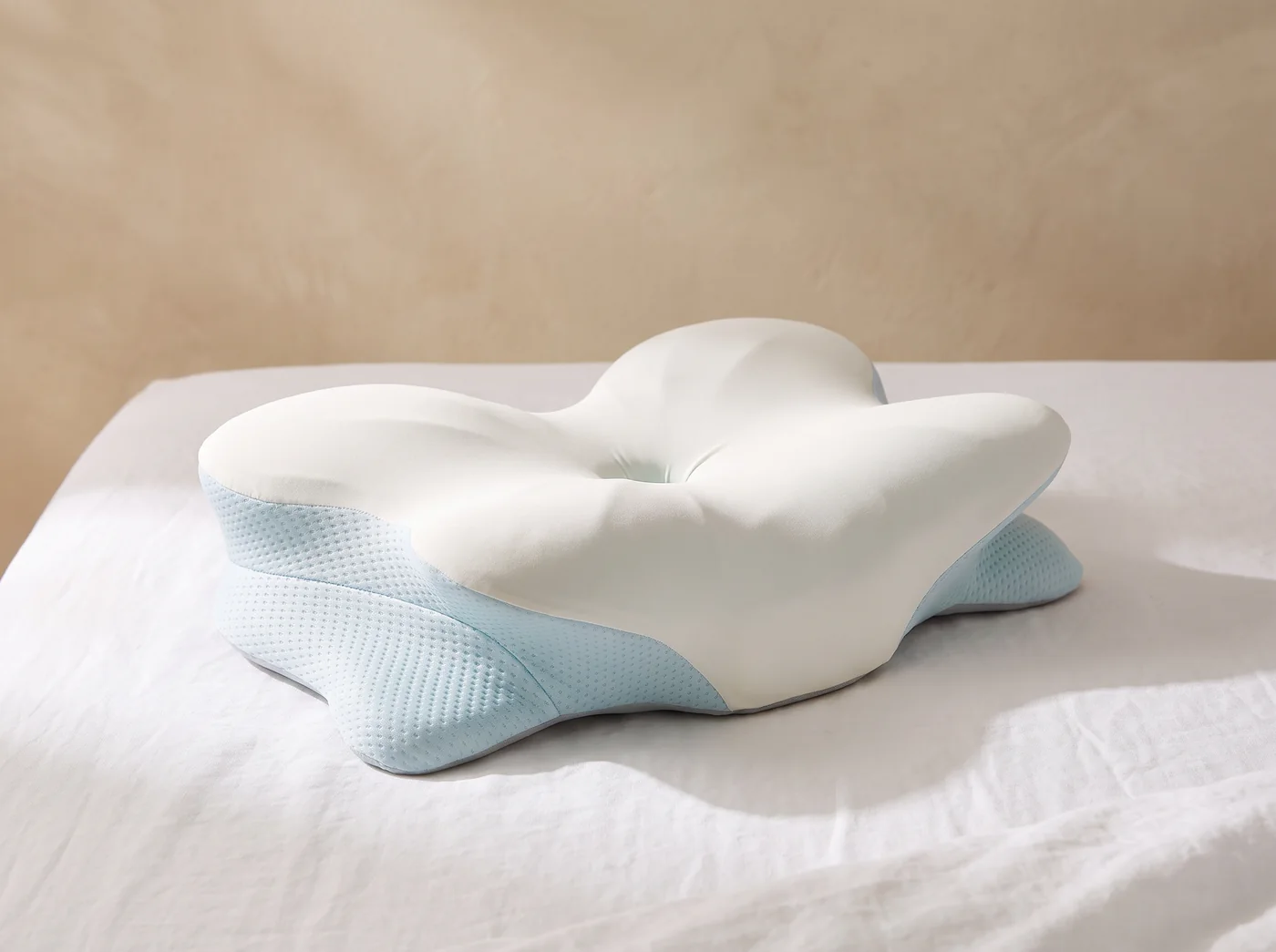
The pillow we suggest for a sleeper berth
The Derila Ergo is a contoured memory-foam pillow with a lower center (about 9 cm), a raised roll under the neck and taller side wings (about 12 cm). It is medium-firm. The shape suits side and back sleepers, which is how most people sleep in a narrow berth, and the wings help when you are sleeping on your side against a cab wall. It is not a good fit if you sleep on your stomach. I have slept on it myself.
When sleep comes in short blocks at odd hours, getting comfortable fast matters, and a pillow that holds the same shape every night helps with neck and shoulder strain from long days at the wheel. Berth mattresses are often thin, so the pillow does more work than at home.
It costs $59.99 for one, $99.98 for two, or $149.96 for four (three plus one free). Shipping is calculated at checkout, and there is a 60-day money-back guarantee.
We earn a commission if you buy through this link, at no extra cost to you. Full details in our Derila pillow review.
If your neck already has a diagnosis. Years behind the wheel, head pushed forward toward the windshield, are hard on the neck and upper back. If a doctor has named the problem, our condition guides give the pillow height that fits it: the best pillow for a dowager’s hump, the best pillow for cervical stenosis, and the best pillow for a herniated disc in the neck.
For back and shoulder aches after loading, tarping or long hours in the seat, some drivers keep a topical pain reliever in the cab. ArcticBlast is an over-the-counter topical for adults; its FDA label lists menthol 10% and camphor 3% as the active ingredients, and it should be applied no more than three to four times a day.
When it is more than tiredness
See a doctor, ideally a sleep specialist, if any of these sound familiar:
- Loud snoring, gasping, or a partner who says you stop breathing. These are classic signs of sleep apnea. There is no federal rule requiring every driver to be tested; FMCSA and the railroad regulator withdrew a proposed rule in 2017 and left screening to the medical examiner’s judgement. Your examiner may still refer you for a sleep study, and the research above found that treatment with CPAP brings crash risk back down to the level of drivers without apnea. Our sleep apnea and snoring guide explains the tests.
- Nodding off at the wheel after a full off-duty period. That is not normal tiredness. Stop driving and get checked.
- Insomnia that lasts weeks, or sleepiness that does not lift on your 34-hour reset. Shift work disorder, a body-clock problem caused by working against your natural sleep time, is treatable.
- Low mood, anxiety or drinking to get to sleep. Life on the road is isolating. In the US, call or text 988 (Suicide & Crisis Lifeline) any time. In an emergency, call 911.
Common questions
How many hours do truck drivers have to sleep?
The rules set off-duty time, not sleep: 10 consecutive hours off duty before driving, then up to 11 hours of driving within a 14-hour window. Plan to sleep at least 7 of those 10 hours.
How does the sleeper berth split work?
You can split the 10 hours into two periods: one of at least 7 hours in the sleeper berth and another of at least 2 hours, adding up to at least 10. Qualifying split periods do not count against your 14-hour window.
Can team drivers sleep while the truck is moving?
Yes, it is legal for the off-duty partner to sleep in the berth while the other drives. Research found team drivers woke far more often in the berth than at home, likely from vibration, so earplugs, a mask and a steady pillow help.
Do truck drivers have to be tested for sleep apnea?
There is no federal rule requiring every driver to be tested. A proposed rule was withdrawn in 2017, and screening is left to the certified medical examiner, who can refer drivers at higher risk for a sleep study.
What is the best pillow for a sleeper cab?
For side and back sleepers, a contoured, medium-firm pillow that keeps the neck in line on a thin berth mattress. We suggest the Derila Ergo. Stomach sleepers should choose a thin, soft pillow instead.
The bottom line
Truck drivers sleep in short, scheduled blocks, often at the wrong time of day, in a cab that is loud, hot or moving. The rules give you the time. Turning it into sleep takes a protected 7-hour block, smart naps, early caffeine, no sleep aids before driving, and a check for sleep apnea if you snore.
One easy upgrade for the berth. A contoured pillow that holds its shape helps you settle fast when sleep is short.
Related: How night shift nurses sleep · How offshore workers sleep · Sleep apnea and snoring guide · How to stop waking up with neck pain
Sources
- US Code of Federal Regulations, Title 49: 395.3 Maximum driving time for property-carrying vehicles, 395.1 Scope (sleeper berth, short-haul and adverse-conditions provisions), 392.3 Ill or fatigued operator and 392.4 Drugs and other substances. Legal Information Institute, Cornell Law School.
- Pack AI, Maislin G, Staley B, et al. Impaired performance in commercial drivers: role of sleep apnea and short sleep duration. American Journal of Respiratory and Critical Care Medicine, 2006. Results as reported in Insurance Journal, 15 August 2006.
- Gurubhagavatula I, Sullivan S, Meoli A, et al. Management of obstructive sleep apnea in commercial motor vehicle operators: recommendations of the AASM Sleep and Transportation Safety Awareness Task Force. Journal of Clinical Sleep Medicine, 2017.
- FMCSA and FRA. Evaluation of safety sensitive personnel for moderate-to-severe obstructive sleep apnea: withdrawal of ANPRM. Federal Register 82(151), 8 August 2017.
- Heavy Duty Trucking. Causes of truck crashes (report on the FMCSA Large Truck Crash Causation Study), 2006.
- AAA Foundation for Traffic Safety. Drowsy driving in fatal crashes, United States, 2017–2021 (Tefft BC), 2024.
- Centers for Disease Control and Prevention. Announcements: Drowsy Driving Prevention Week. MMWR, 2012.
- Olson R, Johnson PW, Shea SA, et al. The Tech4Rest randomized controlled trial: applying the hierarchy of controls to advance the sleep, health, and well-being of team truck drivers. Journal of Occupational and Environmental Medicine, 2023.
- Sharwood LN, Elkington J, Meuleners L, et al. Use of caffeinated substances and risk of crashes in long distance drivers of commercial vehicles: case-control study. BMJ, 2013.
- US Food and Drug Administration. Questions and answers: risk of next-morning impairment after use of insomnia drugs.