Back at the Gym in January? How to Sleep When Everything Aches
Quick answer: To sleep with sore muscles, take the stretch off whatever hurts. Put a pillow under your knees if you lie on your back, or between your knees if you lie on your side, and hug a pillow to rest sore shoulders. A warm shower before bed and some gentle movement in the evening help more than lying still. Soreness after a new workout usually peaks one to three days later and then fades. Sharp pain, swelling or dark urine are not normal soreness and need a doctor.
Every January a lot of people go back to the gym, or start for the first time, and then cannot get comfortable in bed two nights later. That timing is not a coincidence. The ache from unfamiliar exercise is called delayed onset muscle soreness, and according to the American College of Sports Medicine it typically begins 12 to 24 hours after the session and is at its worst between 24 and 72 hours. So the worst night is usually the second one.
It also arrives at an awkward moment, because sleep is when most muscle repair happens. A bad night after a hard session makes the next session harder. Here is how to get through it.
Position by what hurts
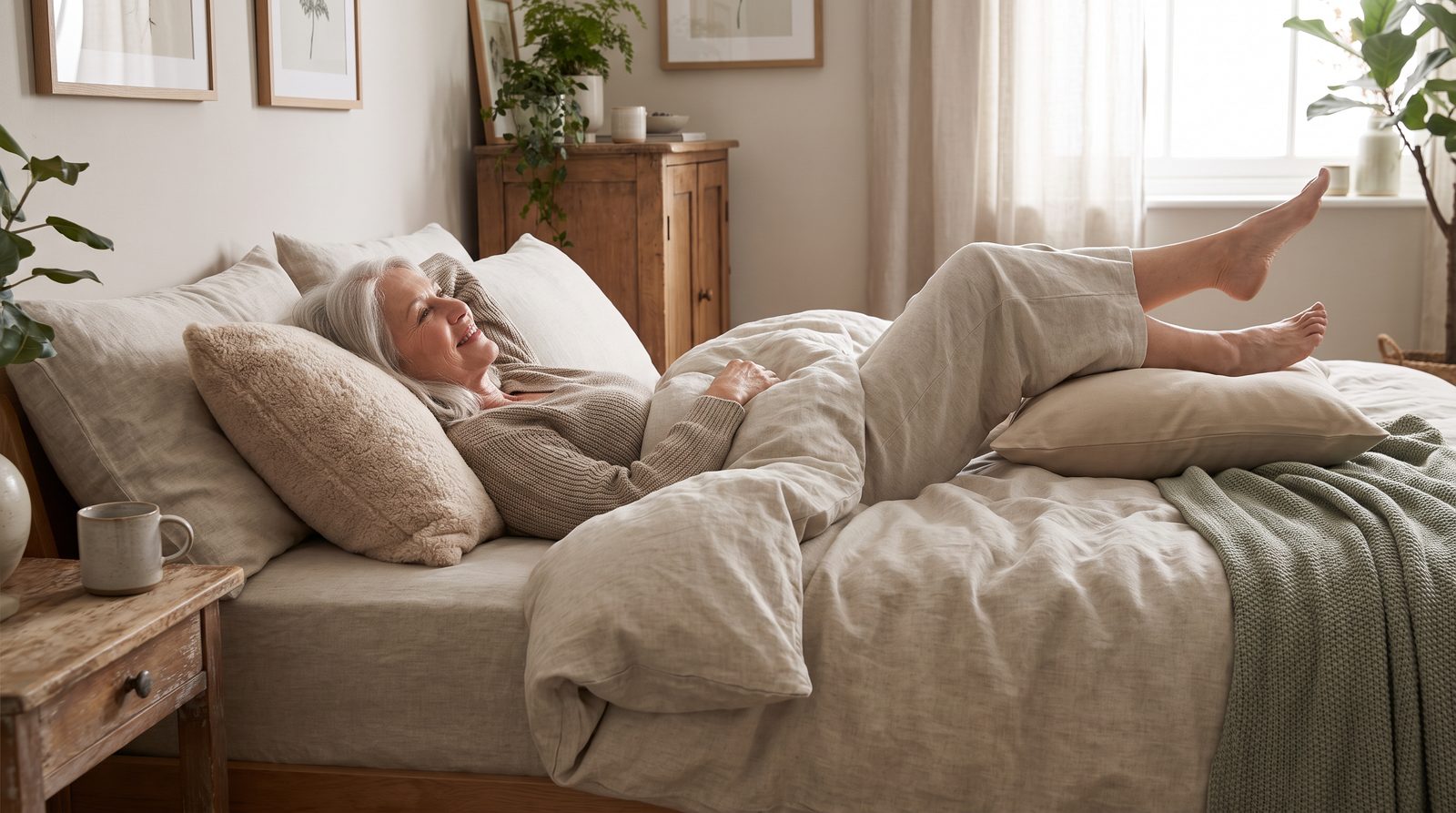
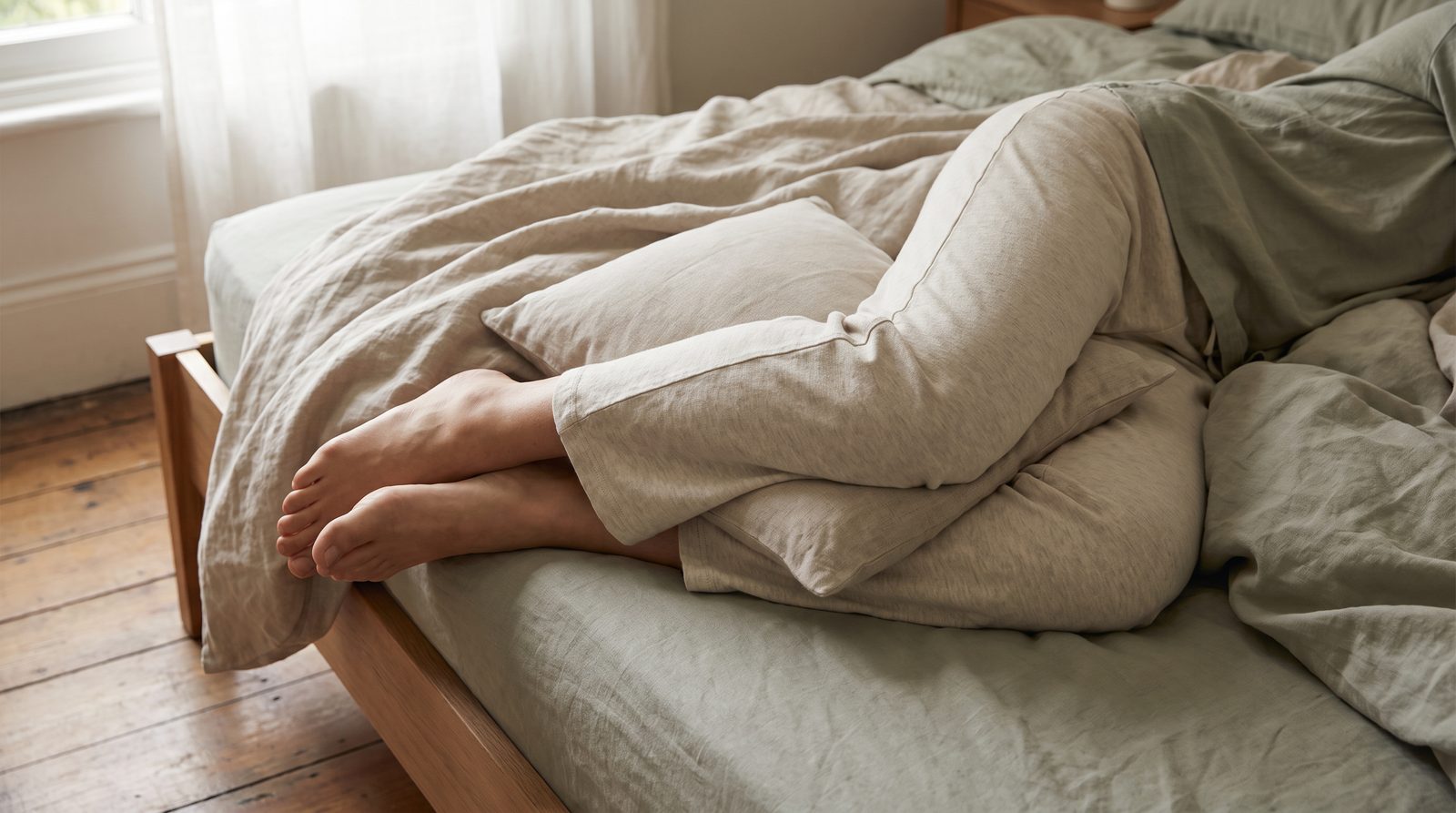
Sore legs and glutes. On your back, put a pillow under your knees so your hips and hamstrings are slightly bent and nothing is pulled tight. On your side, put a firm pillow between your knees so the top leg is not dragging on your hip.
Sore lower back. The same two positions work, for the same reason. Lying flat on your back with straight legs arches the lower back, and a pillow under the knees flattens it. Avoid sleeping on your front, which holds the back arched all night.
Sore shoulders and chest. Lie on the less sore side and hug a pillow, so the top arm rests on it and does not hang forward across your chest. If both sides ache, lie on your back with a small pillow under each forearm.
Sore neck and upper back. This is where the head pillow matters. It needs to fill the gap between your shoulder and your head without tipping your head up or letting it drop. If you are not sure yours does, work out the height you need.
What to do in the evening
- Move a little. A ten-minute walk or some easy stretching eases stiffness. Sitting still all evening makes it worse when you finally lie down.
- Take a warm shower or bath an hour or so before bed. Warmth relaxes tight muscles, and cooling down afterwards helps you feel sleepy.
- Eat properly. Going to bed hungry after training is a common reason for waking in the night.
- Watch the timing. If a late, hard session leaves you wired at bedtime, move it earlier in the day. If it does not affect you, train when you can.
- Skip the nightcap. Alcohol breaks up the second half of the night, which is the sleep you need for recovery. See alcohol and sleep.
Topical relief
Some people use a topical product on sore spots before bed. The one we list on this site is ArcticBlast, a liquid made by Nutriomo Labs that you apply to the skin over the sore area. The maker does not publish how long relief lasts; it is typically re-applied two or three times a day. We have not tested it ourselves, and it is not a treatment for an injury.
How long will it last?
For most people the ache fades within three to five days, and it is much milder the second time you do the same workout. Muscles adapt quickly. The first two weeks of a new routine are the sore ones, which is worth knowing in January because that is exactly when most people stop.
You do not need to wait until you are pain-free to train again. Light exercise while you are still a bit sore is fine and often helps. Work a different part of the body, or do the same thing more gently.
When it is not normal soreness
See a doctor if you have any of these:
- Sharp pain that started suddenly during the exercise
- Pain in a joint, as opposed to the muscle
- Visible swelling, or a limb that feels hot
- Soreness that is still getting worse after three days
- Dark, cola-colored urine after a very hard session. This can be a sign of serious muscle breakdown and needs urgent medical attention.
If you ache every morning, workout or not
Soreness from exercise comes and goes with your training. If you wake up stiff in your neck or back on rest days too, and it eases within an hour of getting up, the cause is more likely your pillow or mattress than the gym. A pillow that has gone flat lets your head drop all night. The fold test takes 30 seconds and tells you whether yours is finished.
Frequently asked questions
Why is the second night worse than the first? Because this kind of soreness is delayed. It builds for a day or two after the session before it eases.
Is it bad to sleep on a sore muscle? No, but pressure on it may wake you. Lie on the other side or on your back and support the sore area with a pillow.
Should I take painkillers before bed? That is a question for a pharmacist, especially if you take other medication. Positioning and warmth are worth trying first.
Does more sleep help recovery? Yes. Sleep is when most repair happens, so an earlier night after a hard session is time well spent.
Further reading
- New Year Sleep Reset: A 14-Day Plan
- Dry January and Sleep: What Happens Week by Week
- How to Stop Waking Up With Neck Pain
- Our top picks →
Sleep Align is reader-supported. Links to ArcticBlast and Derila are affiliate links and we earn a commission if you buy through them, at no extra cost to you. Prices and guarantee terms are set by the sellers and were correct at the time of writing. This article is general information, not medical advice.