
Do You Really Need 8 Hours of Sleep? Where the Number Comes From
The short version: Not exactly. “Eight hours” is a handy round number, not a medical rule. The American Academy of Sleep Medicine and the Sleep Research Society say adults should sleep 7 or more hours a night, and the National Sleep Foundation recommends 7 to 9 hours for most adults and 7 to 8 for those over 65. Regularly getting less than 7 is linked to real harm, while sleeping more than 9 is harder to read, because illness can cause long sleep. Your own number is the amount that leaves you alert all day without an alarm or a caffeine crutch.
Few health rules are repeated as often as “get your eight hours”. But go looking for the study that says eight and you will not find one. You find a range, some nuance and some history.
This is part of our myth-check series, where we trace popular sleep claims back to their sources. (We have already taken apart the claim that dust mites double the weight of your pillow.) Here is where the figure comes from, what the evidence supports, and how to find your own number.

Short on sleep because you keep waking? Neck and shoulder discomfort is a common reason. The Derila Ergo is a contoured pillow for side and back sleepers.
Where the number comes from
The neat split of the day into three eights is older than sleep science. In 1817 the social reformer Robert Owen coined the slogan “Eight hours’ labour, Eight hours’ recreation, Eight hours’ rest”, which became a rallying cry for the eight-hour working day. It was a demand about working hours, not a measurement of sleep need, but “eight hours of rest” slid into “eight hours of sleep”.
Modern research lands near eight for a different reason. When scientists give people far more time in bed than they need, they sleep as much as their body wants. In one study, adults were allowed 12 hours in bed at night plus 4 hours in the afternoon for several days. Younger adults slept about 8.9 hours a day and older adults about 7.4 (Klerman and Dijk, 2008). So “about eight” is roughly what a healthy adult sleeps when nothing gets in the way. It is an average, not a target every person must hit.
Eight also sits in the middle of today’s recommended 7-to-9-hour range. That is the honest way to read it: a sensible midpoint, not a line you fail if you miss.
What the experts actually recommend
Two expert panels set the numbers most doctors use. In 2015 the American Academy of Sleep Medicine (AASM) and the Sleep Research Society (SRS) agreed that “adults should sleep 7 or more hours per night on a regular basis to promote optimal health”. The same year, a National Sleep Foundation panel of 18 experts published ranges by age.
| Age group | Recommended sleep (National Sleep Foundation) |
|---|---|
| Newborns (0 to 3 months) | 14 to 17 hours |
| Infants (4 to 11 months) | 12 to 15 hours |
| Toddlers (1 to 2 years) | 11 to 14 hours |
| Preschoolers (3 to 5 years) | 10 to 13 hours |
| School-age children (6 to 13 years) | 9 to 11 hours |
| Teenagers (14 to 17 years) | 8 to 10 hours |
| Young adults and adults (18 to 64) | 7 to 9 hours |
| Older adults (65+) | 7 to 8 hours |
Neither panel says “eight”. The AASM and SRS set a floor of 7 hours, and said that more than 9 hours “may be appropriate” for young adults, people catching up after sleep loss and people who are ill, and that for everyone else it is uncertain whether sleeping more than 9 hours carries any risk.
Key facts you can quote
- Sleep experts recommend adults sleep 7 or more hours a night, not exactly 8 (AASM and SRS consensus, 2015).
- The National Sleep Foundation recommends 7 to 9 hours for adults aged 18 to 64 and 7 to 8 hours for adults 65 and over (Hirshkowitz et al., 2015).
- More than a third of US adults usually sleep less than 7 hours (CDC, MMWR 2016).
- Two weeks of 6 hours a night produced thinking deficits equal to up to 2 nights of total sleep deprivation (Van Dongen et al., 2003).
- In a review of 1.38 million people, short sleep was linked to 12% higher risk of death and long sleep to 30% higher, though long sleep may often reflect illness (Cappuccio et al., 2010).
Free to quote with a link to this page.
The case against too little sleep
The evidence on short sleep is strong and consistent. The AASM and SRS link regularly sleeping under 7 hours to weight gain, diabetes, high blood pressure, heart disease, stroke, depression and a higher risk of death.
Short sleep is also common. In a CDC survey of 444,306 adults, 65.2% reported a healthy sleep duration of 7 hours or more, which means more than a third usually slept less.
The most striking evidence comes from the lab. In a 2003 study, 48 healthy adults spent two weeks with 4, 6 or 8 hours in bed per night. Those on 4 or 6 hours built up steady, growing deficits in attention and memory. By the end, 6 hours or less a night produced deficits equal to up to two nights of no sleep at all. The catch: their sense of how sleepy they felt barely changed after the first few days. People on 6 hours often believe they have adapted when their performance says otherwise.
The puzzle of too much sleep
Large studies also find that people who sleep a lot tend to die sooner. A 2010 meta-analysis of 16 studies with more than 1.38 million people found that short sleepers had a 12% higher risk of death and long sleepers a 30% higher risk. Plotted on a graph, risk rises at both ends: a U shape.
That sounds alarming, but read it with care. These studies show links, not cause and effect. Long sleep can be a sign of something else, such as depression or an illness that has not been diagnosed yet. That is why the experts call the long-sleep risk “uncertain” rather than telling people to sleep less.
The practical takeaway: if you used to sleep 7 to 8 hours and now need 10 and still feel tired, that change is worth mentioning to a doctor. Forcing yourself to sleep less is not the fix.
Are some people fine on 6 hours?
A very small number are. In 2009, researchers at the University of California, San Francisco found two women in one family who naturally slept about 6 hours and 15 minutes a night and felt fine. Both carried a rare change in a gene called DEC2 (also known as BHLHE41). It was not found in 250 other people who slept about 8 hours.
Researchers believe very few people carry variants like this. The trouble is that far more people think they are natural short sleepers than actually are. Genuine short sleepers feel alert on little sleep without an alarm clock, caffeine or weekend catch-up sleep. If you sleep 6 hours in the week and 9 at the weekend, you are almost certainly not one of them.
What about “first sleep” and “second sleep”?
The idea that our ancestors slept in two halves comes from historian A. Roger Ekirch, who found many references to a “first sleep” and “second sleep” in early modern English records. A 1992 experiment by Thomas Wehr also found that people kept in long nights of darkness drifted into two sleep blocks with a waking gap of 1 to 3 hours between them.
Treat this one with caution. A 2023 paper in the journal Medical History by Niall Boyce re-examined the historical sources and argued that other readings of them are possible, and Ekirch has replied defending his view. And a study of three pre-industrial societies living without electricity found people sleeping 5.7 to 7.1 hours a night. The fair summary: waking briefly in the night is common and usually normal, but there is no proof that a split night is the “natural” human pattern you should aim for. If you wake at 3am and lie there anxious, our guide to why you wake at 3am may help.
Find your situation
Tap the option that matches how much you usually sleep.
If you usually sleep about 6 hours
- You are below the 7-hour floor the experts recommend. Unless you are one of the rare natural short sleepers, you are probably carrying a sleep debt you no longer notice.
- Try moving bedtime 15 minutes earlier each week until you reach 7 hours or more.
- If you are in bed for 8 hours but only sleeping 6, the problem may be broken sleep, not too little time in bed. Discomfort and neck pain are common reasons people wake.
If you usually sleep 7 to 9 hours
- You are inside the recommended range. If you feel alert during the day, there is no need to chase a perfect 8.
- If you still wake tired, look at sleep quality. Snoring, waking with a stiff neck or a lumpy pillow can cut into deep sleep.
- Our pillow height calculator can check whether your pillow suits how you sleep.
If you usually sleep more than 9 hours
- That can be normal for young adults, after a period of sleep loss, or during illness.
- If it is a new change, or you still feel exhausted after 9 hours or more, see a doctor. Sleep apnea, depression and other conditions can show up this way.
- Do not try to fix it with sleep aids. Long sleep plus daytime tiredness is a reason for a check-up, not a supplement.
How to find your own number
Run a holiday test. Spend a week or two with no alarm. Go to bed when sleepy and wake when you wake. The first nights may run long as you pay back debt; where you settle after that is close to your real need.
Use the daytime check. With enough sleep you wake mostly without an alarm, stay alert without heavy caffeine, and do not nod off while reading or in traffic. A mild dip after lunch is normal.
Watch the weekend gap. If you sleep two or more hours longer at weekends than on weekdays, your weekday sleep is probably too short. If your weekday and weekend times have drifted apart, our sleep schedule plan builder turns the wake time you need into a 14-day plan.
Count sleep, not time in bed. Eight hours in bed with three wake-ups is not eight hours of sleep. If you wake often from discomfort, a sore neck or a too-high pillow, fixing that may give you more real sleep than going to bed earlier. Our guide to waking up with neck pain covers the common causes.
Products that can help you reach your number
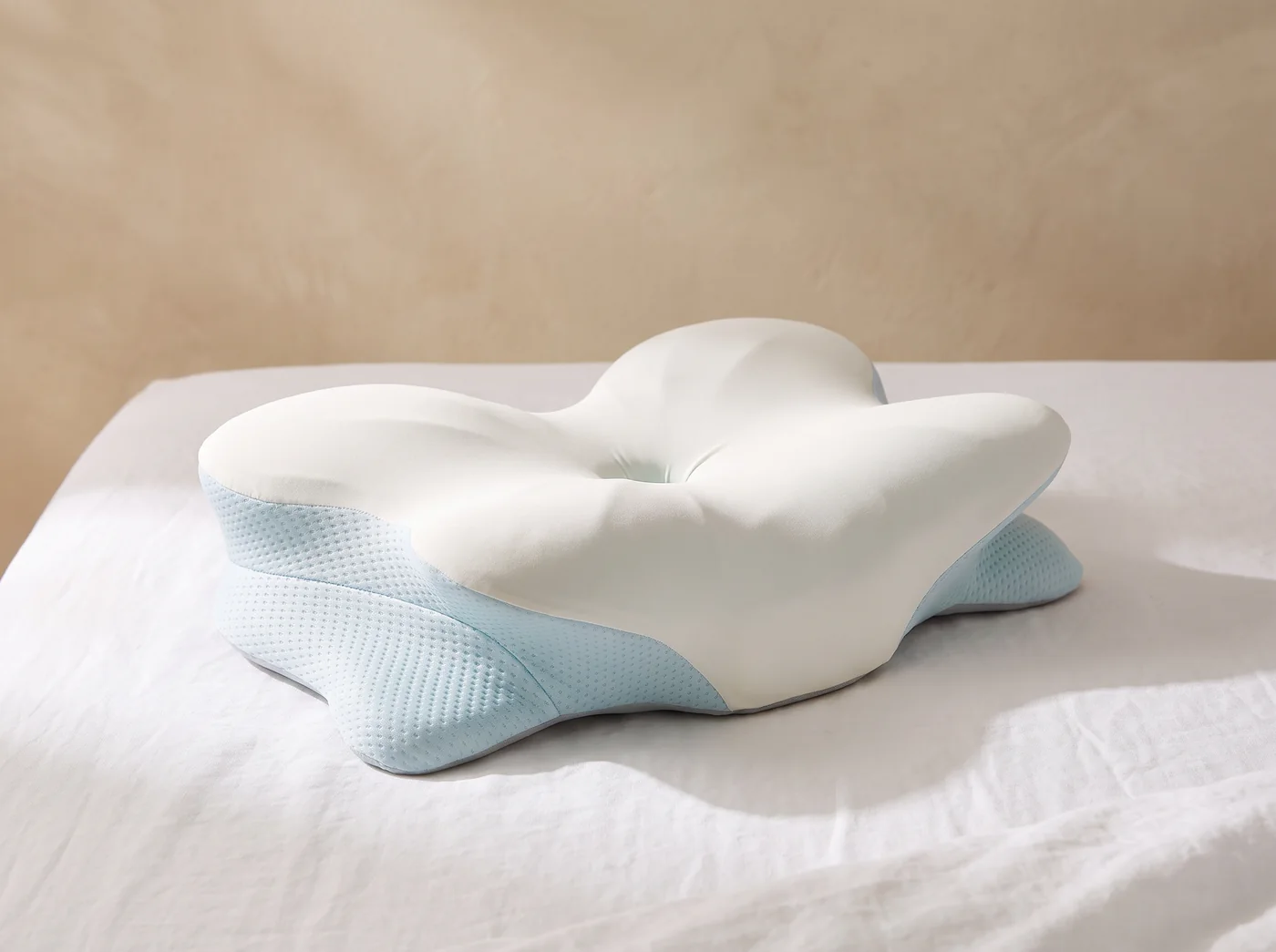
If you keep waking, comfort is often the easiest thing to fix. The Derila Ergo is a contoured memory-foam pillow with a lower center (about 9 cm) for back sleeping, taller side wings (about 12 cm) for side sleeping, a raised neck roll and a medium-firm feel. It suits side and back sleepers, not stomach sleepers. I have slept on it myself. It costs $59.99 for one, $99.98 for two or $149.96 for four, with shipping calculated at checkout and a 60-day money-back guarantee.
Want our pillow pick? See our Derila Ergo review.
We earn a commission if you buy through this link, at no extra cost to you. Full details in our Derila pillow review.
If falling asleep is the hard part: YU SLEEP
YU SLEEP is a liquid sleep supplement with Red Tart Cherry, 5-HTP, vitamins B6 and B2, Magnesium Glycinate, Apigenin, Lemon Balm, L-Theanine, GABA and a low 0.9 mg dose of melatonin. We have not tested it ourselves. It will not replace a 7-hour sleep window or fix the causes of short sleep. It costs $138 for two months, $177 for three or $294 for six, with a 60-day guarantee. Compare it in our YU SLEEP vs melatonin guide.
Want our sleep-supplement pick? See why we chose YU SLEEP.
Do not take it with antidepressants (SSRIs, SNRIs, MAOIs) or other serotonin medicines, because it contains 5-HTP. If you take regular medication, are pregnant or breastfeeding, check with a doctor or pharmacist first.
When it is more than tiredness
- You sleep 7 to 9 hours and still feel exhausted. Loud snoring, gasping or choking at night, and morning headaches can point to sleep apnea. See our sleep apnea and snoring guide and talk to your doctor.
- You cannot sleep even when you have the time. Trouble falling or staying asleep most nights for months may be insomnia, which a doctor can treat, often with a talking therapy called CBT-I (cognitive behavioral therapy for insomnia).
- Your sleep need has jumped. A sudden rise in how long you sleep, especially with low mood or weight change, is worth a check-up.
- Your mind races at night. See our guide to night-time anxiety. If low mood or anxiety feels overwhelming, speak to a doctor; in the US you can call or text 988 at any time.
Common questions
Is 7 hours of sleep enough?
For most adults, yes. Seven hours is the minimum the AASM and SRS recommend, and it sits inside the National Sleep Foundation’s 7-to-9-hour range.
Is 6 hours of sleep enough?
For most people, no. In a lab study, two weeks of 6 hours a night caused thinking deficits equal to up to two nights without sleep. Only a rare few, such as carriers of a DEC2 gene variant, do well on about 6.
Is it bad to sleep 9 or 10 hours?
Not necessarily. It can be normal for young adults or after sleep loss. Studies link long sleep to higher death rates, but illness may be the cause. If your sleep need has risen sharply, see a doctor.
Where did the 8-hour sleep rule come from?
Splitting the day into three eights comes from the campaign for an eight-hour working day and Robert Owen’s 1817 slogan about labour, recreation and rest. Eight is also the middle of today’s 7-to-9-hour range.
How can I tell how much sleep I need?
Sleep without an alarm for a week or two and note where your sleep settles after the first few nights. If you then stay alert all day, that is about your number.
The bottom line
You do not need exactly eight hours. You need enough, and for nearly all adults that means at least 7. Below 7, the harm is well documented. Above 9, the link to poor health may say more about illness than sleep. Find your number with a no-alarm week, protect it, and make sure the hours in bed are spent asleep.
Losing sleep to wake-ups? If neck or shoulder discomfort keeps waking you, a contoured pillow for side and back sleepers is a simple place to start.
Related: Why you wake at 3am · Resetting your circadian rhythm · Pillow height calculator · How do medical residents sleep?
Subscribe for the FREE 7-Night Sleep Reset protocol
The free protocol lands in your inbox within a minute: a one-page checklist for tonight, then one short email a night for seven nights, each with one small change a doctor would agree with.
Start tonight. Every night you wait is another 3 a.m. you did not have to have.
- Watson NF et al. Recommended amount of sleep for a healthy adult: a joint consensus statement of the AASM and SRS. J Clin Sleep Med. 2015;11(6):591-2.
- Hirshkowitz M et al. National Sleep Foundation’s sleep time duration recommendations: methodology and results summary. Sleep Health. 2015;1(1):40-3.
- Liu Y et al. Prevalence of healthy sleep duration among adults, United States, 2014. MMWR. 2016;65(6):137-41.
- Van Dongen HPA et al. The cumulative cost of additional wakefulness. Sleep. 2003;26(2):117-26.
- Cappuccio FP et al. Sleep duration and all-cause mortality: a systematic review and meta-analysis of prospective studies. Sleep. 2010;33(5):585-92.
- Klerman EB, Dijk DJ. Age-related reduction in the maximal capacity for sleep. Curr Biol. 2008;18(15):1118-23.
- He Y et al. The transcriptional repressor DEC2 regulates sleep length in mammals. Science. 2009;325:866-70; and Science News, A gene for a short night’s sleep.
- Wehr TA. In short photoperiods, human sleep is biphasic. J Sleep Res. 1992;1(2):103-7.
- Boyce N. Have we lost sleep? A reconsideration of segmented sleep in early modern England. Med Hist. 2023;67(2):91-108; and Ekirch AR. Reflections on ‘Have we lost sleep?’ Med Hist. 2024;68(3):254-62.
- Yetish G et al. Natural sleep and its seasonal variations in three pre-industrial societies. Curr Biol. 2015;25(21):2862-8.