How Do Soldiers Sleep?
The short version: Less than they need, and in pieces. The Army’s fitness manual says most soldiers need 7 to 9 hours of sleep every 24 hours, but in a RAND survey of nearly 2,000 service members only 37.4% got 7 hours or more, and 31.4% slept 5 hours or less. In the field, soldiers sleep in shifts and short naps, and the Army now tells leaders to plan sleep like food and ammunition. For many, the hardest sleep comes later, at home, when insomnia, nightmares and sleep apnea show up.
Military life has a long habit of treating sleep as optional. RAND researchers found that going without sleep is often seen as a badge of honor in the services, and admitting you need it can look like weakness. The Army’s own doctrine now says the opposite, in plain words.
This guide covers what the Army tells soldiers about sleep, what the research shows, the problems of training, the field and coming home, and what helps. Every number links to a source at the end.

What the Army says about sleep
The Army’s Holistic Health and Fitness manual, FM 7-22 (October 2020), gives sleep its own chapter, “Sleep Readiness”. Most soldiers, it says, need 7 to 9 hours of sleep every 24 hours to maximize health and sustain performance. There is no safe minimum: more sleep always means better performance.
The manual calls the idea that one can adapt to sleep loss “a myth”, and says soldiers cannot be trained to perform better on less sleep. People who are short on sleep for weeks get used to feeling dull and think it is normal, but objective tests show no real adaptation.
For leaders, FM 7-22 says to treat sleep as an item of resupply, “like beans and bullets”, with time planned for sleep before missions and recovery sleep after. It sums up the leader’s job as SLEEP: set conditions, lead by example, educate and encourage, prioritize and plan.
What the research says
| What was measured | Finding | Source |
|---|---|---|
| Sleep the Army says soldiers need | 7 to 9 hours every 24 hours | FM 7-22, 2020 |
| Service members getting 7+ hours | 37.4% of 1,957 surveyed across all four branches | RAND, 2015 |
| Sleeping 5 hours or less | 31.4% | RAND, 2015 |
| Poor sleep quality | 48.6% scored in the range that signals a real sleep problem | RAND, 2015 |
| Using sleep medication | About 18% | RAND, 2015 |
| Sleep apnea in active-duty members sent for a sleep study | 51.2% (27.2% mild, 24.0% moderate to severe); insomnia 24.7% | Mysliwiec et al., 2013 (725 patients) |
| Recovery after a week of short sleep | After 7 nights of 5 or 7 hours in bed, 3 nights of 8 hours did not restore normal reaction speed | Belenky et al., Walter Reed Army Institute of Research, 2003 |
Key facts you can quote
- The Army’s FM 7-22 says most soldiers need 7 to 9 hours of sleep every 24 hours, and calls the idea of adapting to sleep loss “a myth”.
- In a RAND survey of 1,957 US service members, only 37.4% got 7 hours or more, and 31.4% slept 5 hours or less (RAND, 2015).
- 48.6% of the same service members had poor sleep quality scores (RAND, 2015).
- Of 725 active-duty members referred for a sleep study, 51.2% had obstructive sleep apnea and 24.7% had insomnia (Mysliwiec et al., 2013).
- CBT for insomnia improves sleep in 7 out of 10 people who complete it (VA National Center for PTSD).
Free to quote with a link to this page.
The Walter Reed study is worth remembering if you think one weekend fixes a hard month. Volunteers spent a week with 3, 5, 7 or 9 hours in bed each night. Only the 9-hour group stayed at normal levels. The 5- and 7-hour groups slowed down and stayed slow even after three nights of 8 hours.
The sleep problems soldiers face
Training
Training days often start before dawn and end late. FM 7-22 notes that younger soldiers almost always use a later wake time to get more sleep when they can, which shows how much early starts cost them. The manual recommends a later start to the duty day and afternoon physical training where feasible, and says this can mean fewer sick calls and accidents.
The field and continuous operations
In the field, sleep happens in shifts, on cots, in vehicles and on the ground. FM 7-22 says work between 23:00 and 08:00 is slower and has more errors, and that soldiers on critical tasks in those hours risk lapses and even microsleeps (brief, uncontrolled seconds of sleep). It recommends separating sleeping areas by shift, and says no soldier should have to choose between food and sleep.
Caffeine and energy drinks
Caffeine is the Army’s approved alertness tool, but it backfires when overused. RAND’s review cites a 2010 survey of 998 soldiers and Marines in Afghanistan: 44.8% drank at least one energy drink a day, and the nearly 14% who drank three or more reported frequent sleep disruption.
The drive home after night duty
FM 7-22 singles out the morning commute after overnight duty as a high-risk time, with a sleep-deprived soldier at the wheel at the low point of the body clock. It suggests post-shift sleeping quarters, later shift end times, or a ride home.
Coming home
RAND calls sleep problems a primary complaint after deployment. Its review cites figures showing about 40% of those deployed to Iraq or Afghanistan reported sleep problems one and three months after returning, against 20 to 25% of those deployed to less combat-heavy places. Insomnia and post-traumatic stress disorder (PTSD) are closely tied: in the Mysliwiec study, PTSD roughly doubled the odds of an insomnia diagnosis, and the VA says almost everyone with PTSD has trouble sleeping.
Find your situation
Garrison and training days
- Protect the 7 to 9 hours. Before a big event, bank sleep with more than 8 hours in bed for several nights.
- Extend sleep by going to bed earlier, not sleeping in, so your wake time stays steady.
- Stop caffeine at least 6 hours before you plan to sleep.
- Sleeping in on a day off is fine if you are paying back a sleep debt, the manual says.
Field exercises and continuous operations
- Nap whenever the mission allows, aiming for 7 to 8 hours in every 24.
- When you cannot predict your next chance, take the longest nap possible each time.
- Use caffeine in 200 mg doses (about two cups of coffee), the amount the manual calls optimal for most people.
- Caffeine can also cut the grogginess after a nap, the manual notes.
Back home, or out of uniform
- Plan extra sleep after a deployment. FM 7-22 says recovering from weeks of short sleep takes longer than recovering from one long night.
- If sleep has not settled, say so at your health assessment or to your doctor. RAND notes sleep problems may come before other mental health problems, and may carry less stigma to raise.
- Insomnia and nightmares respond to treatment, including CBT for insomnia.
- Keep the bedroom dark, cool and quiet, with a steady wake time.
What helps
Tactical napping. FM 7-22 says that when normal night sleep is not possible, soldiers can use short, infrequent naps to restore wakefulness, and that on 6 hours of sleep or less, naps plus the right doses of caffeine may help sustain performance. Leaders are told to give soldiers permission to nap.
Bank sleep before, recover after. Extra sleep before a mission improves performance during it and reduces the recovery sleep needed afterwards. Where possible, the manual suggests up to 10 hours in bed for at least a week before missions likely to involve heavy sleep loss.
Time caffeine like a dose. For sustained overnight operations, the manual lists 200 mg at midnight, and again at 04:00 and 08:00 if needed. For restricted sleep, 200 mg on waking and again 4 hours later, with the last dose at least 6 hours before sleep. It adds that caffeine “does not replace sleep”.
Rotate shifts forward. FM 7-22 advises rotating shifts no more than twice a month and always forward (days to evenings to nights), because the body adapts more easily to going to bed later. To map out a rotation, put your shift times into our free shift-work sleep planner.
Be careful with sleep aids while serving. FM 7-22 says to use sleep-inducing medicines only under a physician’s supervision, to avoid over-the-counter sleep aids, and to avoid over-the-counter melatonin, which it says does not increase actual sleep time. If you are serving, follow that and talk to your unit’s medical staff.
Products for sleep at home
Nothing here is meant for duty; in the field you sleep on what you are issued. At home, though, the setup matters, especially for the daytime and odd-hours sleep that recovery and shift work demand.
The pillow: Derila Ergo
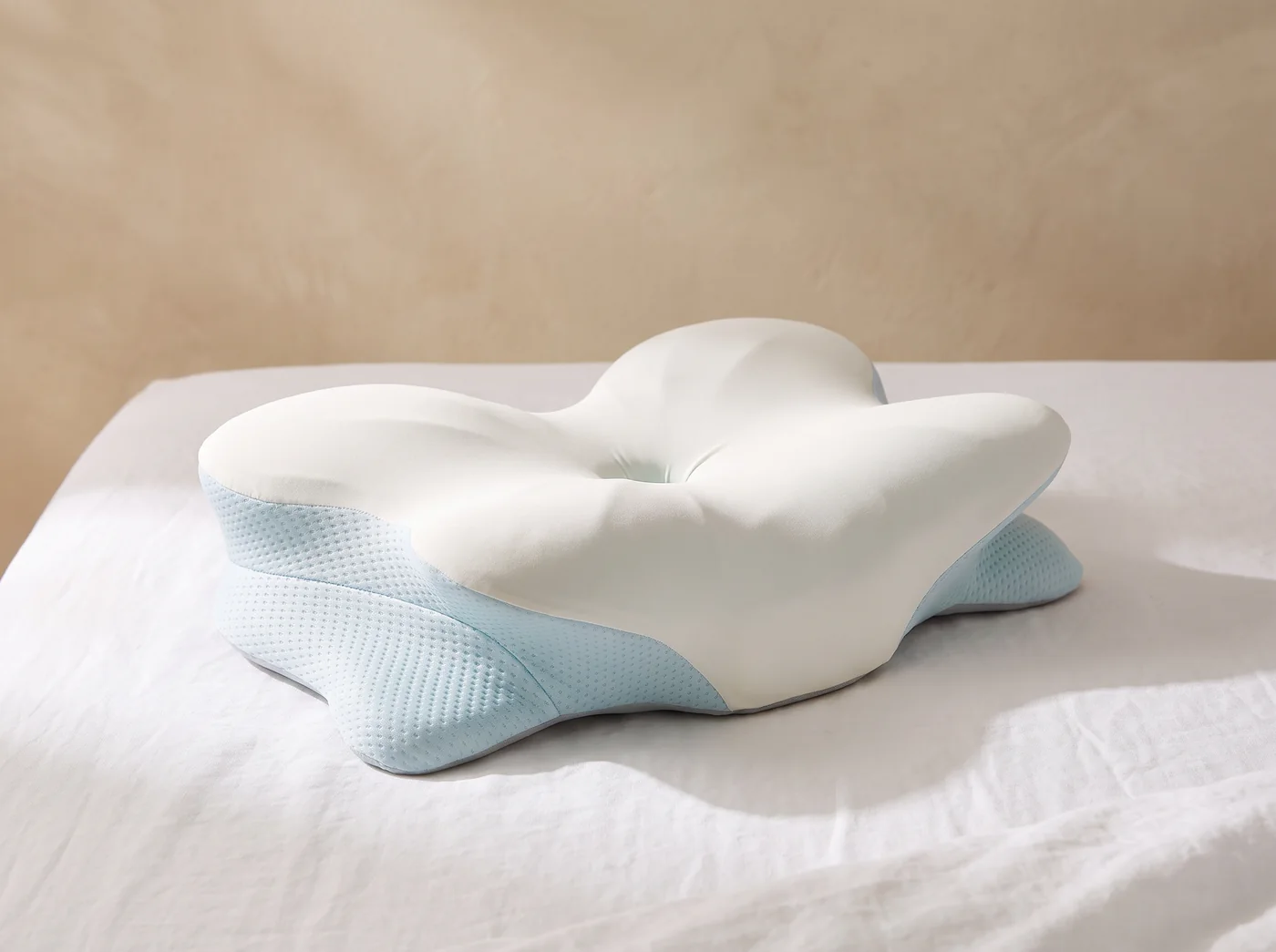
The pillow we recommend is the Derila Ergo, a medium-firm contoured memory-foam pillow with a lower center (about 9 cm) for back sleeping, a raised neck roll, and taller side wings (about 12 cm) for side sleeping. It suits side and back sleepers, not stomach sleepers. I have slept on it myself. It is aimed at people who need to get comfortable fast at strange hours, and at anyone whose neck and shoulders feel the years of rucks and bad pillows. It costs $59.99 for one, $99.98 for two, or $149.96 for four (three plus one free), with a 60-day money-back guarantee. Shipping is calculated at checkout.
Want our pillow pick? See our Derila Ergo review.
We earn a commission if you buy through this link, at no extra cost to you. Full details in our Derila pillow review.
If your neck already has a diagnosis. Years of rucks, helmets and body armor often show up later in the neck. If a doctor has named the problem, our condition guides give the pillow height that fits it: the best pillow for a herniated disc in the neck, the best pillow for cervical stenosis, and the best pillow for occipital neuralgia for headaches that start at the base of the skull.
For veterans only: a sleep supplement
If you are out of uniform and want to try a low-dose supplement
This is for veterans at home, not for anyone still serving, since FM 7-22 tells soldiers to avoid over-the-counter melatonin and sleep aids. YU SLEEP is a liquid sleep supplement with melatonin 0.9 mg plus red tart cherry, 5-HTP, vitamins B6 and B2, magnesium glycinate, apigenin, lemon balm, L-theanine and GABA. We have not tested it ourselves. It costs $138 for 2 months, $177 for 3 months or $294 for 6 months, with a 60-day guarantee. Never take it before driving or handling a weapon, and treat it as a support, not a replacement for treatment of insomnia, nightmares or PTSD.
Want our sleep-supplement pick? See why we chose YU SLEEP.
Do not take it with antidepressants (SSRIs, SNRIs, MAOIs) or other serotonin medicines, because it contains 5-HTP. If you take regular medication, are pregnant or breastfeeding, check with a doctor or pharmacist first.
When it is more than tiredness
- Loud snoring, gasping or waking unrefreshed. These are signs of obstructive sleep apnea, where the airway closes during sleep. More than half of the active-duty members sent for a sleep study in the Mysliwiec research had it. The VA says it is common in veterans with PTSD, and that CPAP treatment may even help PTSD treatment. See our sleep apnea and snoring guide.
- Insomnia that lasts. The VA says the best treatment is Cognitive Behavioral Therapy for Insomnia (CBT-I), usually about six sessions, which helps 7 out of 10 people who complete it. An app called CBT-i Coach supports it. The VA advises keeping sleep medicine to short-term use of 2 to 4 weeks.
- Nightmares, flashbacks or a racing mind. These can be part of PTSD, which is treatable. The VA notes CBT-I also reduces nightmares. Our guide to nighttime anxiety and a racing mind has first steps, but please also talk to a professional.
If you are a veteran or service member in crisis, or worried about one, contact the Veterans Crisis Line: dial 988 then press 1, text 838255, or chat online at VeteransCrisisLine.net. It is open 24/7, and you do not need to be enrolled in VA care. In an emergency, call 911.
Common questions
How many hours of sleep does the Army say soldiers need?
FM 7-22 says most soldiers need 7 to 9 hours of sleep every 24 hours, and that more sleep always produces better performance. Before a hard mission it recommends more than 8 hours a night to bank sleep.
How do soldiers sleep in the field?
In shifts and naps, on cots, in vehicles or on the ground. The Army tells leaders to separate sleeping areas by shift, plan sleep like any other supply, and let soldiers nap whenever the mission allows.
What is tactical napping?
Taking short naps whenever a mission allows, to restore alertness when normal night sleep is not possible. FM 7-22 says that when chances are unpredictable, soldiers should take the longest nap possible each time.
Why do veterans have trouble sleeping?
Years of short, irregular sleep, combat stress, pain, PTSD and sleep apnea all play a part. RAND calls sleep problems a primary complaint after deployment, and the VA says almost everyone with PTSD has trouble sleeping. These problems respond to treatment.
What helps veterans sleep after leaving the military?
A steady wake time, a dark and quiet bedroom, and a comfortable bed and pillow are the base. For lasting insomnia, CBT-I is the VA’s first-choice treatment. Snoring or gasping should be checked for sleep apnea.
The bottom line
Soldiers sleep in fragments, often far less than the 7 to 9 hours their own manual says they need. The Army now says plainly that sleep is a force multiplier: bank it before missions, nap during them, recover after them, and time caffeine with care. At home, the job is protecting your sleep and getting help early when it will not come back on its own.
We earn a commission if you buy through this link, at no extra cost to you. Full details in our Derila pillow review.
Related: How do firefighters sleep? · How do police officers sleep? · How do pilots and flight attendants sleep? · How to stop waking up with neck pain
Sources
- Headquarters, Department of the Army. FM 7-22, Holistic Health and Fitness, Chapter 11: Sleep Readiness (1 October 2020 edition; copy hosted by Illinois State University Army ROTC).
- Troxel WM, Shih RA, Pedersen ER, et al. Sleep in the Military: Promoting Healthy Sleep Among U.S. Servicemembers. RAND Corporation, 2015.
- RAND Corporation. Sleep Problems Prevalent for Military Members Post-Deployment (press release, April 2015).
- RAND Corporation. Improving Sleep Health for U.S. Servicemembers (research brief RB-9824, 2015).
- Mysliwiec V, McGraw L, Pierce R, et al. Sleep disorders and associated medical comorbidities in active duty military personnel. Sleep, 2013.
- Belenky G, Wesensten NJ, Thorne DR, et al. Patterns of performance degradation and restoration during sleep restriction and subsequent recovery: a sleep dose-response study. Journal of Sleep Research, 2003.
- U.S. Department of Veterans Affairs, National Center for PTSD. Sleep Problems and PTSD.
- Veterans Crisis Line. VeteransCrisisLine.net.