

How to Sleep With Pelvic Girdle Pain in Pregnancy (PGP and SPD)
The short version: sleep on your side with a pillow between your knees and ankles thick enough to keep your top leg level with your hip, and a small pillow under your bump. To turn over, keep your knees together, squeeze the pillow and roll in one piece, or turn through your hands and knees. Get in and out of bed sideways with both legs moving together. And ask your midwife for a referral to a pelvic health physiotherapist, because this is treatable.
Pelvic girdle pain, often shortened to PGP and sometimes still called SPD (symphysis pubis dysfunction), is pain in the joints of the pelvis: at the front over the pubic bone, at the back on one or both sides, or across the hips and into the thighs. NHS sources put it at around one in five pregnant women.
It has a nasty habit of being worst in bed. Lying still stiffens the joints, turning over moves each side of the pelvis separately, and a top leg that drops forward twists the whole ring. Women describe a stab or a grinding feeling when they roll, and a pelvis that feels like it needs a minute to get going in the morning.
Most of that can be eased with how you lie and how you move. This guide covers both. It does not replace assessment by a physiotherapist, which is the real treatment.
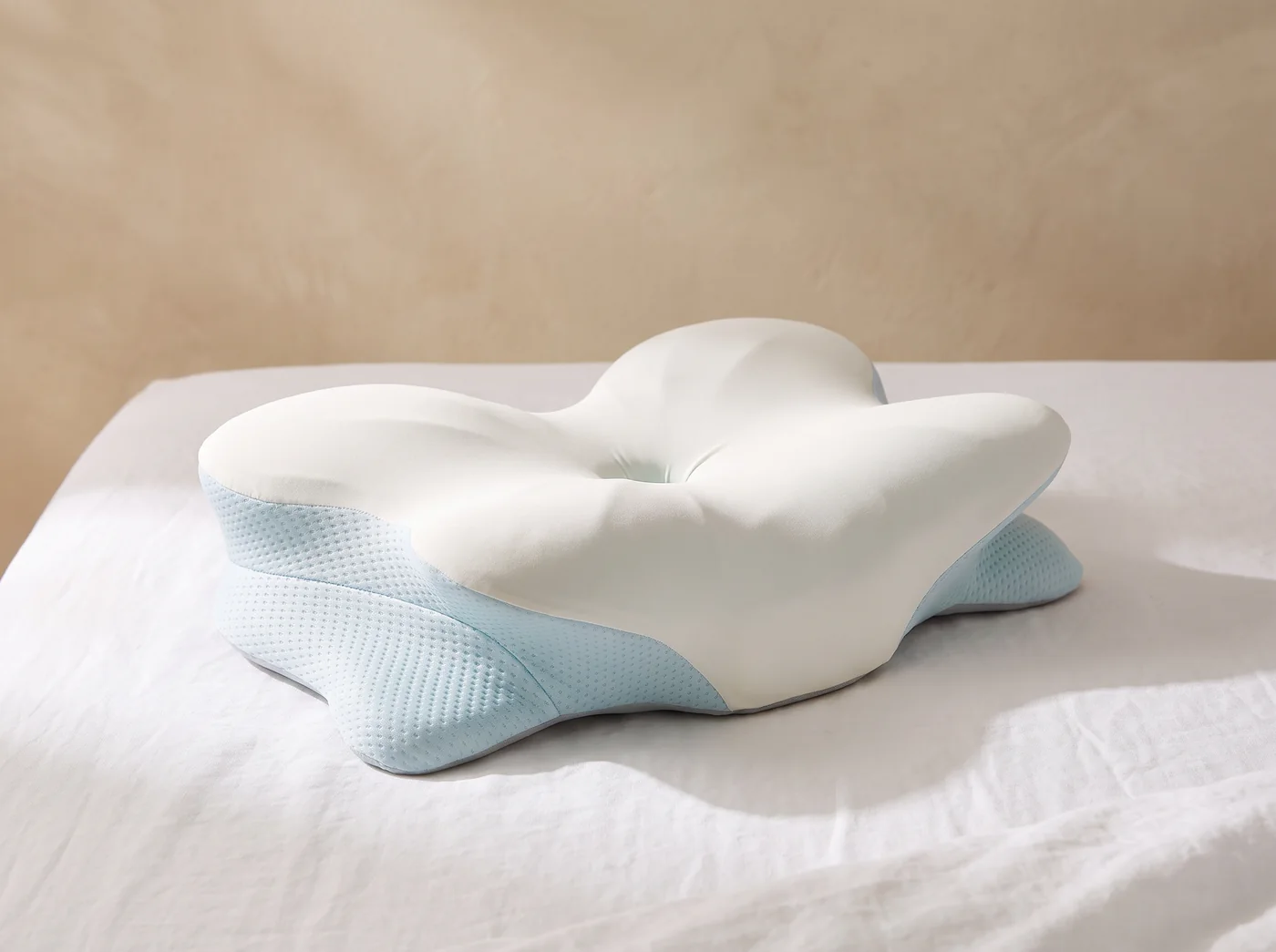
When turning over hurts, you stay on one side for longer. That makes the head pillow matter more than usual. We recommend the Derila Ergo, a contoured pillow with raised sides for side sleepers and a 60-day guarantee.
Why It Hurts More at Night
| What happens in bed | What it does to the pelvis | The fix |
|---|---|---|
| Top leg drops forward on your side | Twists the pelvis and pulls at the front joint | Thick pillow between knees and ankles |
| Bump hangs toward the mattress | Drags on the lower back and the back of the pelvis | Small pillow or wedge under the bump |
| Rolling over one leg at a time | Moves the two halves of the pelvis against each other | Knees together, roll as one piece |
| Hours on one hip | Pressure on the outer hip and thigh | Softer surface, change sides when you wake |
| Swinging one leg out of bed | Parts the legs under load | Both legs together, sit up sideways |
Pick Where Your Pain Is
Tap the area that hurts most for the setup that suits it.
Front pain: keep your legs together. Anything that parts your knees pulls on this joint.
- A firm, thick pillow between your thighs, knees and ankles, so your legs lie parallel and your top leg cannot drop.
- Squeeze that pillow gently and keep it in place while you turn.
- Get in and out of bed with knees pressed together, as if you were wearing a tight skirt.
- A head pillow tall enough that you do not need to shift about to get your neck comfortable.
Back-of-pelvis pain: take the weight of the bump.
- A small pillow or wedge under your bump so it does not pull you forward.
- A pillow between your knees and ankles to stop your pelvis twisting.
- A firm pillow behind your back to lean into, which takes the load off the sore side.
- Try lying on the less painful side first.
Hip and thigh pain: reduce the pressure.
- Soften the surface with a mattress topper or a folded duvet under the sheet.
- A pillow between knees and ankles so the top leg’s weight is carried by the pillow, not your lower hip.
- Change sides each time you wake for the toilet, using the knees-together turn.
- If a pillow between the knees does not suit you, rest your top leg forward on two pillows instead.
More on this: best pillow for hip pain.
The Pillow Setup in Detail
Between your knees and ankles
This is the one that matters most. A thin cushion between the knees alone is not enough, because your top foot still drops and your thigh turns inward. You want support from thigh to ankle, thick enough that your top leg lies level with your hip. A firm bed pillow lengthways, two pillows, or the long arm of a pregnancy body pillow all work.
Under your bump
A small wedge or a folded towel tucked under the bump stops it hanging toward the mattress. Several NHS leaflets recommend this alongside the knee pillow.
Behind your back
A firm pillow behind you lets you lean back a few degrees and rest, and keeps you on your side, which is where you should be settling from 28 weeks anyway. See our trimester-by-trimester sleep guide for why.
Under your head
With PGP you turn less, so you spend longer on each side, and you cannot wriggle your way to a comfortable neck. The head pillow needs to be the right height first time: tall enough to fill the space between your ear and the mattress, with support under the curve of the neck.
How to Turn Over
This is where most of the night-time pain comes from. Two methods, both from NHS physiotherapy leaflets. Try each and use the one that hurts less.
- Knees together. Bend both knees, squeeze the pillow between them, gently tighten your stomach and buttock muscles, and roll your shoulders, hips and knees over together as one piece. Breathe out as you go.
- Hands and knees. Push up onto all fours, shuffle round, and lower yourself onto the other side. It looks like more effort but keeps the pelvis square the whole way.
Many physiotherapists also suggest something slippery under you, such as satin pyjamas or a satin sheet over the middle of the bed, so that you slide round and do not have to lift.
Getting In and Out of Bed
- In: sit on the edge, lower yourself sideways onto your elbow and shoulder, and bring both legs up together with knees touching. Then roll onto your side.
- Out: roll to the edge on your side, let both lower legs drop over together, and push up sideways with your arms.
- Never sit straight up from lying on your back, and never swing one leg out first.
What You Do in the Day Shows Up at Night
- Sit down to get dressed and to put shoes on. Standing on one leg is a classic trigger.
- Take stairs one step at a time, and get in and out of the car with knees together.
- Keep moving within your pain limits, and stop before the pain builds, not after.
- Rest on your side with your pillows for a few minutes during the day.
Our Pick for the Head Pillow: Derila Ergo
A head pillow will not treat your pelvis. What it does is remove one reason to keep moving. The Derila Ergo is a contoured memory foam pillow with raised wings at each side that give a side sleeper the height they need, and a roll that supports the curve of the neck. It is medium firm and keeps its shape, so your head is at the same height at 4am as it was at midnight.
I have slept on it myself. It costs $59.99 for one or $99.98 for two, with shipping worked out at checkout, and comes with a 60-day money-back guarantee.
A pillow eases the ache; it does not treat the cause. If the pain is severe or getting worse, or comes with bleeding, fever, a hot or swollen leg, or numbness, call your midwife or doctor first.
We earn a commission if you buy through this link, at no extra cost to you. Full details in our Derila pillow review.
Get It Treated
PGP is a mechanical joint problem, and it responds to treatment. Ask your midwife or doctor for a referral to a pelvic health physiotherapist. They can assess which joints are involved, give you exercises, and fit a support belt if it would help. The earlier you go, the better it tends to respond. For most women it eases in the weeks after the birth.
Get urgent medical help if you have numbness around your genitals or bottom, new difficulty passing urine or controlling your bladder or bowels, or weakness in a leg. Those are not PGP.
Frequently Asked Questions
What is the best sleeping position for pelvic girdle pain?
On your side with a thick pillow between your knees and ankles so your top leg stays level with your hip, and a small pillow under your bump. A pillow behind your back lets you lean into it and rest.
How do I turn over in bed with PGP?
Bend your knees, squeeze a pillow between them, and roll your shoulders, hips and knees together as one piece. If that hurts, turn by going up onto your hands and knees. Satin nightwear or a satin sheet makes sliding easier.
Why is pelvic girdle pain worse at night?
Lying still stiffens the joints, a top leg that drops forward twists the pelvis, and turning over moves the two halves of the pelvis against each other. Supporting the legs and turning in one piece removes most of that.
Does a pillow between the knees help SPD?
Yes, and it is the standard advice in NHS physiotherapy leaflets. It works best when it supports the whole leg from thigh to ankle and is thick enough to keep your legs parallel.
Which head pillow is best when I have to stay on my side?
One with enough height at the sides to fill the space between ear and mattress and support under the neck, so you are not shifting about to get comfortable. That is why we recommend the Derila Ergo.
The Bottom Line
Support both legs from thigh to ankle, support the bump, turn with your knees together, and get in and out of bed sideways. Set your head pillow up so you can settle once and stay there. Then ask for the physiotherapy referral, because the pillows manage the nights and the physiotherapist treats the cause.
Related: how to sleep when pregnant, by trimester, best pillow for pregnancy and sleeping with a pillow between your knees.
Sources
- NHS Fife: Pregnancy-related pelvic girdle pain
- South Tees Hospitals NHS Foundation Trust: Pelvic girdle pain in pregnancy
- Gloucestershire Hospitals NHS Foundation Trust: Looking after your back and pelvis in pregnancy
- Cambridge University Hospitals: Pelvic girdle pain (PGP) in pregnancy
More Pillow Guides
Recommended for Pain-Free Sleep
🛌 Derila Ergonomic Memory Foam Pillow
Contoured design that holds your cervical spine in neutral for the full night. Works for side and back sleepers. Backed by a 60-day money-back guarantee on the official store.
- ✓ Memory foam contour
- ✓ Side & back sleeper design
- ✓ 60-day money-back guarantee